Image: Wikipedia / Wikimedia Commons
Image: Wikipedia / Wikimedia Commons
Al Jīzah, more commonly known as Giza, stands as one of Egypt's most significant urban centres and serves as the essential gateway to understanding pharaonic Egypt. This sprawling city of over four million people occupies the western bank of the Nile River, positioned directly opposite central Cairo across the water. As the capital of Giza Governorate and the third-largest city in Egypt by area, Giza represents both a thriving modern metropolis and the home of humanity's most enduring monuments to ancient engineering and ambition. For visitors and residents alike, Giza embodies the remarkable coexistence of contemporary Egyptian urban life with the timeless legacy of the pyramids.
Giza sits at an elevation of just 19 metres above sea level on the western bank of the Nile, occupying coordinates 30.00944N, 31.20861E. This modest elevation belies the city's geographical significance — positioned as part of the greater Cairo metropolitan area while maintaining its own distinct identity and administrative centre. The Nile's presence has shaped Giza's development for millennia, providing water, fertile soil, and transport routes that made the region ideal for both ancient settlement and modern urban expansion. The city stretches across the desert plateau where the ancient pyramids stand, creating a fascinating geography where centuries-old monuments rise above contemporary neighbourhoods, roads, and agricultural fields. Being situated less than thirty kilometres south of Memphis, the ancient capital of unified Egypt established around 3100 BC, places Giza at the historical heart of pharaonic civilization.
The city lies in the Africa/Cairo timezone, and its position relative to modern Cairo has made it an essential commercial and residential hub for the greater metropolitan region. The Nile Valley narrows in this area, and the transition from river to desert creates distinct ecological zones within the city's boundaries — from riverside agricultural lands to the arid plateau where monumental architecture dominates the landscape.
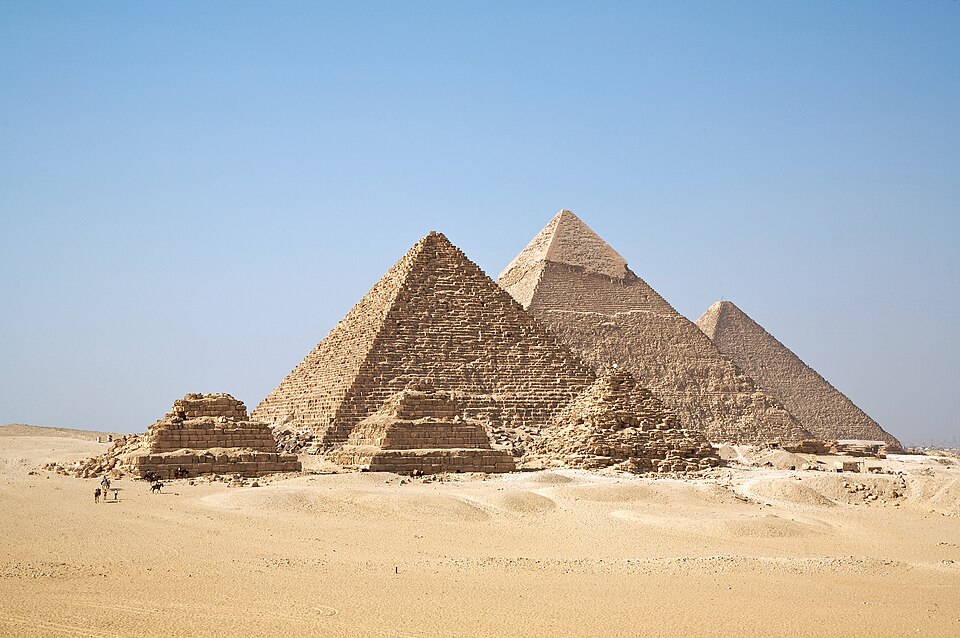
Giza's history is inseparable from ancient Egypt's greatest achievements. The Giza Plateau, which overlooks the modern city, was the burial ground of choice for pharaohs of the Old Kingdom, particularly during the Fourth Dynasty when Khufu, Khafre, and Menkaure commissioned the construction of the three great pyramids that still define the skyline. These structures represent not merely tombs but the culmination of Egyptian architectural knowledge, mathematical precision, and organizational capacity. The nearby Valley Temple and associated causeway complexes speak to the elaborate religious and ceremonial practices that accompanied royal burial. For over four thousand years, these monuments have captivated human imagination and continue to be the primary draw for visitors to the region.
Beyond the pyramids, Giza's history encompasses the rise of modern urban settlement, particularly during the nineteenth and twentieth centuries when the city expanded significantly as Cairo's population grew and development spread westward across the Nile. Today's Giza represents layers of history — from the monumental remains of pharaonic times to colonial-era development to contemporary metropolitan growth, each era leaving its mark on the cityscape and the character of its people.
The Giza Plateau remains the region's primary attraction, drawing millions of visitors annually to witness the pyramids, the Great Sphinx, and associated temples and tombs. The scale of these monuments — particularly when encountered in person — communicates something profound about human aspiration and capability. Walking the plateau offers not only views of the pyramids themselves but also perspectives on the desert landscape, the Nile Valley in the distance, and the interplay between ancient and modern Giza below.
Beyond the monumental sites, the city itself reflects authentic Egyptian urban character. The riverside areas provide respite from the desert heat and opportunities to observe local life along the Nile. Markets, neighbourhood streets, and residential quarters show how contemporary Egyptians navigate daily existence in a city living in the shadow of antiquity. The surrounding agricultural regions, where the Nile's flood plains still sustain farming communities, offer glimpses of traditional Egyptian rural life. Photography enthusiasts find compelling subjects in the contrast between ancient stone and modern development, between timeless desert vistas and busy urban streets. The landscape itself — the drama of the desert meeting the river valley — provides a natural backdrop that has inspired artists and writers for centuries.
Giza is accessible from central Cairo via multiple routes across the Nile — roads, bridges, and the Cairo Metro provide regular connections between the two cities. Taxis, microbuses, and organized transport services connect Giza's various neighbourhoods and link the city to surrounding areas. The plateau monuments are reachable by local transport, though the specific logistics of visiting require current local information due to ongoing site management and security protocols. Most visitors base themselves in central Cairo and make day trips to Giza, though the city has its own residential and commercial infrastructure for those staying longer.
For residents, Giza functions as a major employment and residential centre — home to government offices, educational institutions, commercial enterprises, and light manufacturing. The city's economy integrates tourism, agriculture, services, and increasingly, modern business sectors. The presence of the pyramids significantly influences Giza's character and economic life, supporting tourism-related work while creating a unique cultural identity that blends ordinary metropolitan concerns with the extraordinary heritage surrounding the city.
Giza's population stands at 4,367,343, making it one of Egypt's largest cities. The city sits at an elevation of 19 metres above sea level and operates in the Africa/Cairo timezone, UTC+2 (UTC+3 during daylight saving time when observed). Understanding these basic facts helps orient visitors and provides context for planning visits to this remarkable city where ancient wonders and modern Egyptian life intersect.
View larger map — © OpenStreetMap contributors
Flight delayed or cancelled?
You could be owed up to €600 compensation. Check your eligibility for free.Do you know Al Jīzah, Giza?
Share local tips, recommend a hotel, list a business or add a photo.
✏️ Share your knowledge about Al Jīzah, GizaDo you know Al Jīzah, Giza?
Share local tips, recommend a hotel, list a business or add a photo.
✏️ Share your knowledge about Al Jīzah, Giza