Image: Wikipedia / Wikimedia Commons
Image: Wikipedia / Wikimedia Commons
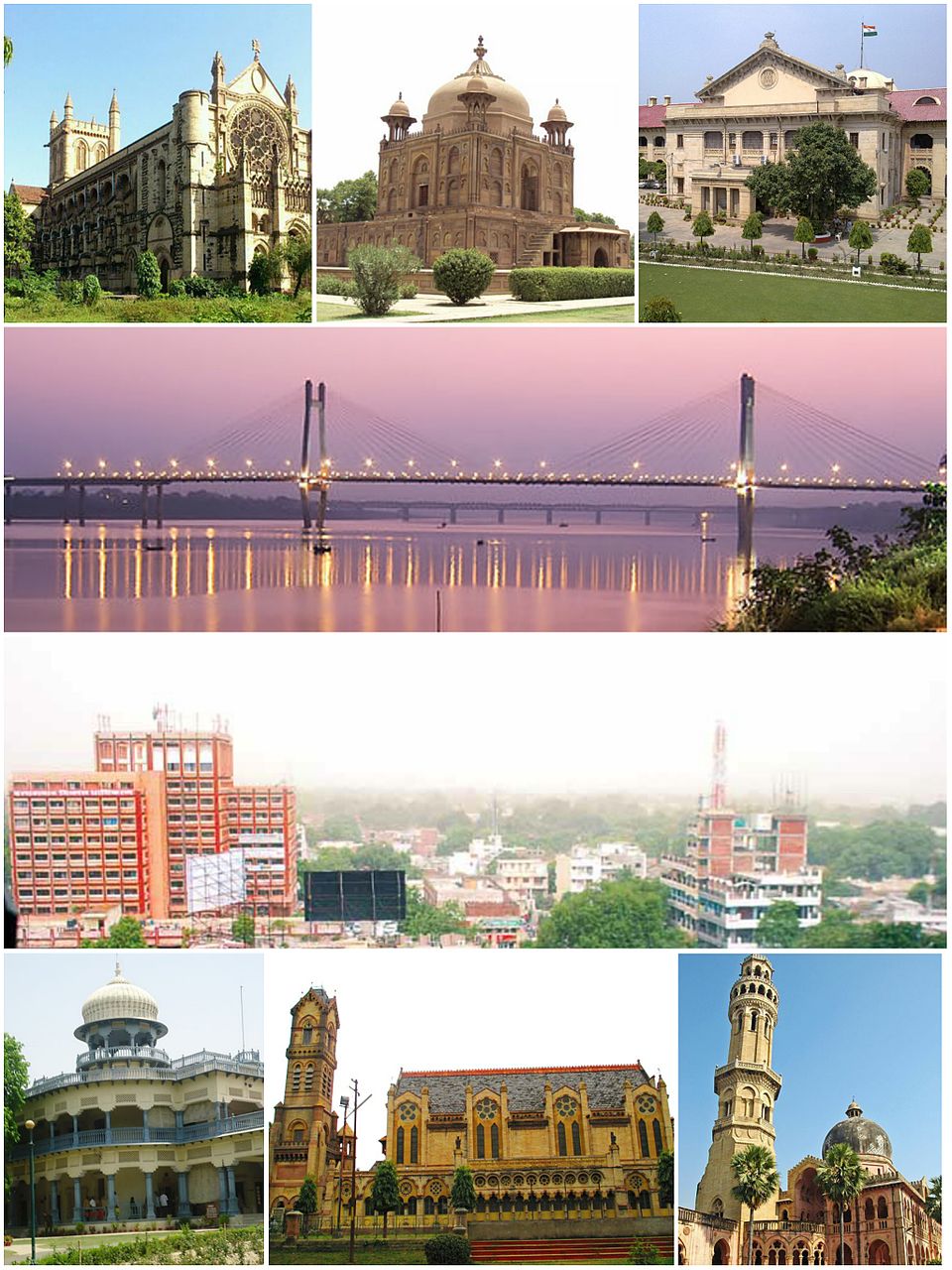
Prayagraj, known colloquially and historically as Allahābād, stands as one of India's most significant cities, shaped by its location at the meeting of three rivers and its role as the judicial heart of Uttar Pradesh. This metropolis of over one million residents combines ancient spiritual importance with modern administrative functions, creating a city that bridges India's past and present. The confluence of the Ganges, Yamuna, and the mythical Saraswati rivers has made this place sacred for centuries, drawing pilgrims and shaping its character in ways that continue to influence daily life.
Allahābād lies in the northern Indian state of Uttar Pradesh at coordinates 25.44478 degrees North latitude and 81.84322 degrees East longitude. The city sits at an elevation of 99 meters above sea level, positioning it within the Indo-Gangetic Plain, one of the world's most fertile and densely populated regions. This geographical setting has proven crucial to the city's development, providing access to water resources and agricultural land that have sustained human settlement for millennia.
The city's defining geographical feature is the Sangam, the sacred confluence where three rivers meet. This convergence point has determined Allahābād's spiritual significance and remains central to its identity. The Ganges and Yamuna rivers form natural boundaries and transportation arteries, while the flat terrain and riverine landscape create a distinctive environment that shapes how residents and visitors experience the city. The local timezone is Asia/Kolkata, consistent with Indian Standard Time across the country.
Allahābād's history stretches back centuries, with evidence of settlement and spiritual significance dating to ancient times. The confluence of the rivers earned the city its Sanskrit name "Prayagraj," meaning "city of sacrifice," reflecting its importance in Hindu philosophy and practice. The Allahabad High Court, established during British rule, positioned the city as the judicial capital of Uttar Pradesh, a role it maintains today. This legal and administrative significance has shaped the city's modern character, attracting government officials, lawyers, and civil servants who form a substantial portion of the urban population.
The city has witnessed major historical moments, including pivotal events during India's independence struggle. The blend of colonial-era architecture with older structures creates a layered urban landscape where different historical periods remain visible. Religious festivals, particularly the Maha Kumbh Mela held at the Sangam, draw millions of pilgrims from across India and beyond, temporarily transforming the city into one of the world's largest temporary gatherings of humanity. These cultural events remain central to understanding Allahābād's place within Indian religious and social life.
The Sangam itself represents the primary draw for visitors, offering a spiritual and natural experience unique to this location. Watching the rivers meet, particularly during dawn, provides insight into why this place has captivated people across centuries. The banks of the rivers serve as gathering spaces where everyday life unfolds—bathing, washing clothes, selling goods, and conducting rituals all occur within view of the water.
Beyond the confluence, the city offers cultural and architectural experiences tied to its judicial and administrative heritage. The landscape around Allahābād, shaped by the rivers and plains, provides opportunities for understanding how geography has influenced Indian civilization. The city's gardens, many with historical connections, offer green spaces where locals spend leisure time. The local academic institutions and cultural centers reflect the city's role as a center of learning and intellectual activity. Walking through different neighborhoods reveals the texture of urban life in a major Indian city, from bustling commercial areas to residential quarters where daily routines continue largely unchanged.
Allahābād maintains good transportation connections to other major Indian cities. Rail services connect the city to destinations across northern India, with the railway station serving as a major transportation hub. Road networks link Allahābād to surrounding regions, accessible by bus and private vehicles. The Bamrauli Airport provides air connections, though many travelers also arrive by train given the extensive rail infrastructure serving the city. Local transportation within Allahābād relies on buses, auto-rickshaws, and cycles, with walking remaining practical for many areas.
The city functions as the administrative and judicial heart of a major region, with government offices and courts forming significant employers. The High Court's presence brings lawyers, judges, and associated professionals who contribute to the city's professional character. Educational institutions serve both local students and those from surrounding areas, making Allahābād an educational center within the state. The confluence and associated religious significance mean that tourism and pilgrimage-related activities provide economic activity, particularly during major festivals. Traditional manufacturing and small-scale industries operate throughout the city, while agriculture in surrounding areas remains economically important.
Hindi serves as the primary language, though English is widely understood in educational and professional settings. The local population comprises both longtime residents with deep family histories in the city and newcomers drawn by employment and educational opportunities. Community life centers around neighborhoods, temples, mosques, churches, and other gathering spaces where social bonds form and local culture perpetuates.
Allahābād is home to an estimated 1,073,438 residents according to recent counts, making it a substantial metropolitan center and the seventh most populous city in Uttar Pradesh. The city's elevation of 99 meters places it within the low-lying Indo-Gangetic Plain. The timezone throughout the city and region is Asia/Kolkata. Visitors should prepare for the climate of northern India, with hot summers, monsoon rains, and cool winters shaping the calendar of local activity and travel patterns. The city's size and importance mean that most practical services and facilities are available, though visitors benefit from planning ahead, particularly regarding accommodation and transportation during peak pilgrimage seasons.
View larger map — © OpenStreetMap contributors
Flight delayed or cancelled?
You could be owed up to €600 compensation. Check your eligibility for free.Do you know Allahābād, Uttar Pradesh?
Share local tips, recommend a hotel, list a business or add a photo.
✏️ Share your knowledge about Allahābād, Uttar PradeshDo you know Allahābād, Uttar Pradesh?
Share local tips, recommend a hotel, list a business or add a photo.
✏️ Share your knowledge about Allahābād, Uttar Pradesh