In This Guide
Read the guide as a story
Walking into Ambleside: An October Afternoon in the Lakes
A Visitor's Guide to Ambleside
Ambleside is a small working town at the head of Windermere — England's largest natural lake — and one of the most practical bases for exploring the Lake District National Park. With a population of around 2,500, it sits at 68 metres in a valley enclosed by fells on most sides, and it functions genuinely as a service town rather than a preserved visitor set-piece. Walkers, students, shoppers and day-trippers all move through the same streets.
The town suits visitors who want a walking base with good public transport links, access to lake cruises from nearby Waterhead Pier, and a range of independent shops and cafes. Those looking for nightlife, large indoor attractions or a beach resort will find it modest by those measures.
First Impressions and Setting
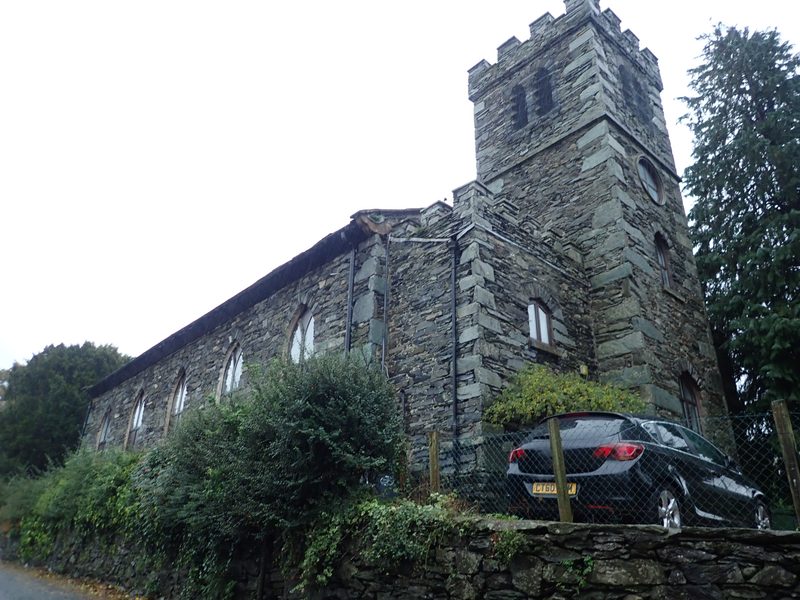
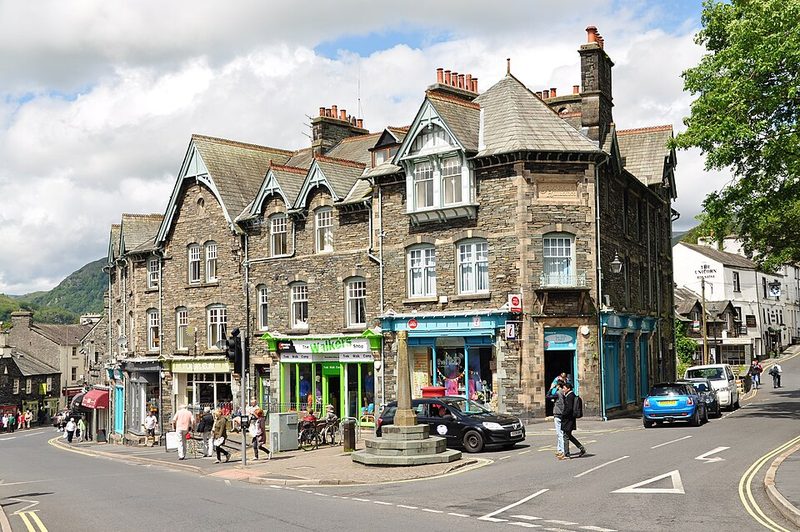
Arriving in Ambleside, the landscape closes in quickly. Wansfell Pike and Todd Crag rise within two kilometres of the town centre, and the fells are visible from the main streets. The architecture is largely Victorian stone, with older structures scattered throughout. There is no dominant central square or single landmark — the town's character comes from the way it is laid out and used day to day.
The waterfront at Waterhead, roughly 1.1 kilometres from the town centre, is where the River Rothay flows into Windermere. This is the departure point for boat trips on the lake and a natural gathering point for visitors arriving or heading out onto the water. Waterhead functions as a distinct area — connected to the town but not the centre of it.
History and Identity
Ambleside has long served as a service hub for the surrounding fell communities and for visitors drawn to the Lake District. Its position at the head of Windermere made it a natural focus for boat traffic and trade. The town sits within the Lake District National Park, which was designated in 1951, and within the civil parish of Lakes in Cumbria's Westmorland and Furness district.
Bridge House — a small, distinctive 17th-century structure built directly on a bridge over Stock Ghyll — is among the most photographed buildings in the town. Its original purpose is uncertain, though it has served various functions over the centuries. It is now cared for by the National Trust. The Armitt Museum, on Rydal Road, provides a more substantial cultural anchor: it holds collections connected to the Lake District's artistic and literary history, including work associated with Beatrix Potter and John Ruskin.
The University of Cumbria maintains a campus in Ambleside, which gives the town a role in regional education beyond its visitor economy.
What Visitors Come For
Most visitors come for one or both of two things: fell walking and lake access.
Walking. Routes begin almost at the town centre. Wansfell Pike (1.7 km from town), Todd Crag (1.9 km) and Loughrigg Fell (3 km) are all accessible on foot without a car. Stock Ghyll Force, a waterfall reached via a short walk up from the centre, is a popular first outing. For those wanting gentler terrain, the paths around Rydal Water — about 2.9 kilometres away — offer a quieter alternative with good views and a flat, accessible approach along the River Rothay. Grasmere, roughly 4.3 kilometres north, is reachable on foot or by the 555 bus.
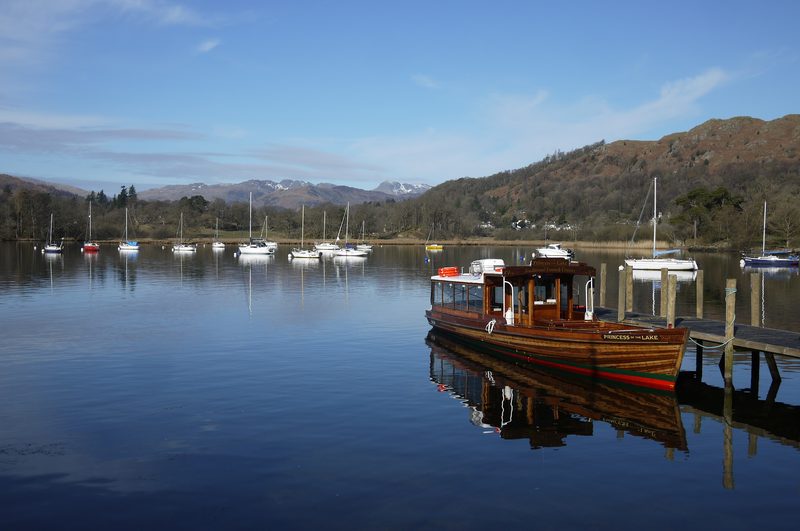
Boat trips. Windermere Lake Cruises operates passenger services from Waterhead Pier. These are cruise boats — not car or vehicle ferries — and connect Ambleside with Bowness-on-Windermere and Lakeside to the south, making it possible to explore the length of the lake without a car. The pier is an easy, flat 15-minute walk from the town centre.
Day trips. Grasmere, Hawkshead, Coniston and Keswick are all reachable by Stagecoach bus from Ambleside. The 555 service runs north to Grasmere and Keswick, and south to Windermere and Kendal. The 505 runs to Hawkshead and Coniston. Bowness-on-Windermere is served by the 599. Visitors without a car can cover a substantial part of the Lake District using these routes.
The Town Centre
The centre is compact and practical. Independent outdoor retailers — the town is well-stocked with walking gear — sit alongside cafes, small food shops and pubs. It is busiest in peak summer and during school holidays; at quieter times, particularly in autumn and winter, it feels markedly smaller. Weather in the Lake District is variable at all times of year, and cold, snow or ice in winter can affect walking conditions and some transport reliability. Visitors planning walks should check conditions locally before heading onto higher ground.
Getting There and Around
Ambleside has no railway station. The nearest train station is Windermere, approximately 4 miles (6.4 km) south, with frequent onward bus connections. Stagecoach Cumbria & North Lancashire operates the main services into and out of Ambleside.
Key routes from Ambleside include:
- 555 — runs between Lancaster and Keswick, stopping at Waterhead, Windermere station, Staveley, Kendal (southbound) and Rydal, White Moss Common, Grasmere, Thirlmere and Keswick (northbound). This is the most useful long-distance bus for car-free visitors exploring the central Lakes.
- 505 — runs to Hawkshead and Coniston via Clappersgate and Skelwith Fold, and south to Kendal via Windermere station. Also serves Waterhead.
- 516 — runs to Dungeon Ghyll in Great Langdale via Kendal and Windermere, useful for walkers heading into the Langdale valleys.
- 599 — runs south to Bowness-on-Windermere via Waterhead and Brockhole Visitor Centre.
A PlusBus ticket covering Ambleside and Grasmere can be added to through rail tickets to Windermere station, allowing unlimited local bus travel. Visitors relying entirely on public transport should check current Stagecoach timetables directly, as services vary by season and day of week.
Within the town, walking is the natural mode of travel. Distances are short — Waterhead Pier is under 1.5 km from the centre — and most of what visitors need is accessible on foot.
Seasonal Considerations
The Lake District's reputation for rainfall is well-founded, and Ambleside is no exception. Wet weather at any time of year is a realistic possibility. In peak summer (July–August) and during school holidays, the town and surrounding roads are noticeably busier, and parking can be difficult for those arriving by car. Winter brings quieter streets and potentially icy fell conditions; some services and boat schedules operate reduced hours or days. Autumn is generally well-regarded for walking conditions and colour, with smaller crowds than midsummer.
Who Will Enjoy Ambleside
Ambleside works well for walkers and outdoor visitors of most abilities — there are routes ranging from short, flat lakeside paths to serious fell ascents. Families will find it manageable: the waterfront, short walks and boat trips are accessible, and the Armitt Museum offers a wet-weather option. Car-free visitors are well-served by the bus network, which is more comprehensive here than in many Lake District villages. Those primarily interested in nightlife or large-scale indoor attractions will find the offer limited — it is a small town, and it functions as one.
Practical Notes
Ambleside is in the Lake District National Park, within the civil parish of Lakes, Westmorland and Furness. Elevation is 68 metres. The UK currently carries a Level 1 travel advisory — the lowest level — indicating normal precautions apply. No regional restrictions are in place. Visitors should confirm current accommodation availability, boat cruise schedules, bus timetables and attraction opening hours with local operators, as these change seasonally.
Lake District National Park
Ambleside and the Lake District National Park
Ambleside sits inside the Lake District National Park, one of England's largest and most visited protected landscapes. The park covers around 2,362 square kilometres of Cumbrian fells, lakes, valleys and woodland, and was designated in 1951. In 2017 it was inscribed as a UNESCO World Heritage Site, recognised for its cultural landscape shaped by centuries of farming, literary association and landscape design as much as by its natural terrain.
For visitors based in Ambleside, the national park designation has practical implications: development is managed, the landscape is largely intact, and an unusually extensive network of public footpaths and bridleways is well-maintained. The Lake District National Park Authority provides walking information and accessible routes, including its Miles Without Stiles programme for visitors with limited mobility.
Ambleside's position near the centre of the park makes it a natural hub. From the town, bus services run north to Grasmere, Thirlmere and Keswick, south to Windermere and Kendal, and west toward Hawkshead and Coniston. The park's main visitor centres — including Brockhole on Windermere, which is a stop on several bus routes — provide orientation, maps and seasonal event information.
The park sees substantial visitor pressure in peak season, particularly on the most popular routes such as Helvellyn and Scafell Pike, and on roads around Windermere and Grasmere. Ambleside, while busy in summer, is generally more manageable than some of the honeypot villages further along Windermere. Visitors arriving by public transport can avoid the worst of the car-parking pressure that affects the A591 corridor in July and August.
Wildlife in the national park includes red squirrels, ospreys (which have returned to some lake catchments) and a range of upland bird species on the higher fells. Visitors should follow the countryside code, particularly around farmland and during lambing season in spring.
Practical Notes
- The Lake District National Park Authority website (lakedistrict.gov.uk) provides current walking advice, route information and accessibility guides.
- Bus services through the park are operated primarily by Stagecoach Cumbria & North Lancashire; route 555 is the main north-south spine through the central Lakes.
- Brockhole Visitor Centre on Windermere is a stop on the 555 and 505 routes and provides maps, café facilities and seasonal activities.
- The park has no entry fee; car parks within the park are managed locally and charge seasonally.
Sources: Ambleside Buses - Stagecoach Cumbria • Lake District Buses - Lake District On Board • Ambleside - Wikipedia
Waterhead Pier
Waterhead Pier, Ambleside
Waterhead Pier is the boat departure point for Ambleside, situated at the northern end of Windermere where the River Rothay flows into the lake. It lies approximately 1.1 kilometres from Ambleside town centre — an easy, flat walk — and is the practical gateway to lake-based travel from this part of the Lake District.
The pier serves Windermere Lake Cruises passenger boat services, which run south along Windermere to Bowness-on-Windermere and Lakeside. These are passenger cruise boats, not vehicle or car ferries. From Waterhead, visitors can travel the full length of England's largest natural lake by water, with connections at Bowness and Lakeside to other transport options and attractions. The service makes it possible to base yourself in Ambleside and explore the lake without needing a car.
The area around the pier — known as Waterhead — has its own distinct character: a smaller settlement with lake views, moored boats and a more open aspect than the enclosed town centre further north. Several bus routes stop at or near Waterhead, including the 505 and 555 services operated by Stagecoach Cumbria & North Lancashire, making the pier accessible by public transport from Windermere station and other points.
The walk between Ambleside town centre and Waterhead takes roughly 15–20 minutes on a flat, straightforward route. For visitors with limited mobility, the flat terrain along the lakeside approach is more accessible than many of the fell paths around the town.
Practical Notes
- Windermere Lake Cruises operates passenger services from Waterhead; schedules vary seasonally and should be checked directly with the operator before travel.
- Bus routes 505 and 555 serve the Waterhead area; check current Stagecoach timetables for operating days and times.
- The pier is approximately 1.1 km south of Ambleside town centre on a flat route suitable for most visitors.
- Waterhead is also a stop on the 599 service to Bowness-on-Windermere.
Sources: Waterhead Pier - Visit Lake District • Transport - Ambleside Online
Ambleside lake cruises and historic boats
Lake Cruises from Ambleside
Windermere Lake Cruises operates passenger boat services from Waterhead Pier, giving visitors based in Ambleside direct access to England's largest natural lake without needing a car. The service runs south to Bowness-on-Windermere — roughly midway along the lake — and continues to Lakeside at the southern end, where connections to the Haverthwaite Steam Railway are available seasonally.
The boats are passenger cruise vessels. Windermere has no car ferry service along its main length; these are sightseeing and transport cruises for foot passengers. A round-trip cruise from Waterhead to Bowness and back gives a view of the full northern half of the lake, including the wooded western shore and the broader basin around Belle Isle. Extending south to Lakeside covers the full 17-kilometre length of Windermere.
The fleet includes historic vessels operating alongside newer boats. MV Tern, one of the older working boats on the lake, has appeared in visitor sources connected to Waterhead services. The precise current operational schedule of individual vessels varies and should be confirmed with Windermere Lake Cruises directly.
For visitors using Ambleside as a base, the cruise connection creates a practical touring loop: travel south by boat to Bowness, explore the town on foot, and return by boat or bus. The 599 bus also runs between Waterhead and Bowness-on-Windermere, providing an alternative land route on the same corridor.
Cruises are seasonal in their full frequency; reduced winter timetables typically apply. Booking in advance is advisable during peak summer periods. Prices and timetables should be checked with the operator before travel — WorldTownGuide does not carry live schedules.
Practical Notes
- Departure point: Waterhead Pier, approximately 1.1 km from Ambleside town centre.
- Operator: Windermere Lake Cruises (check operator website for current schedules and fares).
- Key destinations: Bowness-on-Windermere, Lakeside.
- The 599 bus provides a land alternative on the Waterhead–Bowness corridor.
- MV Tern is one named historic vessel associated with Waterhead services; current operational details should be confirmed with the operator.
Sources: Waterhead Pier - Visit Lake District • Lake District Buses - Lake District On Board • Things to do in Ambleside on a Rainy Day - One Lake District
Ambleside Bridge House
Bridge House, Ambleside
Bridge House is a small stone building constructed directly over Stock Ghyll — a beck that runs through the centre of Ambleside — and is one of the most recognisable structures in the Lake District. It dates to the 17th century, though its original purpose has never been definitively established. Theories over the years have included an apple store, a summer house attached to the Ambleside Hall estate, and a weaver's workshop, but none has been conclusively proven by historical sources.
The building is now owned by the National Trust and has served as a National Trust shop and information point in recent decades. Its current operational use should be confirmed with the National Trust before visiting, as arrangements can change.
What makes Bridge House unusual — and much-photographed — is its physical improbability. It is a two-storey structure with a chimney, sitting on a tiny stone arch over a fast-running stream, apparently designed to use as little land as possible. Whether or not this was the original intention, the practical effect is a building that looks as though it should not be standing where it is.
The building is on Rydal Road, a short walk from the town centre. It is visible from the road and the adjacent bridge, so visitors can see it without needing to enter. Its proximity to the centre of Ambleside makes it a natural stop on any walk through the town.
Practical Notes
- Location: Rydal Road, Ambleside town centre.
- Owner: National Trust.
- Current operational use: confirm with the National Trust (nationaltrust.org.uk) before visiting.
- The exterior is visible from the public road at no charge.
- Original purpose: historically debated; the 17th-century construction date is established but precise original use is uncertain.
Sources: Things to do at Stagshaw Garden and Ambleside - National Trust • Ambleside - Wikipedia
The Armitt Museum
The Armitt Museum and Library on Rydal Road is Ambleside's main cultural institution. Founded in 1912, it holds collections connected to Beatrix Potter, John Ruskin and the Lake District's artistic and natural history. It operates as an independent charity and is listed with the Art Fund. A practical option on wet days or for visitors interested in the region's cultural depth beyond the standard walking routes. Confirm current opening hours and admission with the museum directly (armitt.com).
Read the full The Armitt Museum guide
Sources: Welcome to Armitt Museum and Library - armitt.com • The Armitt Museum - Visit Lake District • The Armitt: Museum, Gallery, Library - Art Fund • The Armitt Museum - Visit Cumbria