Image: Wikipedia / Wikimedia Commons
Image: Wikipedia / Wikimedia Commons
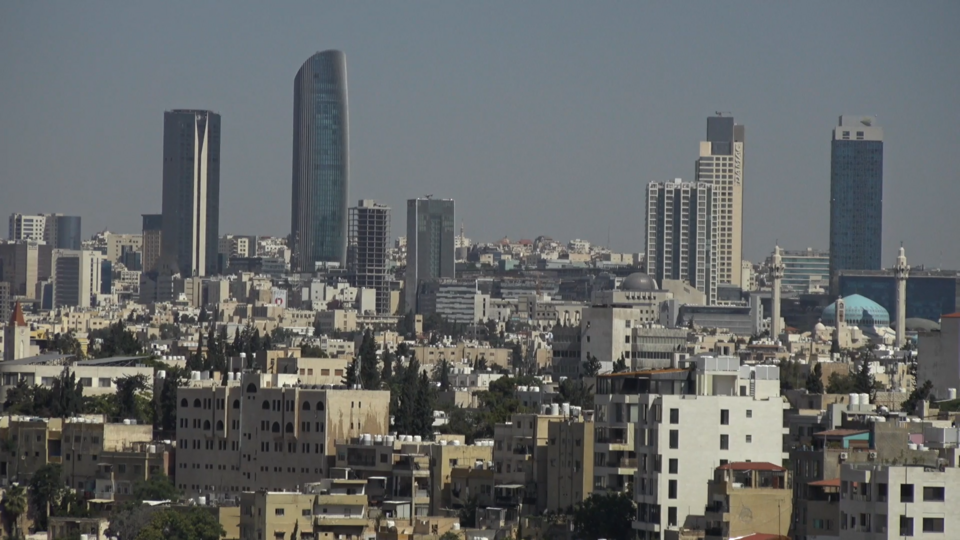
Amman is Jordan's vibrant capital and largest city, a place where ancient Roman ruins sit alongside modern high-rise developments, and where the desert landscape shapes daily life in subtle but important ways. With a metropolitan population of approximately five million people, it has grown from a modest town into the seventh-largest city in the Arab world and the economic and cultural heartbeat of the nation. For visitors and residents alike, Amman presents a compelling blend of history, contemporary urban energy, and Middle Eastern hospitality.
Amman sits at an elevation of 757 meters above sea level on the East Bank of the Jordan River, positioned at coordinates 31.95522N, 35.94503E. The city's location in the heart of the Levant region has made it a natural crossroads for trade and travel for thousands of years. The metropolitan area sprawls across a series of hills and valleys in a semi-arid landscape, with the Arabian Desert stretching out to the east. This geography means the city experiences significant temperature variations between seasons, with hot, dry summers and mild winters that occasionally bring rain. The elevation provides relief from the most intense heat of lower-lying areas, though the thin air means the sun's intensity should not be underestimated.
The city's layout reflects its hillside terrain. Many neighborhoods climb steep slopes, creating neighborhoods with distinct characters and offering impressive views across the urban landscape. The downtown core occupies the lower elevations, while newer developments extend upward and outward into surrounding hills. This topography means that getting around often involves significant elevation changes, something to keep in mind when planning daily activities.
Amman's history stretches back millennia. The city was known as Philadelphia during the Greco-Roman period, when it was one of the ten great cities of the Decapolis. Visitors today can see remnants of this classical heritage in the form of the Roman Theater, an impressively preserved structure that still dominates the downtown skyline, and the Temple of Hercules, whose towering columns remain visible from many parts of the city. The Islamic period transformed the city, and it eventually became a modest settlement. The modern city's rapid growth began only in the 20th century, particularly after it became Jordan's capital in 1921 following the end of the Ottoman period.
This compressed history—ancient grandeur, centuries of relative quiet, and then explosive modern growth—gives Amman a unique character. Walking through different neighborhoods, you encounter layers of different eras and architectural styles. The contrast between the heritage sites of the downtown area and the sprawling modern suburbs tells the story of Jordan's development as an independent nation.
For those interested in history, downtown Amman offers the most concentrated collection of sites. The Roman Theater remains the most iconic landmark, its tiers still occasionally hosting performances and gatherings. Nearby, museums house artifacts from across Jordanian history, offering context for understanding the region's past. The Citadel, located on a hill overlooking the city, contains additional ruins from various periods along with panoramic views across Amman's sprawling landscape.
Beyond the ancient sites, the character of Amman emerges through its neighborhoods and street life. The downtown area buzzes with activity, particularly in the late afternoon and evening when temperatures cool. Markets, cafes, and small shops reflect both Jordanian traditions and the diverse backgrounds of residents. Several neighborhoods have developed distinctive characters—some are known for their concentrations of galleries and cultural spaces, while others serve as commercial or residential centers. The Amman Citadel area offers not just archaeological interest but also vantage points from which to understand how the city is organized and oriented.
The surrounding landscape offers opportunities for those seeking natural experiences. The nearby Dead Sea, the lowest point on Earth, lies within reach for day trips, as do natural reserves and hiking areas in the surrounding region. The desert landscape that begins just beyond the city's edges characterizes much of Jordan and provides an important context for understanding life here.
Amman is served by Queen Alia International Airport, located south of the city, which connects to major international hubs. The airport has ground transportation options for reaching the city center. Within the city, local buses operate on fixed routes, and shared taxis provide flexible transportation options. The hilly terrain and traffic patterns mean that distances can be deceptive—what appears close on a map may involve significant elevation changes or detours. Many visitors find that having a prearranged driver for at least some journeys makes navigation easier, particularly when unfamiliar with the city layout.
Amman serves as Jordan's economic engine, hosting government institutions, business headquarters, and commercial operations that drive the national economy. The city has become an important regional hub for business and finance, attracting investment and workers from across the Middle East and beyond. This economic importance shapes daily life—the city is busy and purposeful, filled with people commuting to work, conducting business, and pursuing commerce. The population of 1,275,857 people within city proper (though the metropolitan area is significantly larger) speaks to the concentration of economic activity here.
The city operates on Asia/Amman timezone. Its elevation of 757 meters above sea level places it well above the surrounding Dead Sea region but still subject to significant temperature swings. For planning purposes, visitors should prepare for substantial variation in conditions between seasons and between day and night temperatures.
View larger map — © OpenStreetMap contributors
Flight delayed or cancelled?
You could be owed up to €600 compensation. Check your eligibility for free.Do you know Amman?
Share local tips, recommend a hotel, list a business or add a photo.
✏️ Share your knowledge about AmmanDo you know Amman?
Share local tips, recommend a hotel, list a business or add a photo.
✏️ Share your knowledge about Amman