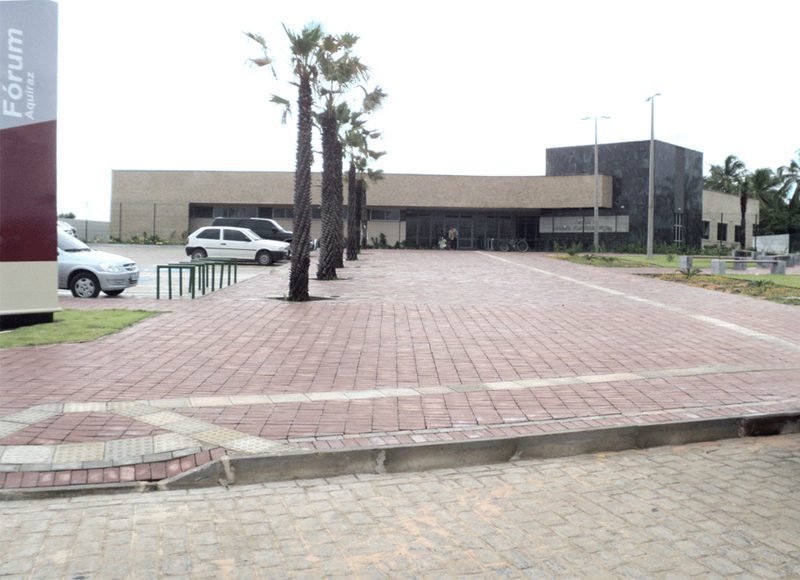


Just 32 kilometers south of Ceará's booming capital, Aquiraz sits where the Northeast's sprawling metropolitan reach begins to soften into the quieter rhythms of smaller coastal towns. This is a place shaped by proximity—close enough to Fortaleza to feel the city's pull, yet far enough away to maintain its own character as a genuine residential and beach community. What draws most visitors here isn't crowded attractions within the town itself, but rather the distinctive pull of the Atlantic coastline and the surprising presence of one of Brazil's most visited leisure destinations just offshore.
FIRST IMPRESSIONS AND SETTING
Arriving in Aquiraz, you move through a landscape that feels fundamentally coastal. The terrain is low and flat—just 21 meters above sea level—which means the sky dominates your view. The Pacoti and Catu rivers cross through the municipality before emptying into the ocean, and you'll feel the presence of water throughout. The landscape here is distinctly Northeastern: humid, green in patches, with scattered vegetation adapted to the tropical coastal environment. Neighborhoods blend residential buildings with older structures, reflecting gradual growth rather than planned expansion. The Atlantic Ocean forms the town's eastern boundary, and that proximity shapes everything from the air you breathe to the economic life of the community.
This is not a town built for tourism spectacle in the center itself. Instead, it's a working municipality of roughly 65,000 people where daily life revolves around schools, small commerce, residences, and the fishing and service economies tied to the coast and to proximity with Fortaleza.
HISTORY, IDENTITY AND LOCAL STORIES
Aquiraz's story is inseparable from Ceará's colonial past. The region was colonized by the Portuguese beginning in the 16th century, a process marked by indigenous resistance and the Portuguese struggle to adapt to a harsh, unfamiliar climate. Like much of Ceará, Aquiraz evolved from a rural society centered on livestock and agriculture. The "coronéis"—powerful landowners—controlled vast territories and the lives of dependents who worked their land in exchange for subsistence, a semi-feudal arrangement that persisted for centuries. This patron-client relationship shaped not only economic life but also social power, family networks, and local politics.
The town sits within a broader history of the Northeast's boom-and-bust cycles, from sugar wealth to droughts, from colonial dominance to industrial decline. Today, that history is visible in the way the municipality is organized and in the character of its built environment—a layering of different eras and economic systems rather than the planned uniformity of newer settlements.
DAILY LIFE, ECONOMY AND CULTURE
For residents, Aquiraz functions as both a place to live and a commuter town. Many people work in Fortaleza, taking advantage of reasonable transport links, while others work locally in small business, fishing, construction, commerce, and increasingly in leisure and service sectors. The town has schools, health services, and the ordinary infrastructure of a municipality its size. The coastal areas support fishing, both for subsistence and small-scale commerce, and the presence of the ocean shapes seasonal patterns and local diet.
The most significant economic presence in the area is not in Aquiraz itself but nearby: Beach Park, a major water park and resort located at Porto das Dunas, receives over 1.7 million visitors annually and was ranked the second-best water park globally in 2014. While not technically within Aquiraz proper, it is licensed to the municipality and draws workers and commerce to the region. This creates a distinctive economic tension—the town hosts a globally significant tourist facility yet remains primarily a residential settlement rather than a tourist town in character.
WHAT VISITORS NOTICE
The beaches here have a different quality from Fortaleza's more urbanized coastline. They feel less crowded, more embedded in a working landscape where fishing boats coexist with swimmers and visitors. The light is intense and constant—latitude this close to the equator means strong sun and dramatic skies, particularly during the rainy season from January to June. The Atlantic here is warm, murky green from sediment, and the tides are noticeable.
A visitor moving through Aquiraz notices mixed architecture—some houses and small buildings showing age, others newer, some in active decay and others recently improved. There are no grand colonial churches or preserved historic plazas to visit; this is not a heritage tourism destination. Instead, the character comes from the lived texture of the place: the sound of traffic on the main roads connecting to Fortaleza, the presence of small bars and shops, the quality of light on narrow streets, the smell of salt air mixing with vehicle exhaust and cooking.
The beaches accessible from Aquiraz are genuinely pleasant, with softer development patterns than central Fortaleza, though they are increasingly attracting residential construction and weekend homes from the capital's growing population.
GETTING THERE AND AROUND
Aquiraz is well connected to Fortaleza by road, with regular bus service and the ability to travel by car in roughly 45 minutes depending on traffic. This proximity means the town functions partly as a suburban extension of the capital while maintaining its own identity. Moving around Aquiraz itself relies on local buses, shared taxis, and private transport. The town spreads across an area of roughly 200 square kilometers, so walking is practical within neighborhoods but impractical for longer distances.
PRACTICAL NOTES
Aquiraz is a real municipal settlement, not a planned tourist destination, so expectations matter. If you're looking for colonial architecture, museums, or a pedestrian historic center, this is not the place. If you're interested in understanding how a medium-sized Northeastern Brazilian municipality functions, or if you want beach access with less tourism infrastructure than Fortaleza, the town offers an authentic glimpse of contemporary coastal life in Ceará. Basic services, food, and accommodation options exist locally, though the region's most significant facility—Beach Park—operates separately as a self-contained resort.