Image: Wikipedia / Wikimedia Commons
Image: Wikipedia / Wikimedia Commons
Baghdad stands as the capital and largest city of Iraq, a sprawling metropolis that sits at the crossroads of ancient civilizations and modern Middle Eastern life. Located along the banks of the Tigris River in central Iraq, this city has served as a center of power, culture, and commerce for centuries. Today, Baghdad remains one of the most significant urban centers in the Arab world, home to millions of residents and serving as the nation's primary financial and commercial hub.
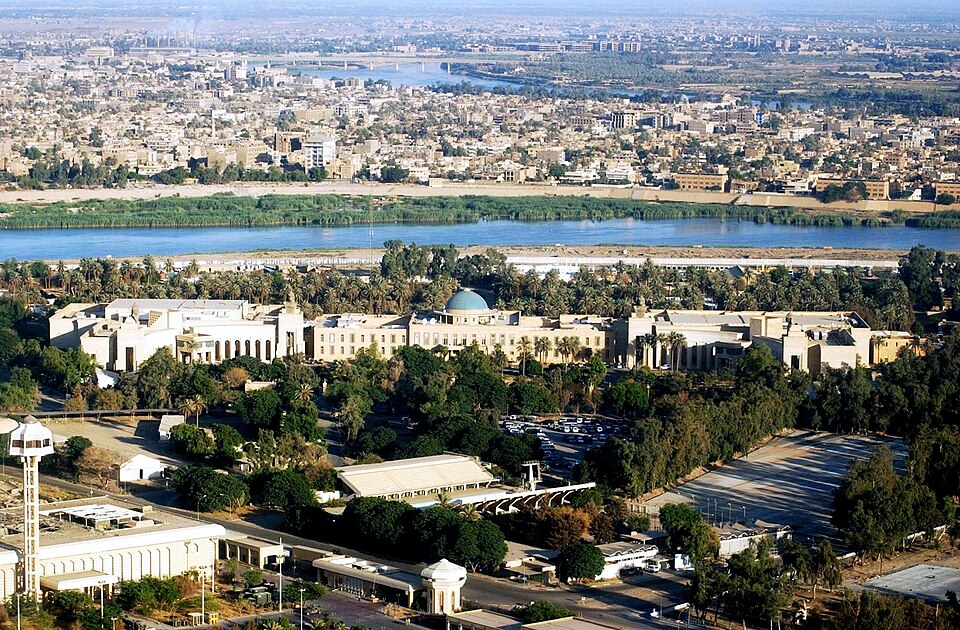
Baghdad's position on the Tigris River has defined its character since its founding. The city sits at an elevation of just 41 meters above sea level in central Iraq, positioned at coordinates 33.34058N, 44.40088E. The relatively low elevation and the river's presence have made this location strategically valuable throughout history, providing water access and natural transportation routes through the surrounding landscape. The city sprawls across both banks of the Tigris, with different neighborhoods and districts developing on each side of the river. The terrain surrounding Baghdad is relatively flat, characteristic of the Mesopotamian plains that have cradled human civilization for millennia.
The broader region around Baghdad is part of Iraq's central plains, and the city's development has been intrinsically linked to the availability of water from the Tigris. This geographic advantage has made Baghdad an important crossing point and meeting place for trade routes connecting different regions of the Middle East. The flat topography means that the city spreads outward rather than upward, creating distinct neighborhoods and districts that reflect different periods of urban development.
Baghdad carries the weight of extraordinary historical significance. The city was founded in 762 CE as the capital of the Abbasid Caliphate and quickly became one of the world's most important centers of learning, culture, and commerce during the Islamic Golden Age. Medieval Baghdad was renowned for its House of Wisdom, where scholars from various backgrounds translated and preserved texts in mathematics, astronomy, medicine, and philosophy. The city's historical layers run deep, with influences from Persian, Arab, Turkish, and other cultures woven into its urban fabric and traditions.
Much of Baghdad's heritage reflects these periods of cultural flowering, though the city has experienced significant upheaval in recent decades. Despite challenges, Baghdad retains considerable historical and cultural importance. The city's museums and cultural institutions house artifacts and materials that document Iraq's rich past, connecting residents and visitors to thousands of years of Mesopotamian and Islamic history. The Tigris itself remains a defining feature, much as it has for generations.
For those interested in history and culture, Baghdad offers substantial opportunities to engage with Iraq's heritage. The city is home to several museums and cultural institutions that preserve artifacts from various periods, including prehistoric times through the Islamic era. Walking through different neighborhoods provides a sense of how the city has developed over time, with architecture and street layouts reflecting different historical periods and urban planning approaches.
The Tigris River itself is central to Baghdad's character and offers a natural focal point for the city. Riverbanks and parks along the river provide spaces where locals gather, offering insight into daily life in the city. The river creates natural points of orientation and movement throughout the urban landscape. Beyond the city center, the surrounding plains and agricultural areas outside Baghdad reflect the broader Iraqi landscape that has sustained settlements for thousands of years. Understanding Baghdad means appreciating both the urban environment and the natural geography that has always defined this region.
Baghdad is served by Baghdad International Airport, which handles flights connecting the city to regional and international destinations. Ground transportation within and to the city is available through various means, though travelers should check current conditions and security situations before planning trips. The city is connected to other parts of Iraq through road networks, though these connections' status and accessibility vary. Within the city itself, transportation options include taxis and private vehicles. Public transportation systems exist, though navigating the city requires familiarity with local routes and conditions.
Baghdad is home to approximately 7.2 million people, making it not only Iraq's largest city but one of the most populous in the entire Arab world. The city represents roughly 22 percent of Iraq's total population, reflecting its role as the primary destination for rural-to-urban migration and its status as the economic center of the nation. The local economy is driven by government employment, commerce, banking, and various industries. The river continues to play a role in daily commerce and movement, much as it has historically. Iraqis from across the country live in Baghdad, creating a cosmopolitan population with diverse backgrounds, dialects, and traditions. For residents, the city represents opportunity, employment, and cultural connection, despite the challenges that Baghdad has faced in recent years.
Baghdad is located at coordinates 33.34058N, 44.40088E in central Iraq. The city's elevation stands at 41 meters above sea level. The local timezone is Asia/Baghdad. The metropolitan area has an estimated population of 7.2 million residents, making it one of the largest urban centers in the Middle East. When planning any visit or stay, check current travel advisories and local conditions, as circumstances in Baghdad can change. Those planning to visit should research thoroughly and remain informed about the current situation before traveling.
View larger map — © OpenStreetMap contributors
Flight delayed or cancelled?
You could be owed up to €600 compensation. Check your eligibility for free.Do you know Baghdad, Baghdad?
Share local tips, recommend a hotel, list a business or add a photo.
✏️ Share your knowledge about Baghdad, BaghdadDo you know Baghdad, Baghdad?
Share local tips, recommend a hotel, list a business or add a photo.
✏️ Share your knowledge about Baghdad, Baghdad