Image: Wikipedia / Wikimedia Commons
Image: Wikipedia / Wikimedia Commons
Baku, the capital and largest city of Azerbaijan, sits on the shores of the Caspian Sea as a fascinating blend of ancient heritage and modern ambition. With a population of 1,116,513 within the city proper and an estimated two million in the metropolitan area, it dominates the nation's cultural, economic, and political landscape. Few cities in the world can claim such a striking geographic distinction: Baku lies 23 metres below sea level, making it not only the lowest-lying national capital in the world but also the largest city anywhere situated below sea level—a remarkable fact that shapes both its geography and its identity.
Baku occupies a distinctive position on the southern shore of the Absheron Peninsula, extending along the wide Bay of Baku on the western coast of the Caspian Sea. Located at coordinates 40.37767N, 49.89201E, the city sprawls across a natural amphitheatre of land that slopes gently toward the water's edge. This unusual topography—being well below sea level—creates a unique microclimate and environment found nowhere else for a capital city of comparable size. The Absheron Peninsula itself is a narrow strip of land jutting into the Caspian, and Baku's position here has historically made it a natural crossroads between Europe and Asia.
The city's relationship with the Caspian Sea is fundamental to its character. The bay provides a natural harbor that has shaped settlement patterns for centuries, while the water itself influences the local climate and provides both livelihood and recreation for residents. The surrounding landscape is relatively flat, with the Greater Caucasus Mountains visible in the distance to the west and northwest, creating a dramatic backdrop to the urban skyline.
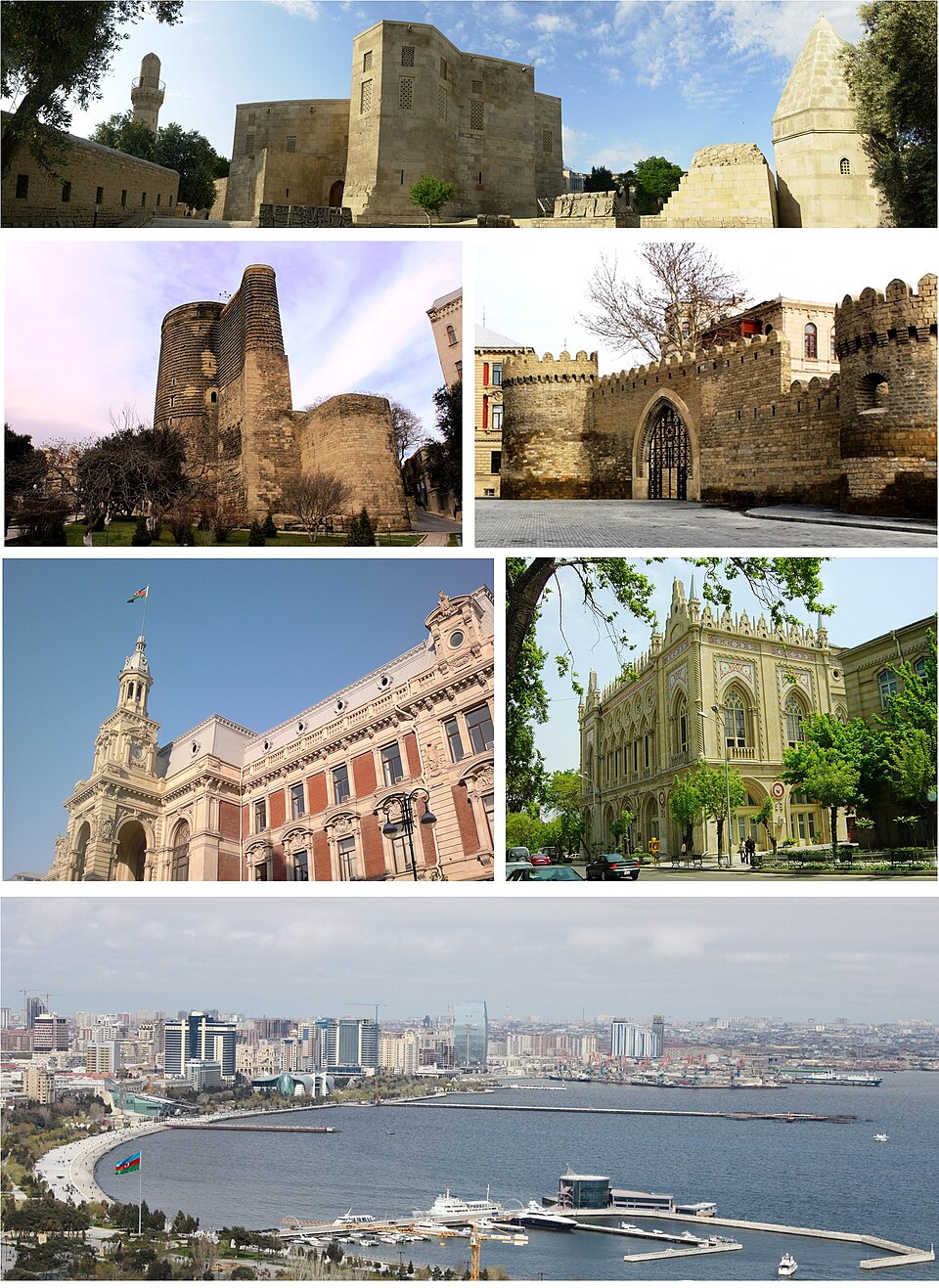
Baku's history stretches back centuries, though its rapid transformation into a major world city occurred during the nineteenth and twentieth centuries. The Old City, known locally as Icherisheher, represents the medieval heart of Baku and contains structures that reflect the city's long past as a trading hub and cultural center. This walled quarter showcases architecture and urban patterns that developed over centuries of Silk Road commerce and regional exchange.
The discovery of petroleum resources in the Absheron Peninsula transformed Baku dramatically during the late 1800s. Oil drilling and refining became the dominant industry, attracting workers, entrepreneurs, and migrants from across the Russian Empire and beyond. This industrial boom left its mark on the city's architecture, economy, and social composition. The twentieth century brought further change through Soviet industrialization, urban planning, and recent decades of independent development. Today, Baku's skyline reflects this layered history—medieval towers stand near Soviet-era apartment blocks, which in turn neighbor contemporary high-rises and ambitious modern developments. This architectural patchwork tells the story of a city constantly reinventing itself while maintaining connections to its past.
Baku offers visitors and residents alike a rich variety of experiences rooted in its unique geography and cultural heritage. The Caspian shoreline provides opportunities for waterside walks and recreation, with parks and promenades offering respite and views across the bay. The Old City remains the most historically significant area for exploration, where narrow streets, traditional buildings, and cultural sites provide insight into pre-modern urban life in the Caucasus region.
Beyond the center, Baku's character reveals itself through its museums, cultural institutions, and natural features. The surrounding Absheron Peninsula contains areas of environmental and historical interest, including salt lakes and wetlands that attract birdwatchers and nature enthusiasts. The city's position on major migration routes makes it significant for observing seasonal bird movements. For those interested in understanding contemporary Azerbaijani culture, numerous cultural venues, libraries, and public spaces throughout the city offer opportunities to engage with local arts, music, and intellectual life. The landscape itself—particularly the experience of being in a major city well below sea level—creates a distinct sense of place that is worth simply observing and experiencing as you move through the streets and waterfront areas.
Baku is well connected to the outside world through Heydar Aliyev International Airport, located about 25 kilometres northeast of the city center. This modern facility handles domestic and international flights, connecting Baku to major cities across Europe, Asia, and the Middle East. Within the city, public transportation includes metro, bus, and minibus systems that serve the sprawling metropolitan area. The relatively compact city center is walkable, though distances to outlying neighborhoods can be considerable. Taxis and ride-sharing services operate throughout the city, providing flexible options for getting around.
For the approximately 1.1 million people living within Baku proper—with millions more in the metropolitan area—the city represents the center of Azerbaijani opportunity and identity. The petroleum industry remains significant to the local economy, though in recent decades the city has diversified, developing finance, tourism, technology, and service sectors. About one quarter of all Azerbaijanis live in the Baku metropolitan area, making it the true primate city of the nation. This concentration means that major decisions about the country's future are made here, and the city's growth and development directly affect the entire nation. For locals, Baku offers employment, education, cultural amenities, and urban sophistication unavailable elsewhere in the country, which continues to drive migration from rural areas and smaller cities.
Baku operates on Asia/Baku timezone (UTC+4). The city's elevation of 23 metres below sea level is one of its most distinctive features and something visitors and residents notice when considering maps and geographic references. The population within the city limits stands at 1,116,513, though the metropolitan area is significantly larger. Visitors and newcomers should plan their visits and activities with this unique geography in mind, and should come with realistic expectations about what a major Caspian port city offers: a blend of history, contemporary development, and the particular character that emerges from a place where land, sea, and human ambition intersect in an unusual way.
View larger map — © OpenStreetMap contributors
Flight delayed or cancelled?
You could be owed up to €600 compensation. Check your eligibility for free.Do you know Baku, Baki?
Share local tips, recommend a hotel, list a business or add a photo.
✏️ Share your knowledge about Baku, BakiDo you know Baku, Baki?
Share local tips, recommend a hotel, list a business or add a photo.
✏️ Share your knowledge about Baku, Baki