

First Impressions and Setting
Beijing announces itself across vast distances—a sprawl of 16,410 square kilometers spread across the North China Plain, where the landscape flattens into horizon lines interrupted by mountains to the northwest. The city sits at the edge of northern China's temperate zone, where winters are sharp and dry, and summers warm and humid. This geography has shaped Beijing for millennia: it is not a coastal city, nor a river port in the manner of Shanghai, but rather a continental capital positioned to command the routes between Mongolia and the fertile south. The terrain here is workable, the water accessible, and the defensive possibilities clear—which is why Beijing was chosen not once but five times as an imperial capital.
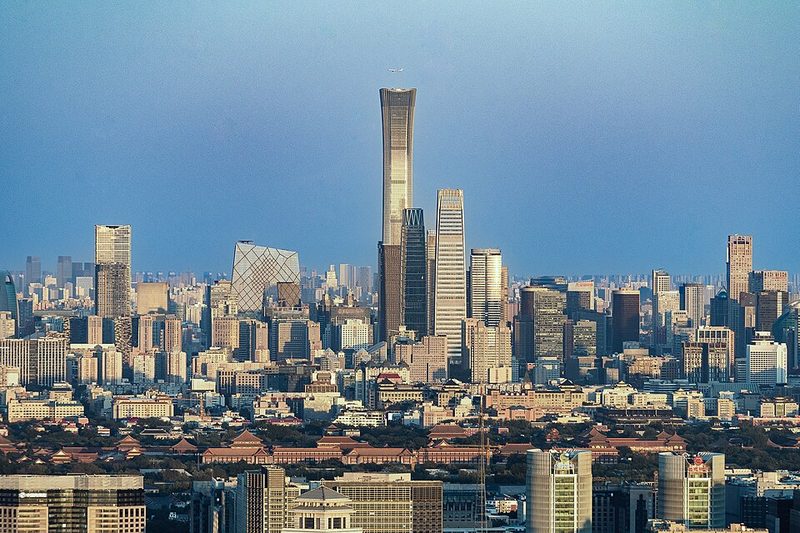
On arrival, visitors often sense Beijing's scale before its character. The city spreads with a kind of deliberate grandeur: wide avenues, monumental public spaces, and the sense that urban planning here operates at a different compass than in most world cities. Modern Beijing is a metropolis of over 18 million residents, overlaid on top of millennia of settlement. The old city plan—the rectangular grid that organized imperial Beijing—remains legible underneath the contemporary sprawl, especially in the older inner districts where traditional courtyard houses called hutongs still stand in networks of narrow, intimate streets.
History, Identity and Local Stories
Beijing's story begins not with empire, but with deep human presence. Peking Man, a hominin ancestor, inhabited the region around Zhoukoudian, about 48 kilometers southwest of the modern city, roughly 600,000 years ago. The city itself traces its organized history back approximately 3,000 years, with a small town on the present southwestern site originally named Ji, then Yan. It was not until the 10th century that Beijing became significant on the imperial stage, serving as a secondary capital of the Liao Dynasty. The real transformation came later: Beijing became the principal capital under the Jin Dynasty, then the Yuan, Ming, and Qing dynasties, holding that role until 1911 and the fall of imperial China.
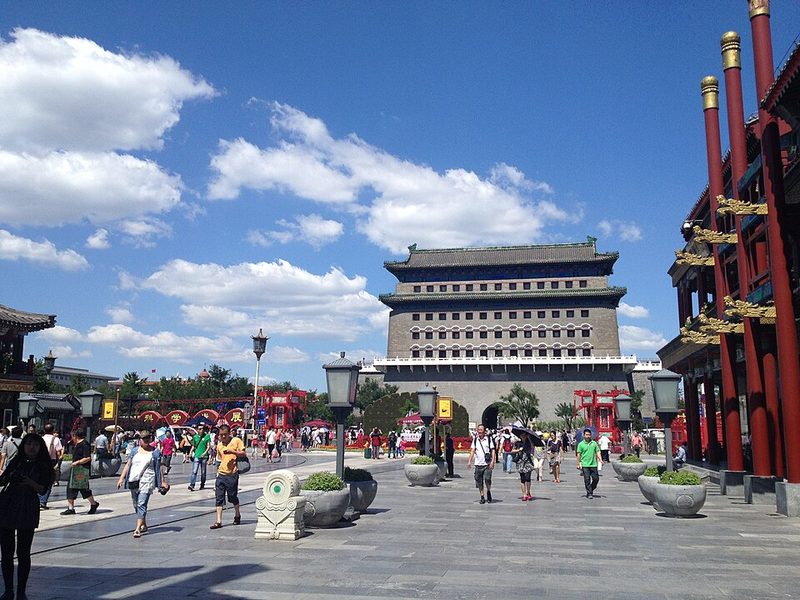
This unbroken sequence of imperial capitals leaves its mark everywhere. The Forbidden City, the Winter Palace, the Temple of Heaven—these are not reconstructed or imagined sites, but actual structures where imperial power was exercised for centuries. In 2024, UNESCO recognized Beijing's Central Axis as a World Heritage Site, describing it as a "Scroll of Myriad Realms." This axis, running north-south through the old city, is a unique urban planning concept that organized the entire imperial capital according to cosmological principles. Walking this axis today—from the Arrow Tower in the south through the Forbidden City to the Bell and Drum Towers—is to walk through a materialized philosophy of order.
Beijing became a capital for an inward-looking empire, and yet it has always been a place of encounter. Marco Polo documented the city in the 13th century, describing a civilized, prosperous place that shaped centuries of Western fascination with China. That openness to the world returned forcefully in the modern era, sometimes violently, sometimes through intentional modernization. Today Beijing is recognized as one of China's historical and cultural cities, but also as a global leading city and modern metropolis.
Daily Life, Economy and Culture
Modern Beijing is not primarily a manufacturing city, though aerospace, electronics, motor vehicles, and machinery remain significant. Instead, the city's economic identity is built on services. The service industry ranks number one among major Chinese cities for many years running. This includes finance, technology, tourism, media, and the knowledge industries—Beijing is positioned as China's international exchange center and a hub for high-end services. The city is also investing heavily in what it calls "future industries": future information, future health, future manufacturing, future energy, future materials, and future space. This language reflects Beijing's role not just as a capital but as a test site for where China is heading.
Culturally, Beijing remains extraordinarily layered. Eight UNESCO World Cultural Heritage Sites are located here: the Great Wall (which runs through the region), the Palace Museum, the Peking Man Site, the Summer Palace, the Temple of Heaven, the Ming Tombs, the Grand Canal, and the Central Axis itself. Religious life in the city reflects multiple traditions—Chinese folk religion, Taoism, Buddhism, Islam, and Christianity all maintain presence. The city has earned a reputation for intangible cultural heritage, performing arts, and contemporary culture. The 798 Art District, a cluster of galleries and creative spaces in a converted electronics factory, exemplifies how Beijing integrates historical spaces with contemporary artistic practice. The city also hosts a vibrant rock music scene and is increasingly recognized as a space where cultural innovation happens.
What Visitors Notice
The visual character of Beijing shifts depending on which district you are in. The old inner city preserves the grid-like hutong neighborhoods, where life happens at human scale in alleyways between low-rise courtyard houses. Moving outward, the city opens up into wider avenues, shopping districts, and the kind of contemporary urban landscape found in modern Chinese cities. The mountains to the northwest are usually visible, a backdrop that anchors the city geographically and historically—the Great Wall runs along those ranges.
Public spaces in Beijing tend to be spacious in a way that reflects the city's imperial history and its post-1980s urban expansion. Museums are numerous and often of high quality. Tiananmen Square itself remains a focal point of contemporary Beijing, though it carries the weight of complex modern history alongside its role as a ceremonial space.
Recent History and Local Context
Beijing was profoundly shaped by the modernization and urban planning that accelerated from the 1980s onward through the 2010s. The city also carries the memory of the 1989 Tiananmen Square protests and massacre, an event that reverberates in international consciousness and remains a sensitive topic within China. This history is part of Beijing's identity as a city where political power is exercised and where social change has been contested.
Getting There and Around
Beijing is served by major transport infrastructure befitting a national capital. Multiple airports connect the city to domestic and international destinations. Railway networks link Beijing to cities across China and to Mongolia. Within the city, public transport includes metro, bus systems, and taxis. The specifics of transport change regularly, so visitors should check current official sources for current schedules and routes before traveling.
Practical Notes
Official travel advisories for China note that typhoons can affect eastern and southern coastal regions during May to November, though Beijing's northern location means it is less vulnerable to these storms than coastal areas. Visitors should check current UK FCDO and US State Department travel advisories for China before planning travel, as advisories can change. Travel insurance that covers your planned activities and itinerary is recommended.