In This Guide
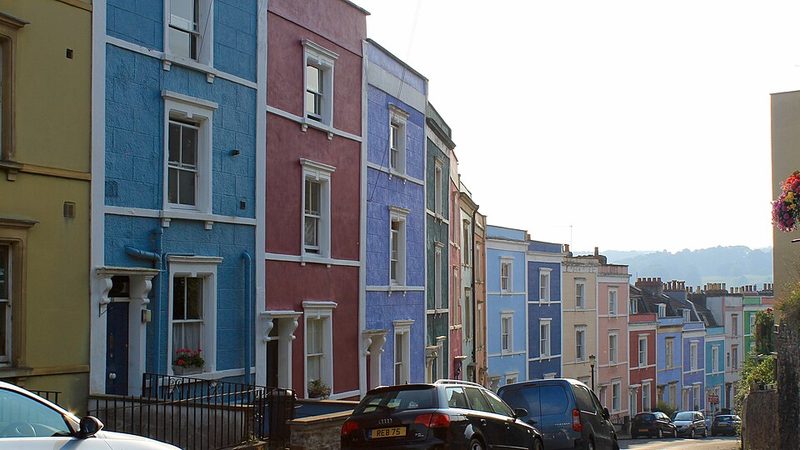
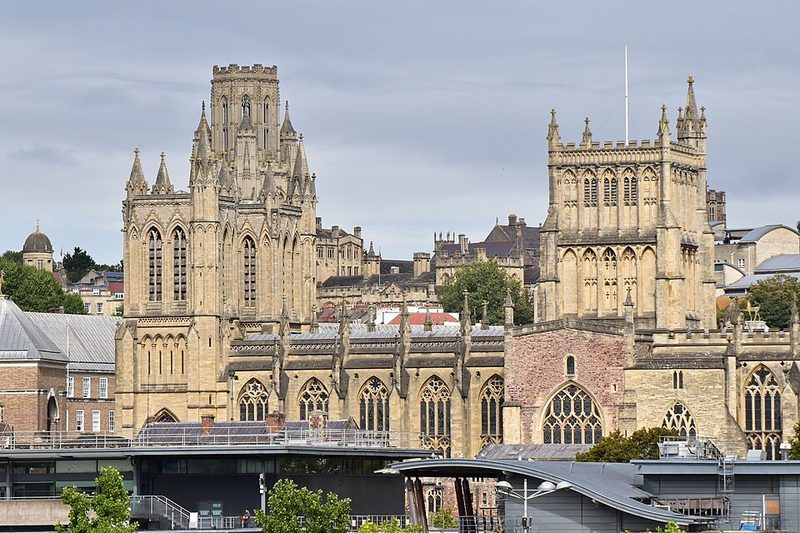
Bristol is a city of nearly 480,000 people on the River Avon in South West England, positioned where that river approaches the Bristol Channel. Its history as one of England's most significant medieval and early modern ports left it with a dense architectural inheritance — Georgian terraces in Clifton, Victorian engineering on the waterfront — and with a past that local residents continue to debate openly, particularly the city's substantial role in the transatlantic slave trade. Today Bristol functions as a regional economic hub, a university city, and a place with a well-established creative and music scene. Visitors tend to find it more immediately engaging than many comparable English cities of its size.
Setting and Orientation
The city sits at roughly 21 metres above sea level, bordered by Gloucestershire to the north and Somerset to the south. The urban area spreads considerably beyond Bristol's ceremonial boundary into South Gloucestershire, Bath and North East Somerset, and North Somerset. For visitors, the practical centre of gravity is the Harbourside — the regenerated former docks along the Floating Harbour — and the adjacent Old City. Clifton, a neighbourhood of Georgian terraces on higher ground to the north-west, is home to the Clifton Suspension Bridge and is a distinct destination in itself. Bristol Temple Meads station, the main rail terminus, sits to the south-east of the centre and provides a natural orientation point on arrival.
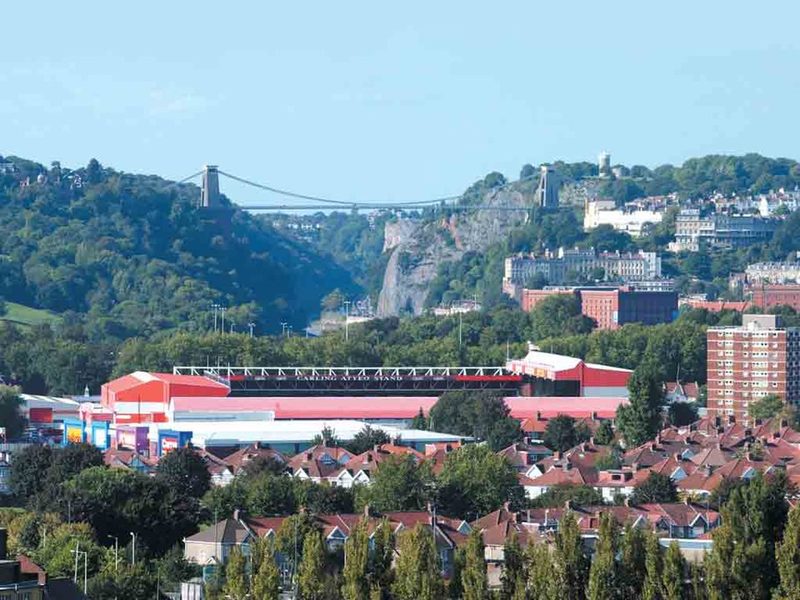
The topography is more varied than many visitors expect. The city rises and falls noticeably, and the Avon Gorge — crossed by Brunel's Clifton Suspension Bridge — gives the western edge of the city a dramatic physical character that sets it apart from the flat industrial heartlands further north.
Key Landmarks and What to See
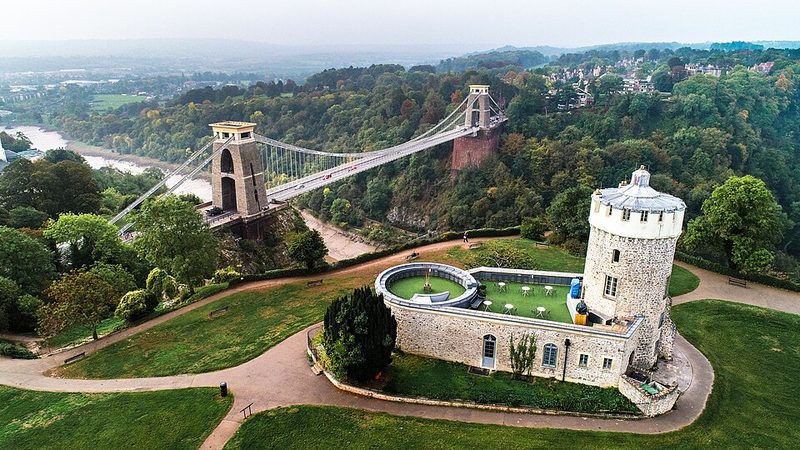
The Clifton Suspension Bridge, designed by Isambard Kingdom Brunel and opened in 1864, spans the Avon Gorge linking Clifton to Leigh Woods in North Somerset. It remains a functioning toll bridge and one of the most recognisable Victorian engineering structures in the UK. A museum on the Leigh Woods side covers the bridge's construction and maintenance history. Visitors can reach Clifton from the city centre on the No. 8 bus from Bristol Temple Meads, or on foot in roughly 45 minutes.
On the Harbourside, the SS Great Britain — another Brunel project, the first ocean-going iron steamship — has been restored and operates as a multi-award-winning museum. The ship was constructed in Bristol's harbour and returned there after decades stranded in the Falkland Islands. Together, the bridge and the ship make Bristol's connection to Brunel unusually tangible for visitors.
The city is also closely associated with Banksy, the anonymous street artist confirmed to have grown up in Bristol. Original works by Banksy remain visible on walls across the city, though their locations shift over time. The Bristol Old Vic, the longest continuously running theatre in the English-speaking world, is in the city centre. The Royal West of England Academy, a Grade II-listed gallery, has presented art exhibitions in Bristol since 1844. Aerospace Bristol, to the north of the city, houses Concorde Alpha Foxtrot — the last of the Bristol-built supersonic aircraft to fly.
History and the Slave Trade Legacy
Bristol became one of England's most important trading ports during the medieval period. From the late 17th century through the abolition of the British slave trade in 1807, Bristol merchants and ship owners were deeply involved in the transatlantic slave trade, and much of the city's Georgian wealth was built on that commerce. This history is not treated as a closed chapter in Bristol: the toppling of the statue of slave trader Edward Colston in 2020 drew international attention and has since led to sustained local debate about how the city commemorates its past. Visitors will find this history discussed in museums, public art and civic signage across the city.
Festivals and Creative Culture
Upfest, described by its organisers as Europe's largest street art festival, takes place annually in Bristol and draws artists and visitors from across the continent. The city also hosts Love Saves the Day and Forwards Festival for music audiences, along with a wide calendar of food, craft beer, film, poetry and walking festivals throughout the year. Bristol Walk Fest offers free events across the city and surrounding area, with most walks open to all ages and fitness levels. The creative and festival scene is one of the reasons Bristol consistently attracts younger residents and visitors.
Economy, Universities and Daily Life
Bristol is no longer dependent on any single industry. The economy spans education, healthcare, creative industries, professional services and technology. The University of the West of England (UWE Bristol) is one of the largest higher education providers in the South West, with over 38,000 students and 4,500 staff. Their presence gives parts of the city, particularly student accommodation and entertainment districts, a distinct demographic character. The lower-lying central areas along the river have been substantially regenerated over recent decades, shifting from purely industrial use toward mixed residential, cultural and hospitality space.
Getting There and Around
Bristol Temple Meads is the city's principal railway station, with regular services to London Paddington, Cardiff, Birmingham and other major UK cities. The station is the eastern terminus of Brunel's Great Western Main Line. Bristol Airport, located south of the city in North Somerset, handles international and domestic flights. Within the city, buses are the primary public transport mode; there is no metro or tram system. For current timetables and routes, the local transport authority's journey planner is the most reliable resource, as services change regularly.
Practical Notes
Bristol has the full infrastructure of a large English city: accommodation across all price ranges, NHS hospital provision, retail and emergency services throughout the urban area. The climate follows the South West England pattern — mild and frequently wet, with the warmest months from June to August. The UK Foreign, Commonwealth and Development Office (FCDO) advises normal precautions for the United Kingdom, with no elevated regional warnings in place. US citizens should refer to the US State Department's Level 1 advisory for the United Kingdom. No specific safety concerns apply to Bristol beyond the standard guidance applicable to any large UK city.
SS Great Britain
The SS Great Britain, designed by Isambard Kingdom Brunel and launched from Bristol's Great Western Dockyard on 19 July 1843, was at the time of her launch the largest ship in the world and the first ocean-going vessel built with an iron hull and screw propulsion. She represented a fundamental break from wooden-hulled, paddle-driven ships, and contemporaries called her "the greatest experiment since the creation." Today she sits in the same dry dock where she was built, forming the centrepiece of one of Bristol's most-visited museums.
Why the Ship Matters
Before the SS Great Britain, ocean-going ships were constructed from timber and driven by paddle wheels. Brunel combined two innovations — wrought iron construction and propeller propulsion — at a scale that had never been attempted. The result was a vessel that could carry far more passengers and cargo across the Atlantic than anything previously built. She made her maiden voyage to New York in 1845 and went on to serve multiple routes, including the Australian emigrant trade. After decades of service she was beached in the Falkland Islands in 1886, where she remained until a salvage operation returned her to Bristol in 1970. The restoration project that followed has been described as one of the most ambitious conservation exercises in British maritime history.
The Visitor Attraction Today
The ship is preserved in Bristol Harbour at Gas Ferry Road, BS1 6TY, within a climate-controlled glass "sea" that protects the iron hull. Visitors can board the ship and explore reconstructed passenger and crew quarters, experiencing what the official attraction describes as "the sights, smells and sounds of Victorian life at sea." The site also includes the Being Brunel museum, housed in Brunel's original Dock Office where he designed the ship. That exhibition features six galleries holding around 150 personal artefacts belonging to Brunel, many of which had not previously been displayed publicly. The SS Great Britain is listed as part of the National Historic Fleet and recorded 131,056 visitors in 2025. Visitors should check current opening times and admission prices directly with the attraction, as these are subject to change.
Getting There
The site is in the Harbourside area of Bristol, accessible on foot from the city centre or by local bus. Bristol Temple Meads railway station is the nearest mainline rail hub; the walk along the harbourside to the ship takes around 20–25 minutes. Check the SS Great Britain website or local transport planners for current bus route options.
Sources: SS Great Britain - Wikipedia • SS Great Britain - official site • Being Brunel - Great West Way • SS Great Britain - Wessex Archaeology
Banksy and Bristol Street Art
Bristol is the hometown of Banksy, the anonymous street artist whose satirical stencil work has entered collections worldwide and sold for hundreds of thousands of pounds. His earliest documented large mural, The Mild Mild West (1997), still exists on Stokes Croft, making Bristol one of the few places where original Banksy works can be seen in situ.
Other confirmed pieces around the city include Well Hung Lover on Park Street, The Girl with the Pierced Eardrum near Bristol Marina, and the Grim Reaper, which is now held at the M Shed museum on Wapping Wharf. In 2009, Banksy staged a major exhibition at Bristol Museum and Art Gallery; the Paint-Pot Angel sculpture from that show remains at the museum entrance. Beyond Banksy, Stokes Croft and Leonard Lane in the Old City are active street art neighbourhoods. Guided walking tours cover both street art and broader city history. Visitors should verify the current status of any specific outdoor piece before visiting, as street art conditions change.
Read the full Banksy and Bristol Street Art guide
Sources: Banksy Street Art in Bristol - VisitBristol • Banksy - Wikipedia • Banksy and street art hotspots in Bristol - VisitBristol • Blackbeard to Banksy walking tour
Clifton Suspension Bridge
The Clifton Suspension Bridge spans the Avon Gorge on Bristol's western edge, linking the Clifton district of Bristol to Leigh Woods in North Somerset at a height of around 75 metres above the River Avon. Designed by Isambard Kingdom Brunel, it opened in 1864 and has since become the most recognisable structure associated with the city. It is also one of the few wrought iron suspension bridges in Europe with its original chains still in place.
History and Construction
The bridge's origins stretch back to 1753, when a Bristol merchant named William Vick left a bequest intended to fund a stone bridge across the gorge. By 1829, accumulated funds and advancing technology prompted an open competition for a suspension bridge design instead. Brunel submitted proposals, and after a complicated process — including the dismissal of his first designs by the judge Thomas Telford — a revised Brunel design was approved. Work began in 1831, but the project was interrupted repeatedly by financial difficulties and civil unrest in Bristol during the reform riots of that year. By 1843, when funding collapsed, only the towers had been completed.
Brunel died in 1859 without seeing his design finished. It was completed posthumously by the Institution of Civil Engineers as a memorial to him, opening on 8 December 1864. The bridge is 412 metres long with a main span of 214 metres and a width of 9.4 metres. The two stone towers differ slightly in design; Brunel's original plan to crown them with sphinx statues was never executed. Since opening, it has operated as a toll bridge, with the income funding its maintenance.
Visiting the Bridge
The bridge is freely walkable; a toll applies for vehicle crossings, but pedestrians can cross on foot. The Clifton Suspension Bridge Visitor Centre and Museum is on the Leigh Woods side of the bridge and contains displays and artefacts explaining the bridge's history, construction and ongoing maintenance. Guided tours have been available on selected days — check current schedules directly with the bridge trust, as they change seasonally. The bridge can be reached from Bristol Temple Meads station by the No. 8 bus to Clifton Village, or on foot from the city centre in approximately 45 minutes, passing through several of Bristol's central areas.
The Clifton Context
Clifton is Bristol's Georgian quarter — the neighbourhood surrounding the bridge is characterised by grand terraces, independent shops and restaurants. The Clifton Observatory, also in the area, includes a Camera Obscura and cave access, and is one of three working Camera Obscuras in the UK according to VisitBristol. The combination of the bridge, the gorge, the village and the observatory makes Clifton a half-day or full-day destination within the broader city visit. Visitors arriving specifically for the bridge should note that Leigh Woods, on the Somerset side, offers walks through National Trust woodland with views back toward the gorge.
Sources: Clifton Suspension Bridge - official site • Clifton Suspension Bridge - Wikipedia • Clifton Suspension Bridge - Historic UK • Clifton Suspension Bridge visitor info - VisitBristol
Bristol and the Slave Trade Legacy
Bristol's involvement in the transatlantic trade in enslaved Africans is one of the most consequential and contested parts of the city's history. From the late seventeenth century until abolition in 1807, Bristol merchants were among the most active participants in the trade, and the wealth generated shaped the city's built environment and civic institutions in ways that remain legible today. The public reckoning with that history has accelerated in recent years and is now an active part of Bristol's cultural life.
Sources: Bristol slave trade - Wikipedia • Statue of Edward Colston - Wikipedia • The Colston Statue - Bristol Museums