
In This Guide
Buenos Aires is the capital and largest city of Argentina, with a city population of around three million and a metropolitan area of more than sixteen million. It sits on the south-western bank of the Río de la Plata, one of the widest river estuaries in the world, and functions as the country's political, commercial, cultural and media centre. The GaWC 2024 ranking classifies it as an Alpha− global city — a designation that reflects both its economic weight and its reach as a hub for Latin American finance, publishing, theatre and fashion.
What most visitors notice first is the scale of the place and the density of its European-influenced architecture. Grand nineteenth-century buildings line avenues laid out on a scale that references Paris and Madrid, though the maintenance is uneven and the streetscape is emphatically lived-in. The city is not a compact tourist circuit but a working metropolis of dense residential blocks, and neighbourhood choice matters considerably when planning a stay.
Setting and Layout
The city occupies flat terrain at river level; the surrounding Pampas extend inland without significant relief. The Río de la Plata defines the eastern edge, though the river itself is wide and often appears brown rather than conventionally scenic, and the city's relationship with the waterfront is more historical and practical than picturesque. Buenos Aires is constituted legally as the Autonomous City of Buenos Aires — a federal district distinct from the surrounding Buenos Aires Province — a distinction that carries real administrative and political weight locally.
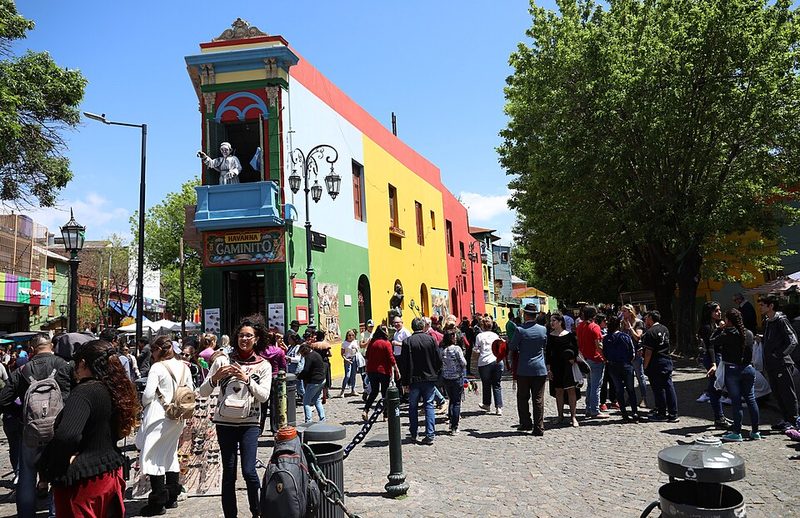
The city is divided into 48 official comunas (communes) and a larger number of recognised barrios (neighbourhoods), each with its own character. Visitors typically orient around a handful of these: San Telmo, one of the oldest districts, is known for its antiques markets and tango venues; La Boca, historically an Italian immigrant neighbourhood, is recognised for its brightly painted houses along the Caminito street; Palermo, the largest barrio, contains parks, restaurants, bars and a concentration of museums; and Recoleta, notable for its nineteenth-century European-style architecture and its famous cemetery.
History and Identity
Buenos Aires has served as the crucible of much of Argentina's political life across two centuries. The city's national role was contested before it was settled: it was only after the Battle of Caseros in 1852 — fought near El Palomar, just outside the city — that the long-running conflict between Buenos Aires and the Argentine interior began to resolve. Bartolomé Mitre, who emerged from that turbulent era, became the first president of a unified Argentina. The figure of Juan Manuel de Rosas, the caudillo who had ruled Buenos Aires Province and briefly the broader Argentine Confederation, was defeated at Caseros; his removal set the conditions for Buenos Aires's eventual consolidation as the national capital.
The late nineteenth and early twentieth centuries brought enormous waves of immigration, primarily from Italy and Spain but also from Eastern Europe and the Middle East. That immigration shaped the city's architecture, its food culture, its linguistic register and the social context from which tango emerged.
Tango
Tango was developed by the urban lower classes in Buenos Aires and Montevideo in the Río de la Plata basin during the late nineteenth century. In 2009, UNESCO inscribed it on the Intangible Cultural Heritage of Humanity list, in a joint nomination by Argentina and Uruguay. The dance and music form remains a living part of city life rather than purely a tourist attraction: milongas — tango social dance events — are held regularly in neighbourhoods including Palermo and San Telmo. Venues range from formal dinner-show productions aimed at visitors to smaller, regular milongas attended principally by local dancers. Visitors who want an authentic milonga experience rather than a staged show will find options, though the conventions around dress and dancing etiquette are taken seriously at the more traditional venues.
Teatro Colón
The Teatro Colón is Buenos Aires's principal opera house and one of the most technically regarded in the world, cited alongside La Scala in Milan, the Opéra Garnier in Paris and the Royal Opera House in London for its acoustics. The building has stood for more than a century and underwent a major restoration programme, reopening in May 2010. Guided tours of the building are available through the theatre's own programme; attending a performance is an alternative way to see the interior, often at lower cost than a dedicated tour. Visitors should check the current season and booking arrangements directly with the theatre.
Museums and Culture
The Museo de Arte Latinoamericano de Buenos Aires (MALBA) is the city's principal contemporary Latin American art museum, with a collection that includes works by Frida Kahlo, Diego Rivera, Xul Solar and Tarsila do Amaral. The Recoleta Cemetery, though primarily a burial ground, is also visited as a record of Argentine architectural and political history; among those interred there are Eva Perón and Carlos Gardel, the tango singer who remains a central figure in Argentine cultural memory.
Getting There
Buenos Aires is served by two airports. Aeroparque Jorge Newbery handles domestic routes and some regional international flights and is located close to the city's north-eastern edge along the river. Ezeiza International Airport (formally Ministro Pistarini International Airport) handles most long-haul international arrivals and is further from the city centre, requiring a transfer by bus, taxi or remis into the capital. Visitors should confirm current ground transport options from Ezeiza at the time of travel.
Getting Around
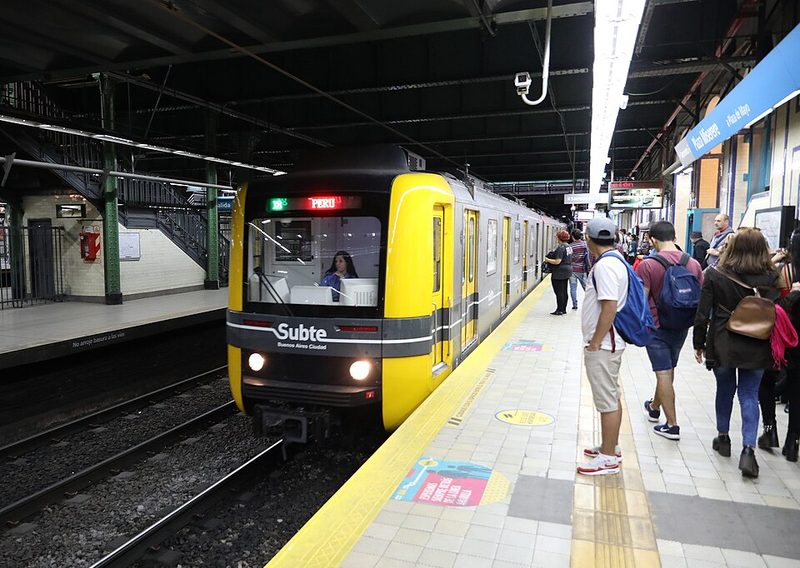
Buenos Aires operates a metro system known as the Subte, which covers central areas of the city across six lines. The Subte is the fastest way to move between central neighbourhoods and avoids surface traffic. Bus routes (colectivos) extend coverage across the wider metropolitan area. Taxis and ride-hailing services are widely available. Fares on the Subte are subject to frequent revision given Argentina's inflationary conditions; visitors should check current fares locally and note that a SUBE card is required for public transport. The city's scale means journey times between outer barrios can be considerable.
Practical Notes
Both the UK Foreign, Commonwealth and Development Office and the US State Department rate Argentina at their standard lowest advisory level, with normal travel precautions applying. Neither advisory applies elevated warnings to Buenos Aires itself. Visitors should follow standard urban precautions and consult current official travel advice at gov.uk/foreign-travel-advice/argentina and travel.state.gov before departure.
Argentina's currency situation has historically been subject to rapid change. Visitors should check current exchange rate conditions and any relevant restrictions before travel. The city operates on Argentina Standard Time. Travel insurance appropriate to the itinerary is recommended.
Tango and Milongas in Buenos Aires
Tango emerged in the working-class districts of Buenos Aires in the late nineteenth century, shaped by converging immigrant and Afro-descendant communities in neighbourhoods such as La Boca and San Telmo. UNESCO inscribed tango on its Intangible Cultural Heritage Lists in 2009, in a joint nomination with Uruguay recognising its Río de la Plata origins.
A milonga is the social event at which tango is danced, distinct from a staged tourist show. Milongas operate across Buenos Aires most nights of the week, with many venues hosting beginner classes before the social session begins. Palermo and San Telmo are among the neighbourhoods with the most active milonga presence. Visitors should check current schedules directly with venues, as timetables and availability change through the year.
The official Buenos Aires tourism authority confirms that multiple internationally recognised tango schools offer regular classes, including private instruction. La Boca's El Caminito is the most photographed tango landmark in the city but the social dance culture is centred elsewhere; San Telmo and Palermo are more practical bases for visitors wanting to dance.
Read the full Tango and Milongas in Buenos Aires guide
Sources: A passion for tango - Official Buenos Aires Tourism • Neighbourhoods - Official Buenos Aires Tourism • Tango - Wikipedia • History of the tango - Wikipedia • Tango - UNESCO Intangible Cultural Heritage
Teatro Colón
The Teatro Colón on Avenida 9 de Julio is one of the most significant opera houses in the world and the centrepiece of Buenos Aires' classical performing arts life. Completed and opened in 1908 after decades of planning and construction difficulties, the theatre sits two blocks from the Obelisco in the heart of the city and has been in continuous use for more than a century, interrupted only by a major renovation project that kept it closed from 2006 until its reopening in May 2010.
The Building
The theatre was designed by Italian architect Francesco Tamburini, with later contributions from other architects across its lengthy construction period. The auditorium is horseshoe-shaped and has 2,487 fixed seats, along with standing room for approximately 1,000, making it one of the larger opera venues in the world. The interior encompasses a main performance hall, the Foyer Principal, the Salón Dorado and the Galería de Bustos. The building is seven storeys tall and the stage measures 20 metres wide and 15 metres high. The acoustics are consistently cited as among the best of any opera house in the world; the official Buenos Aires tourism authority ranks the Colón alongside La Scala in Milan, the Opéra Garnier in Paris and the Royal Opera House in London.
Programme and Visiting
The Teatro Colón operates a full annual programme of opera, ballet and orchestral concerts. Attending a performance is one way to experience the interior; tickets for productions vary in price depending on the event and seating position, and the cheapest seats are generally considerably less expensive than a guided tour. Visitors who wish to see the building without attending a performance can take a guided tour, which the theatre operates regularly. Tours pass through the main auditorium, the Foyer Principal, the Galería de Bustos and the Salón Dorado, covering more than a century of Argentine and international cultural history. Current schedules, tour availability and ticket prices should be confirmed directly with the theatre, as these change across the calendar year.
Practical Notes
The theatre is located centrally, close to the Obelisco and within walking distance of the city's main government and commercial districts. Public transport access is straightforward given its central position. Guided tours are offered in Spanish and English; the official website lists current tour times and booking options. Visitors are advised to book tours in advance, particularly during peak tourist periods, as capacity is limited.
Sources: Teatro Colon - Official Website • Guided Tours - Teatro Colon Official • Teatro Colon - Official Buenos Aires Tourism • Teatro Colon - Wikipedia
Recoleta Cemetery
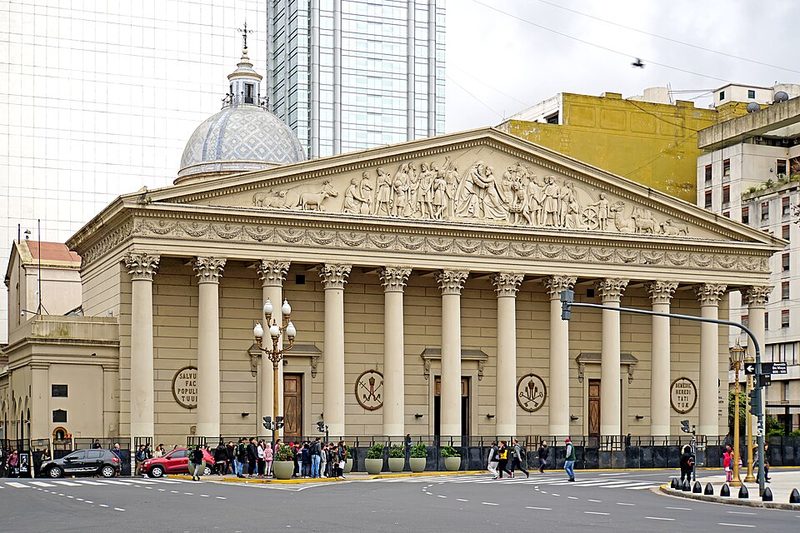
La Recoleta Cemetery, in the Recoleta neighbourhood of northern Buenos Aires, is the city's oldest public burial ground and one of its most visited sites. The land originally formed part of the orchard of the adjoining Basílica Nuestra Señora del Pilar, belonging to the Recollect monks who gave the neighbourhood its name. It became the city's first public cemetery in 1822; its layout was designed by French engineer Próspero Catelin, who also designed Buenos Aires' Metropolitan Cathedral on the Plaza de Mayo.
Sources: Recoleta Cemetery - Official Buenos Aires Tourism • La Recoleta Cemetery - Wikipedia • AfterLife - Recoleta Cemetery (independent documentation site) • Recoleta Cemetery - Vamos Spanish