

What Chicago is known for
Chicago sits on the southwestern shore of Lake Michigan as the third-largest city in the United States, with a population of 2.7 million and a metropolitan area exceeding 9 million residents. The city's location at the western edge of the Great Lakes positioned it to become the commercial heart of the American interior, a role it has maintained since the mid-19th century. This is fundamentally a business city—making deals, moving goods, and processing agricultural output defined Chicago's identity from its earliest days as a trading post.
Arrival and Setting
The city occupies relatively flat terrain at 180 metres elevation, where the lake forms the eastern boundary and shapes both the practical layout and psychological character of the place. Early European penetration began with explorers Louis Jolliet and Jacques Marquette in the late 17th century, though the area remained a frontier of trappers and traders for most of the 18th century. Jean Baptiste Point-du-Sable, a Haitian trader who arrived in the 1770s, established the trading post that would anchor permanent settlement. The United States government built Fort Dearborn in 1795 at what is now the corner of Wacker Drive and Michigan Avenue—a pivot point between frontier and urban infrastructure.
The fort was burned by Native Americans in 1812, rebuilt, then demolished in 1857 as the expanding city rendered it obsolete. From roughly 1850 to 1930, Chicago experienced demographic and economic expansion that transformed it into the Midwest's dominant metropolis. Mark Twain, visiting in 1883 when the city was less than 50 years old, remarked on the hopelessness of keeping up with Chicago's continuous changes—a quality that persists in the built environment today.
The Economic Foundation
Chicago's economy today ranks among the most diversified in the United States. Finance and insurance form the third-largest such sector nationally. Transportation, distribution, and logistics continue to capitalize on the geographical advantages that made the city a hub in the first place. Manufacturing persists and evolves. The technology and startup sector has grown into the fifth-largest ecosystem by growth capital according to available sources. Food innovation and manufacturing remain significant—the city is described as "the nation's food innovation and manufacturing capital," a direct descendant of 19th-century dominance in meatpacking and grain processing.
Urban Organisation and Character
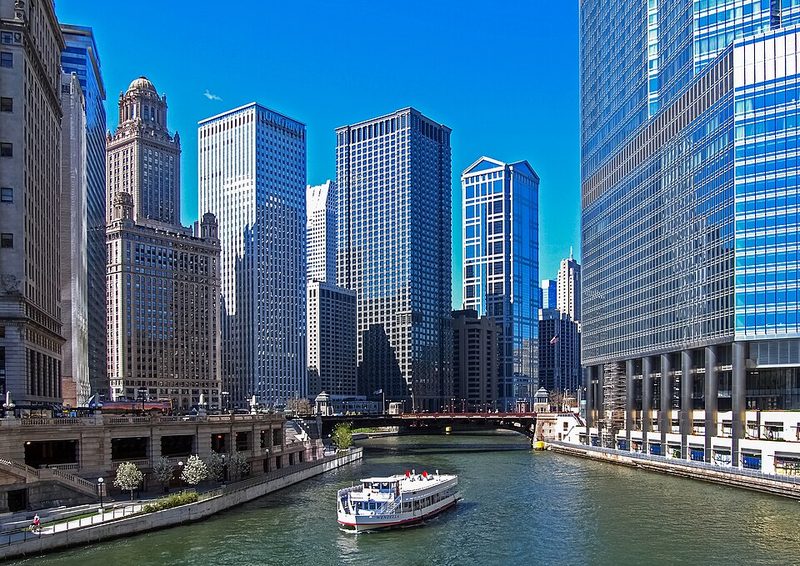
The city is divided into 77 distinct neighbourhoods, each with its own history and character. Architecture forms a notable part of Chicago's identity, particularly the steel-frame skyscrapers that emerged in the late 19th and early 20th centuries. The Chicago Architecture Center offers over 85 walking, bus, and boat tours, including river cruises that trace the development of the skyline from the 1890s to the present. The Architecture Center also operates a Building Tall exhibit in its Skyscraper Gallery.
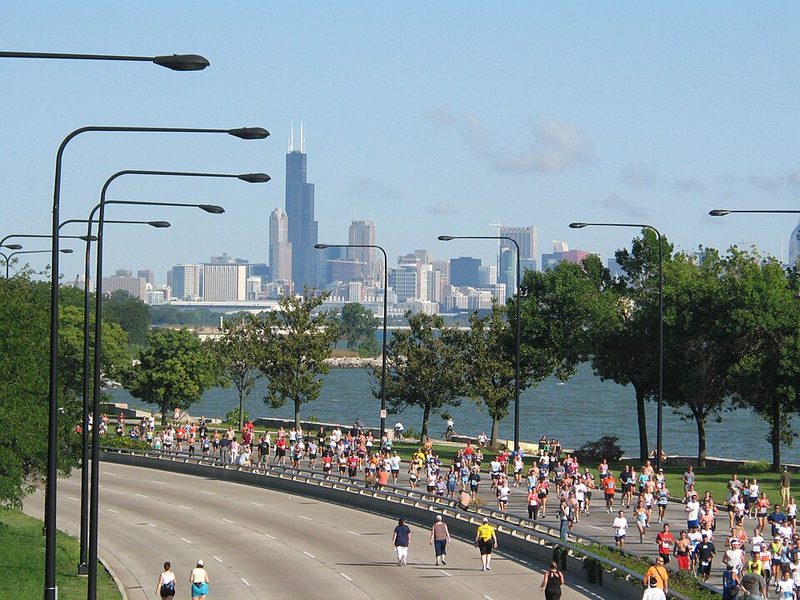
The lakefront remains accessible and visible throughout much of the city. Navy Pier, originally opened in 1916 as a shipping and recreation facility, now spans over 50 acres with restaurants, attractions, retail, and a 15-storey Ferris wheel. Millennium Park provides public green space in the downtown area. The city maintains several beaches along the lakefront, including Ohio Street Beach near Navy Pier.
Food and Local Specialities
Deep-dish pizza originated in Chicago in 1943 when restaurateurs Ike Sewell and Ric Riccardo created the style at Pizzeria Uno on Ohio Street. According to local accounts, Sewell wanted to create something distinct from the food being served in Chicago's Little Italy. The pizza features a thick buttery crust with cheese, toppings, and tomato sauce layered in reverse order from thin-crust preparations. Other local specialities include Chicago-style hot dogs, Italian beef sandwiches, tavern-style thin-crust pizza, jibaritos, Maxwell Street Polish dogs, pizza puffs, and Chicago Mix popcorn.
Music Heritage
Chicago developed a distinctive blues sound in the mid-20th century, when musicians including Muddy Waters, Howlin' Wolf, and Willie Dixon performed at venues across the south and west sides. The Checkerboard Lounge in Bronzeville and the outdoor Maxwell Street Market became centres of the Chicago blues scene. The American Folklife Center's Chicago Ethnic Arts Project Collection documents African American blues and jazz musicians, singers, and venues from this period. Jazz and blues venues continue to operate across the city, though visitors should verify current operations and locations.
Cultural Institutions
The Chicago Theatre, built in 1921, is a 3,600-seat performing arts venue hosting stage plays, comedy, concerts, and other performances. The city holds the James Beard Awards annually. The Obama Presidential Center operates as a visitor attraction. Jackson Park, located in Hyde Park, was the site of the 1893 Chicago World's Fair and includes a Japanese Garden. The Field Museum operates on the Museum Campus along the lakefront.
Practical Considerations
Chicago functions as a major transportation hub for the interior of North America. Specific details on airport access, rail connections, and local public transportation should be verified through official sources before travel. The city is organised into a grid system that makes navigation relatively straightforward once the basic layout is understood.
The United States maintains no specific regional travel restrictions for Chicago or Illinois. The UK Foreign & Commonwealth Office lists normal precautions for travel to the United States as a whole. Visitors should consult current official travel advisories before departure. Those planning to visit during the 2026 FIFA World Cup (11 June to 19 July) should expect that major event logistics may affect accommodation availability and local transport during that period.
Millennium Park and Cloud Gate (The Bean)
Millennium Park opened in 2004 on 24.5 acres of former rail yards in the Loop, becoming one of Chicago's most visited public spaces. The park's signature attraction, Anish Kapoor's Cloud Gate—universally called "The Bean"—is a 110-ton mirror-polished stainless steel sculpture that reflects and distorts the skyline and surrounding environment. The 33-foot-high elliptical form creates unusual visual and acoustic effects, particularly in its concave underside chamber.
The park also features Frank Gehry's Jay Pritzker Pavilion, which hosts free summer concerts, and the Crown Fountain, where video faces project on 50-foot glass towers with water features. The Lurie Garden offers a quieter prairie-inspired landscape at the park's southern edge. The park operates year-round with seasonal ice skating from November through March, weather permitting, and connects to other Loop attractions including the Art Institute of Chicago across Monroe Street.
Read the full Millennium Park and Cloud Gate (The Bean) guide
Sources: Millennium Park - Wikipedia • What is the Bean in Chicago? Cloud Gate Name, Meaning & Location • Cloud Gate - Wikipedia
Chicago Neighbourhoods: Where to Stay and Explore
Chicago divides into 77 officially designated community areas, each with distinct character shaped by immigration patterns, industrial history, and urban development over the past 175 years. The city's neighbourhood structure reflects waves of European, African American, Hispanic, and Asian settlement, creating a patchwork of identities that extends far beyond the downtown core. For visitors, understanding these districts helps with both accommodation decisions and exploring beyond the standard tourist circuit.
Chicago Architecture and Skyscrapers
Chicago's architectural significance stems from its post-1871 fire rebuilding, which coincided with steel-frame construction innovations that made skyscrapers technically and economically viable. The city pioneered tall building design through what became known as the Chicago School, characterized by steel frames, large windows, and functional expression. Architects including Louis Sullivan and Daniel Burnham created early skyscrapers in the 1880s-1890s that established Chicago's reputation for distinctive commercial architecture.
The Chicago Architecture Center operates over 85 tours including river cruises that examine buildings lining the Chicago River and downtown waterways. These boat tours, running spring through autumn, provide perspective on facade details and the density of historically significant buildings. The Center also offers walking tours focused on Art Deco 1920s skyscrapers, the underground Pedway tunnel system, and thematic architectural tours. Visitors should book popular river cruises in advance during summer months and verify seasonal schedules before arrival.
Sources: Chicago Architecture Center • Chicago Architecture Center River Cruise • Chicago School (architecture) - Wikipedia
Chicago Blues and Jazz Heritage
Chicago developed into a centre for blues and jazz music through migration patterns and urban geography that created conditions for musical innovation in the early and mid-20th century. The Great Migration brought hundreds of thousands of African Americans from the rural South to northern industrial cities between roughly 1916 and 1970, with Chicago receiving one of the largest concentrations. Southern musicians brought acoustic Delta blues traditions that transformed in the urban environment, amplified by electricity and adapted to the sound requirements of clubs and bars on the city's South and West Sides.
Sources: Chicago Blues: History, Festival & Venues Guide • Chicago Blues - Wikipedia • Historic Locations - ChiBlues • Chicago Blues and Jazz - Library of Congress
Chicago Deep-Dish Pizza
Deep-dish pizza emerged as a Chicago specialty in 1943 when restaurateurs Ike Sewell and Ric Riccardo opened Pizzeria Uno on Ohio Street. According to search results, Sewell, originally from Texas, "wanted to create something big and different from the food being served in Chicago's Little Italy." The result was a pizza with a thick, buttery crust pressed up the sides of a deep pan, layered with cheese directly on the dough, topped with meat and vegetables, and finished with a chunky tomato sauce on top—an inverted structure compared to thin-crust Neapolitan pizza.
Sources: 12 Restaurants In Chicago For The Best Deep Dish Pizza • Chicago's Best Deep-Dish Pizza Restaurants