In This Guide
Read the guide as a story
Thurber's Staircase: A Columbus Ghost Walk
Quick Answer
Columbus is Ohio's state capital and largest city, a genuinely livable Midwestern metropolis with a compact, walkable downtown, a strong university presence, a growing arts and food scene, and more green space than most first-time visitors expect. Families, culture-seekers, food lovers and walkers all find something here; the city is less obviously visitor-orientated than some American cities its size, which is part of its appeal. The UK Foreign, Commonwealth and Development Office currently advises normal precautions for travel to the United States, with no specific warnings affecting Columbus or Ohio. Standard US entry requirements, including ESTA for eligible nationalities, apply.
First Impressions and Setting
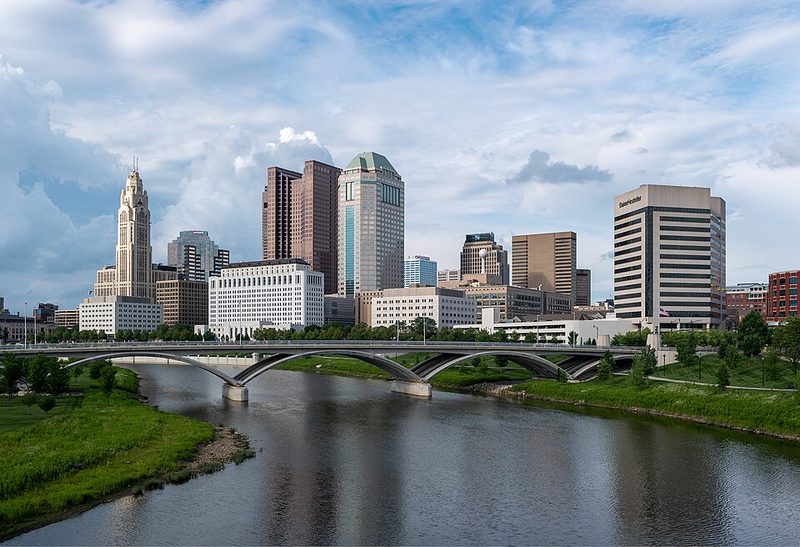
Crossing the Main Street Bridge over the Scioto River gives a useful first orientation: a mid-rise skyline reflected on the water, the Ohio Statehouse dome visible above the rooftops, and a ribbon of riverfront greenery threading through the urban core. Columbus earns its reputation quietly, through good food, energetic neighbourhoods, and the steady confidence of a place that has been growing for decades. Sitting at around 242 metres above sea level in central Ohio, the city occupies gently rolling terrain — close enough to wooded river valleys to give its parks genuine character, far enough from mountains or coastlines to feel unambiguously Midwestern. The city's administrative footprint extends into Delaware and Fairfield counties, encompassing around 2.23 square miles of annexed territory beyond its Franklin County core, a reflection of the sustained growth that has made it Ohio's most populous city, now home to more than 900,000 residents within the city limits, with a wider metropolitan area of roughly two million people.
History, Identity and Character
Columbus was formally founded in 1812 and designated Ohio's state capital in 1816, a deliberately central choice by legislators who wanted a capital belonging geographically to the whole state rather than to any dominant regional faction. The site had earlier European-American roots: the settlement of Franklinton was established in 1797 on the west bank of the Scioto, and the deliberate location at Ohio's geographic centre made it a natural candidate for the state capital when legislators debated the question in the early nineteenth century. The National Road arrived in 1836, and the Ohio and Erie Canal opened in 1831, both helping to integrate Columbus into the broader network of commerce moving through the young state; the first railway reached Columbus in 1850, accelerating the city's growth further. The Columbus Buggy Company operated here during the late nineteenth century as one of the city's significant industrial enterprises, and the city's manufacturing heritage — alongside government and education — shaped its character through the industrial era. The Statehouse itself — a Greek Revival landmark on Capitol Square — took decades to complete and remains one of the more distinctive capitol buildings in the country: low, wide, and self-assured rather than ostentatiously tall. The city grew through the nineteenth and twentieth centuries as a centre of government, commerce, and education, anchored by Ohio State University, founded in 1870 and one of the largest universities in the United States. The Civic Center Historic District along the riverfront preserves some of this institutional heritage, with historical markers connecting Columbus's urban development to its river geography.
The city's cultural identity has been shaped by its diverse communities. German Village, south of downtown, is one of the largest privately funded historic preservation districts in the United States, its brick streets and restored nineteenth-century architecture making it a genuinely distinctive neighbourhood. Writer Wil Haygood, whose work has reached national audiences and has been recognised by the National Endowment for the Arts, is a Columbus figure — a reminder that the city has produced literary voices alongside its institutional achievements. Author and cartoonist James Thurber lived at 77 Jefferson Street in Columbus in 1915; the Thurber House, now a literary centre, connects the city to one of American literature's most distinctive comic voices.
Neighbourhoods and Daily Life
What makes Columbus work as a visitor destination is the combination of institutional anchors and genuine neighbourhood energy. State government, higher education, healthcare, and finance provide a stable economic backbone — no single industry holds more than around 18 percent of the city's employment, a diversity that has historically buffered Columbus against economic downturns. The city's daily texture comes from its districts. The Short North arts district, running north from downtown, is the city's most visitor-friendly concentration of galleries, independent businesses, live music venues, and restaurants. Its monthly Gallery Hop draws art enthusiasts and casual visitors alike on the first Saturday of each month. German Village offers a contrasting mood: quieter streets, biergartens, Schmidt's Restaurant as a long-standing local institution, and a residential scale that rewards a slower afternoon. The Ohio State University campus brings a permanent population of students, researchers, and academics who keep the city intellectually active.
Columbus has a documented local music and festival scene. The annual Jazz and Rib Fest, held in the summer on the downtown riverfront, has a long history as one of the city's major outdoor events. ComFest, held in Goodale Park in late June, features local bands, community workshops, and what organisers describe as one of the city's most community-focused annual gatherings. The city's food culture has developed substantially in recent years: the North Market is an established indoor market operating with over 30 independent vendors under one roof, making it a reliable stop for locally produced food and craft goods, and Columbus Food Adventures runs guided tours around the city's culinary heritage. Jeni's Splendid Ice Creams, a nationally known brand, has its roots in Columbus.
What Visitors Notice
Downtown Columbus is denser than many Midwestern cities its size without feeling overwhelming. Capitol Square sits at the heart of the urban grid, the Statehouse grounds providing a genuine public space where office workers and visitors share the same benches. A short walk from the square, the riverfront opens up. Battelle Riverfront Park and Genoa Park sit along the Scioto, offering views back toward the skyline that reward an early morning or late afternoon walk. The National Veterans Memorial and Museum, on the Scioto Mile, is described in visitor sources as a notable downtown attraction worth planning time for. Franklin Park Conservatory is another frequently mentioned option for families and visitors with an interest in botanical collections.
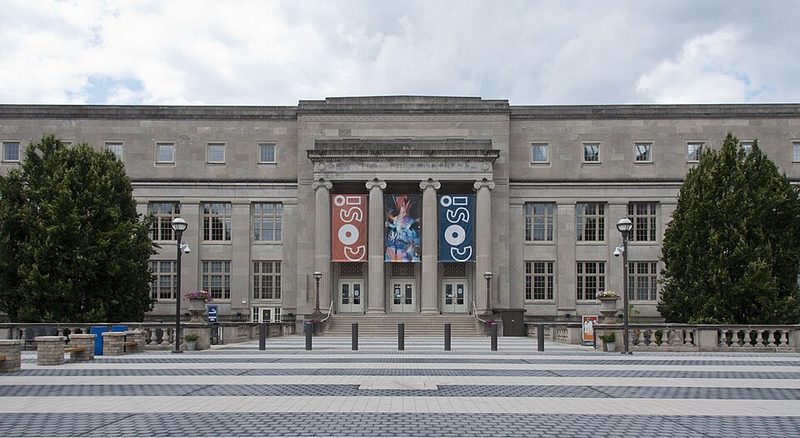
Children's Park and Maynard-Summit Park add neighbourhood-scale green space within easy reach of the centre, and Franklin Commons provides another point of rest along the river corridor. The Franklinton neighbourhood, west of the Scioto, is worth noting for visitors interested in public art: it features over 300 murals concentrated across its streets, one of the more striking examples of community-scale public art in the Midwest. Hayden Falls, in the northwest of the city, is a waterfall destination that locals treat as a genuine natural escape within city limits — a less expected feature for visitors who assume Ohio's landscape is uniformly flat. The overall feel of the parks network is of a city that has invested in its outdoor spaces. COSI — the Columbus science centre — is consistently recommended in visitor sources for families, particularly for rainy days or visits with children.
For visitors interested in local history at street level, the Columbus Landmarks Foundation runs walking and bus tours showcasing the city's historic sites and buildings; checking their current schedule before visiting is worthwhile. Self-guided mural and public art walks are also available through app-guided routes in the Short North and downtown areas.
Seasonal Notes
Columbus has a full continental climate. Summers are warm and busy: the festival calendar fills June, July, and August, and visitor pressure around Ohio State University events — particularly American football Saturdays at Ohio Stadium — can significantly affect accommodation availability and downtown crowds. Spring and autumn offer more moderate weather and a calmer pace, though spring can bring significant rainfall. Winters are cold, with snow and ice a real possibility from December through February; outdoor parks and riverfront areas are less inviting in these months, and visitors should check travel conditions if arriving by road. The city's indoor offer — museums, galleries, food halls, the conservatory — makes off-season visits practical for the right traveller.
Getting There and Around
Columbus is served by John Glenn Columbus International Airport, located east of downtown, which handles domestic connections and a selection of international routes. Interstate highways connect the city to Cleveland to the north, Cincinnati to the southwest, and Pittsburgh to the east, making it a practical road-trip base for exploring central Ohio and the wider region. Columbus does not currently have an Amtrak station, so intercity public transport planning usually depends on coach services, airport arrivals, or onward travel from other Ohio rail cities.
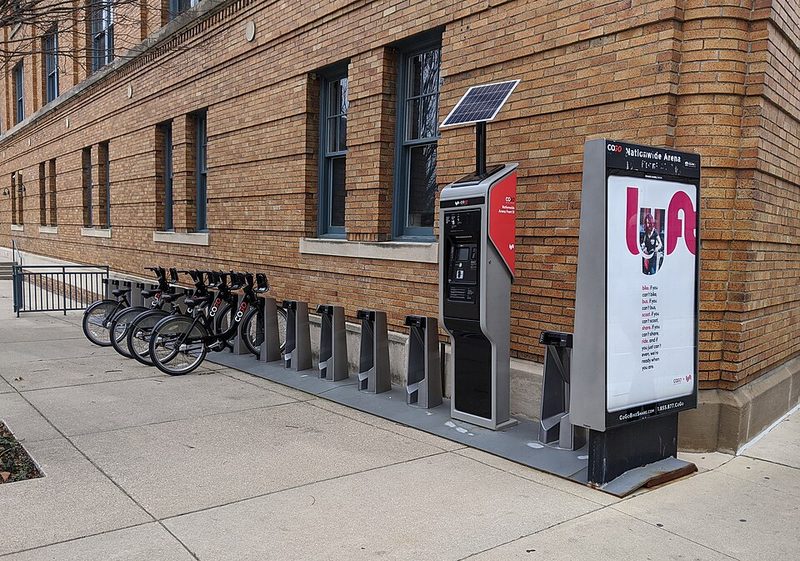
Within the city, the Central Ohio Transit Authority (COTA) operates the public bus network. Route 38 and route 2945 are among the COTA services identified in transport research, serving corridors including Broad Street, Colonial Drive, and outer suburban stops. The CoGo bike-share scheme operates in the downtown and Short North areas, providing a practical option for shorter trips between the riverfront, Capitol Square, and adjacent neighbourhoods. Ride-share services are available across the city. Columbus does not have a rail metro system; visitors planning to move between neighbourhoods beyond the walkable core should plan around COTA routes, CoGo bikes, or ride-share. Car-free visitors will find the downtown, Short North, and German Village most accessible on foot and by bike; outer attractions including Hayden Falls and the airport require onward transport planning.
Practical Notes
Columbus operates on Eastern Time, observing daylight saving in line with the rest of Ohio. Grant Medical Center is located in the downtown area. The city has all standard visitor services including pharmacies and international banking. Visitor sentiment toward Columbus is consistently positive, with particular appreciation for the combination of urban amenities and accessible green space. Accommodation is most constrained during Ohio State football weekends and major summer festivals; booking ahead for these periods is advisable.