

What Dallas is known for
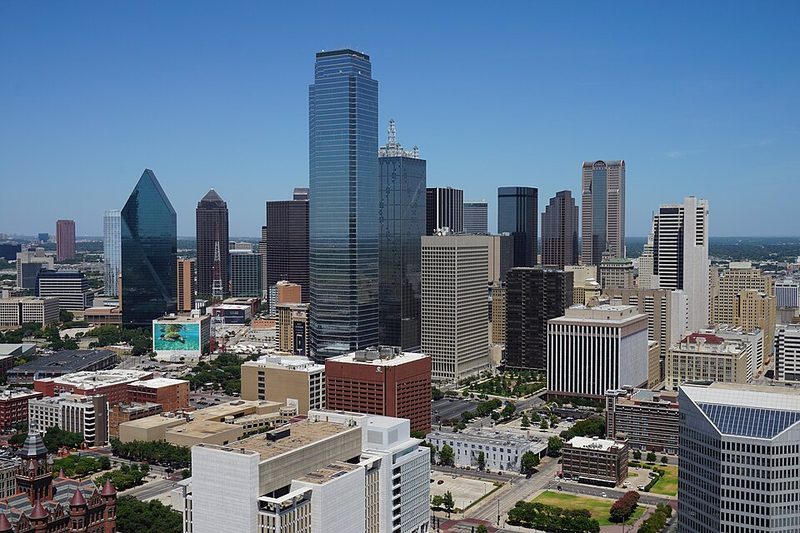
Dallas spreads across nearly 400 square miles on the flat Blackland Prairie where two branches of the Trinity River meet, in the heart of North Texas. The city ranks as the ninth-largest in the United States, with a population of 1.3 million, and anchors the Dallas–Fort Worth metroplex—the fourth-largest metropolitan area in the nation. The terrain sits at 139 metres above sea level, and the defining characteristic is the openness: long, straight streets and wide avenues laid out on a grid that extends in most directions without obstruction. This is a working city built on commerce, finance, and transport, a role it has held since the railways intersected here in the 1870s.
Setting and First Impressions
The site John Neely Bryan chose in November 1841 sat at the intersection of two major Indian trading routes and offered a natural ford where the Trinity River could be crossed. When the Texas Republic granted town status in 1856 and the city incorporated in 1871, Dallas was already positioning itself as a hub. The name's origin remains uncertain—candidates include Vice President George Mifflin Dallas, a naval officer named Commodore Alexander J. Dallas, or a man named Joseph Dallas—but the identity stuck.
What transformed Dallas from a frontier post into a major city was infrastructure and timing. Two major railway lines intersected here in the 1870s, making the city a crucial hub for freight, passengers, and commerce. By the early twentieth century, Dallas had become one of the world's largest cotton markets and a centre for banking and insurance. The discovery of oil deposits in East Texas in 1930 completed the transformation, earning Dallas the nickname "City of Dreams" in those decades. Today the city hosts numerous Fortune 500 companies, and banking, insurance, and corporate headquarters remain central to how Dallas functions.
The Kennedy Assassination and Dealey Plaza
The Sixth Floor Museum at Dealey Plaza, located in the former Texas School Book Depository building at 411 Elm Street in downtown Dallas, chronicles the assassination and legacy of President John F. Kennedy. The museum opened on 20 February 1989 and occupies the sixth floor of what is now the Dallas County Administration Building, overlooking Dealey Plaza at the intersection of Elm and Houston Streets. The main exhibit, "John F. Kennedy and the Memory of a Nation", examines the events of 22 November 1963 and their aftermath. This remains one of the city's most visited sites and defines much of how the wider world perceives Dallas, for better or worse.
Museums and Cultural Institutions
Dallas maintains a range of museums that reflect the city's scale and ambitions. The Perot Museum of Nature and Science, the African American Museum, the Dallas Museum of Art, the Nasher Sculpture Center, and the Crow Museum of Asian Art all operate in the city. The sources mention MICHELIN Guide restaurants in Dallas, indicating a food scene of depth beyond the expected barbecue and Tex-Mex offerings. Fair Park, site of the annual State Fair of Texas, hosts cultural exhibits, concerts, and events including the MLK Juneteenth Festival.
Neighbourhoods and Districts
Several districts have developed distinct characters. Deep Ellum, east of downtown, has a history connected to Dallas music and live performance venues such as The Kessler Theater. Bishop Arts, Lower Greenville, and Trinity Groves are mentioned in local discussions as areas with restaurants and nightlife. The city's considerable size—400 square miles—means distances between neighbourhoods are real, and visitors should plan transport accordingly.
Food Culture
The regional food culture reflects Dallas's position in North Texas and its history. Barbecue, Tex-Mex, tacos, and steakhouses all have presence. Recent developments include restaurants such as Los Charros Tex-Mex Smokehouse near Southern Methodist University, which combines Tex-Mex and Texas barbecue traditions. The Dallas Tortilla and Tamale Factory has operated for more than 70 years. Mi Cocina represents Tex-Mex dining, while barbecue establishments include Cattleack and others across the metroplex.
Parks and Outdoor Spaces
In a landscape otherwise dominated by the built environment and open prairie, several parks and water features provide outdoor recreation. White Rock Lake, Lake Ray Hubbard, and other reservoirs supply water for the city and offer access to the outdoors. Fair Park, Klyde Warren Park, and the Katy Trail represent investments in green space. The Dallas Arboretum operates on the eastern shore of White Rock Lake and is noted for seasonal displays, particularly in spring.
Transport and Access
Dallas–Fort Worth International Airport, located roughly sixteen miles northwest of downtown, serves the entire metro region and connects Dallas to national and international networks. The city's role as a transport hub dates to the railway era and continues today. Visitors should check current information on local transit, bus terminals, and taxi services to understand specific options operating at the time of travel. The city's size and sprawl make advance transport planning necessary.
Regional Context
The University of Texas at Dallas operates in nearby Richardson to the north, initially founded in 1961 as a research arm of Texas Instruments. Fort Worth lies to the west, forming the other anchor of the metroplex. The wider Dallas–Fort Worth region functions as the economic and cultural hub of North Texas, with Dallas serving as the core.
Practical Notes
Dallas draws visitors for business and leisure year-round. The region will host FIFA World Cup 2026 matches, which may affect travel planning for that period. Current travel advice for the United States recommends normal precautions; visitors should check official travel advisories before departure.