


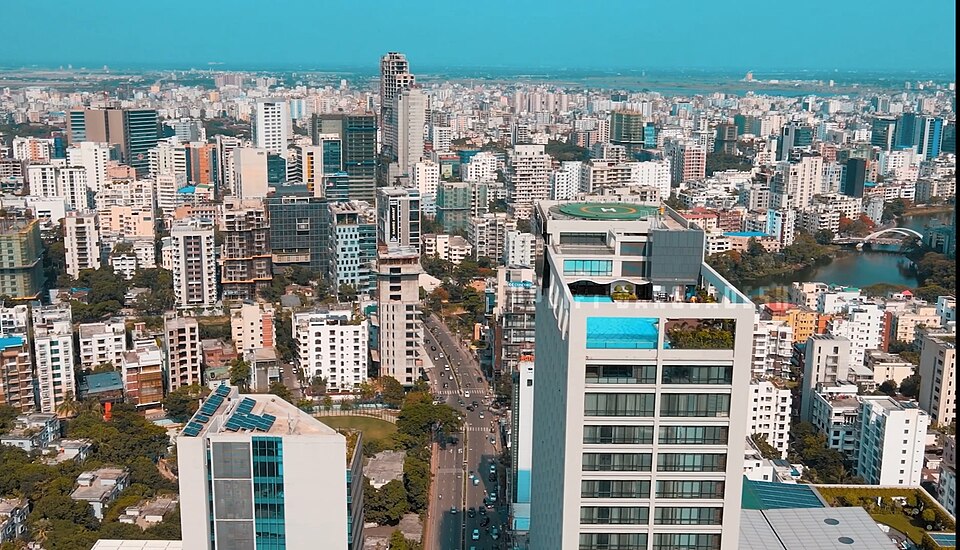
Official Travel Advisory and Current Safety Context
The United States maintains a Level 3 "Reconsider Travel" advisory for Bangladesh, citing terrorism, kidnapping, and civil unrest as primary concerns. The UK Foreign, Commonwealth and Development Office advises against all but essential travel to the Chittagong Hill Tracts—the districts of Rangamati, Khagrachari, and Bandarban. The Hill Tracts are designated Level 4 "Do Not Travel" by the US. Both governments identify terrorism and separatist group activity, documented incidents of improvised explosive devices, and kidnapping risks as the basis for these restrictions. Dhaka itself, as the national capital and largest city, is not subject to a blanket "Do Not Travel" order, but the broader countrywide advisory applies to the settlement.
Official sources note that unrest and violence decreased following the formation of an interim government in summer 2024, though occasional protests continue with the potential to turn violent without warning. Seasonal flooding presents an additional hazard, particularly during the pre-monsoon period and monsoon season. Conditions in Bangladesh can change on short notice. Anyone planning travel to Dhaka should consult current official travel advisories from their government before departure.
Recent History and Local Context
Dhaka has experienced substantial political and social turbulence in recent decades. The city was the seat of government for East Pakistan following the 1947 partition of India and became capital of independent Bangladesh in 1972 after the Bangladesh Liberation War. It has since witnessed multiple periods of martial law, widespread civil unrest, military operations, and natural disasters including cyclones and flooding. The cumulative effect has shaped urban governance, infrastructure investment, and the city's relationship with the state and public order.
This historical context remains relevant to understanding current conditions and official risk assessments. Recent civil unrest in 2024 underscored the continued potential for political volatility and street-level disruption in the capital.
Historical Background
Dhaka's documented history extends to the Mughal period, when it was known as Jahangir Nagar and served as a provincial capital and major centre of the worldwide muslin trade. The city's character during the seventeenth and eighteenth centuries reflected its role as an economic hub of eastern South Asia.
The modern city developed chiefly during the nineteenth century under British colonial rule, when Dhaka became the second-largest city in Bengal after Calcutta. Dhaka District was formally established in 1772. The urban layout, architecture, and administrative institutions that define central Dhaka bear the imprint of this colonial period.
Geography and Regional Role
Dhaka occupies the Ganges Delta, bounded by the Buriganga, Turag, Dhaleshwari, and Shitalakshya rivers. The city sits at approximately 23 metres above sea level. Its location on major river systems has historically enabled trade and remains central to its infrastructure and vulnerability to seasonal flooding.
The city proper covers 815.85 square kilometres, with a district area of 1463.6 square kilometres. The city occupies roughly one-fifth of the district area but functions as the economic, political, and cultural centre for the entire region. Greater Dhaka extends beyond the city corporation boundaries into neighbouring districts, forming a conurbation that includes industrial areas in nearby Gazipur, approximately 25 kilometres north, which serves as a major textile and garment manufacturing hub.
Dhaka is the largest Bengali-speaking city in the world and ranks fourth in South Asia and 55th globally by GDP. It serves as the primary centre of commercial, industrial, educational, and cultural activity for Bangladesh. The city hosts the University of Dhaka, founded in 1921 and the oldest active university in the country, as well as the national stock market and numerous trade and business associations.
Daily Life and Local Context
The settlement is characterised by high population density—approximately 34,000 per square kilometre in the city proper—and intensive street-level activity. The available sources indicate the presence of more than 400,000 rickshaws operating within the city, a form of transport central to daily mobility. Rickshaw art is noted as a distinctive cultural feature.
Dhaka supports active literary, music, publishing, and media sectors. Textile traditions and distinctive architectural heritage are documented parts of the city's identity. Notable heritage sites recorded in local sources include the Star Mosque, Dhakeshwari Temple, Lalbagh Fort, and Ahsan Manzil Palace Museum, though opening hours, access conditions, and current operational status should be verified locally.
The city functions as a major industrial centre beyond the textile sector. The automotive industry in Bangladesh is significant in South Asian terms, with Dhaka as one of its centres. Multiple central business districts and designated industrial areas support manufacturing, trade, and services.
Practical Notes
Dhaka has scheduled air and rail connections to other parts of Bangladesh and the region. Specific current transport schedules, routes, and connections should be verified locally or through official transport authorities.
Visitors should check current official travel advisories from their government before departure. Internet access to official resources may be limited in some circumstances, so advance preparation is important. Local authorities and national government offices can provide current guidance on transport, accommodation, and security conditions.
Weather patterns, flooding risk, and political conditions can change rapidly. Those present in Dhaka should monitor local news and official government communications and follow instructions from local authorities without delay if conditions deteriorate.