Image: Wikipedia / Wikimedia Commons
Image: Wikipedia / Wikimedia Commons
# Freetown, Western Area, Sierra Leone: A Traveler's and Local's Guide
Freetown is West Africa's most vibrant and consequential port cities, a sprawling, energetic capital that serves as Sierra Leone's beating heart. Perched on a peninsula jutting into the Atlantic Ocean, this city of over 800,000 people pulses with the rhythm of commerce, culture, and the determined spirit of a nation rebuilding itself. From its colonial architecture to its bustling markets and dramatic hillside setting, Freetown offers visitors and residents alike a complex, rewarding glimpse into contemporary West African urban life.
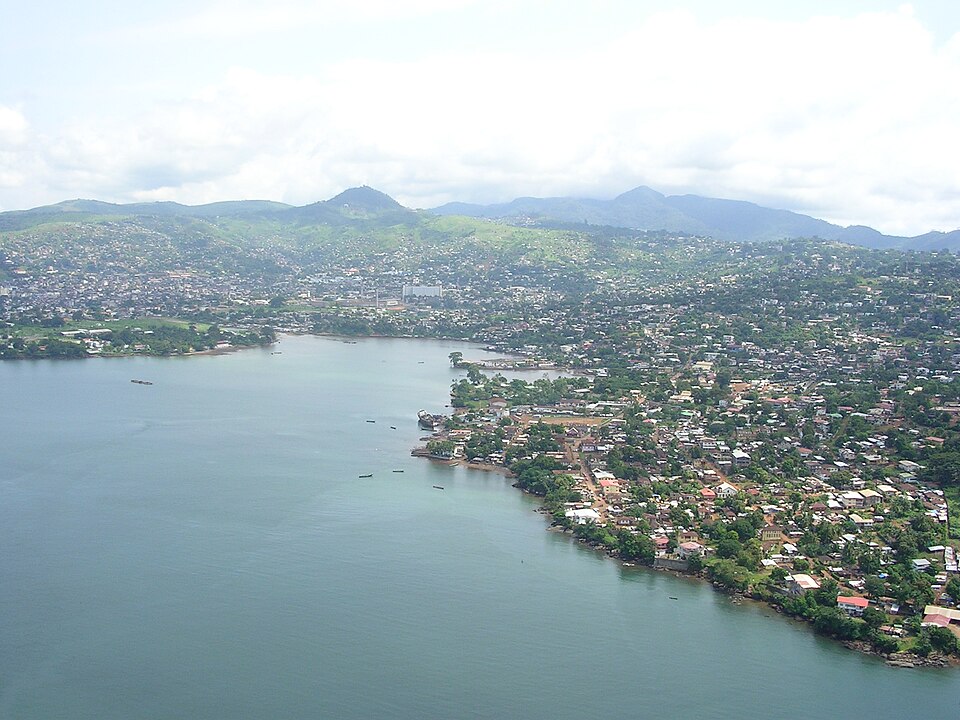
Freetown occupies a strategic position on the coast of Western Area, Sierra Leone's smallest geographic region but its most densely populated. The city sits at 38 meters above sea level and sprawls across a hilly peninsula that extends into the Atlantic, giving it a naturally dramatic topography that defines both its character and its challenges. The coordinates 8.48714N, -13.2356E place the city firmly in West Africa's tropical climate zone, where warm, humid conditions prevail year-round, with a pronounced rainy season from May through October.
The city's geography has shaped its entire history and development. The peninsula limits expansion in certain directions, channeling growth inland and upward into the surrounding hills. This creates distinct neighborhoods, each with its own character—from the low-lying downtown commercial core near the harbor to the residential areas climbing into higher elevations. The natural harbor that made Freetown attractive to early colonial traders remains one of the deepest natural anchorages in West Africa, cementing its role as a major international port.
Freetown's origins are inseparable from the history of enslaved Africans and the abolitionist movement. Founded in 1787 as a settlement for freed slaves and poor Black people from London, the city became a haven for formerly enslaved people from across the Atlantic world. This distinctive founding—as a planned settlement for Black British subjects and liberated Africans—gave Freetown a unique character among West African cities and left an architectural and cultural imprint that remains visible today.
The city's older quarters preserve evidence of this heritage in their building styles, street layouts, and names. Freetown was the capital of the British Sierra Leone colony and remained so after independence in 1961, establishing it as the natural seat of government for the modern nation. The city endured significant hardship during the civil war that lasted from 1991 to 2002, but residents and government have invested in rebuilding and renewal. Today's Freetown reflects both this complex history and a forward-looking energy as the city continues to develop and modernize while honoring its past.
Freetown's attractions are primarily rooted in its natural setting, cultural institutions, and urban character rather than in formal tourist sites. The city's hillside neighborhoods reward walking and exploration, offering changing vistas of the harbor, the Atlantic coast, and the surrounding landscape. Several locations provide vantage points across the city and bay, making them popular for both residents and visitors seeking perspective on the urban panorama.
The waterfront and harbor area form the commercial and social heart of the city. The busy port and fish markets reflect Freetown's ongoing dependence on the ocean, and the energy here—the boats, the traders, the constant activity—captures something essential about how this city functions. Beyond the downtown core, markets throughout the city showcase local commerce, crafts, and food culture. For those interested in understanding Sierra Leone's recent history and heritage, several museums and cultural sites operate in the city, though hours and access can be variable, so asking locally for current information is advisable. The surrounding hills and outlying areas offer opportunities for nature-focused activities, and the beaches accessible from the city provide respite from urban intensity.
International travelers typically arrive at Lungi International Airport, located across the harbor from Freetown. Access to the city from the airport requires either a ferry crossing, a bridge route through the peninsula, or helicopter service—options that vary in convenience and cost depending on travel preferences and current conditions. Within the city itself, transportation options include shared taxis, motorcycle taxis, and private hire vehicles. The hilly terrain and dense urban development mean that traffic can be congested, especially during peak hours. Walking remains a practical way to navigate individual neighborhoods, though the elevation changes and climate require appropriate footwear and hydration.
Freetown is fundamentally a working city. The port dominates much of the local economy, supporting fishing industries, import-export businesses, and maritime services. Government employment is significant, as the city hosts all the major administrative functions of the state. Beyond these formal sectors, countless small businesses, markets, and informal trading operations employ residents and form the backbone of daily commerce. The city attracts rural migrants seeking economic opportunity, university students pursuing education, and entrepreneurs launching ventures.
For residents, Freetown is both opportunity and challenge. Access to services, infrastructure, employment, and education draws people to the city, but rapid growth has strained utilities and housing. Family networks, community organizations, and religious institutions provide social cohesion and support. The city's character reflects both optimism about Sierra Leone's future and the practical realities of building and maintaining urban life in a developing economy.
Freetown's population stands at 802,639 according to verified recent counts, though larger metropolitan estimates exist. The city operates on Africa/Freetown timezone. At 38 meters elevation, Freetown experiences a tropical Atlantic climate with significant rainfall during the monsoon season. Visitors and residents should prepare for heat, humidity, and seasonal rain while planning activities and travel accordingly.
View larger map — © OpenStreetMap contributors
Flight delayed or cancelled?
You could be owed up to €600 compensation. Check your eligibility for free.Do you know Freetown, Western Area?
Share local tips, recommend a hotel, list a business or add a photo.
✏️ Share your knowledge about Freetown, Western AreaDo you know Freetown, Western Area?
Share local tips, recommend a hotel, list a business or add a photo.
✏️ Share your knowledge about Freetown, Western Area