




What Guadalajara is known for
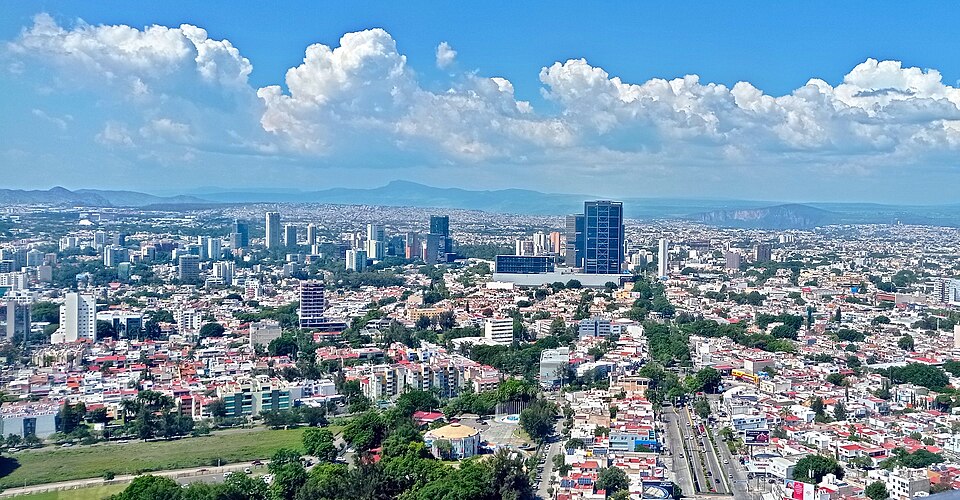
Mexico's second-largest city functions as the birthplace of mariachi music, the commercial heart of tequila production, and a place where colonial architecture shares space with a growing technology sector. Guadalajara sits in a high valley in western Mexico at roughly 1,566 metres elevation, giving it a temperate climate year-round. The metropolitan area exceeds 5 million residents across multiple municipalities, making this the country's third-largest urban zone, whilst the city proper holds 1,385,629 people at a density of over 10,000 per square kilometre—Mexico's second-densest city after the capital.
What distinguishes Guadalajara from other major Mexican cities is its documented role in shaping national cultural identity. This isn't invented heritage: mariachi music developed here from regional folk traditions into the ensemble format recognised worldwide, the surrounding Jalisco region produces the majority of Mexico's tequila, and charrerÃa—Mexican competitive horsemanship—has deep roots in local ranching culture. Visitors encounter these elements as functioning parts of city life rather than staged attractions.
Arrival and Layout
The city spreads across a wide valley with the historic centre anchored by Guadalajara Cathedral and a series of connected plazas. Colonial-era buildings, baroque churches, and modernist structures occupy the same blocks without particular hierarchy, creating an architectural layering that reflects continuous occupation over more than 480 years. Public spaces remain actively used rather than purely monumental—plazas fill with residents moving between shops, offices and cafes throughout the day.
Guadalajara functions as a working economic centre rather than a purpose-built tourist destination. The University of Guadalajara, formally established in 1791 (with institutional roots to 1586), remains one of Mexico's leading research universities and shapes the city's intellectual character. The technology sector has grown significantly, earning the city recognition as a nationally important hub for manufacturing, software development and business services.
Historical Foundations
The city's identity rests on a hybrid foundation of indigenous settlement and Spanish colonial administration. Over more than four centuries, Guadalajara developed into a major regional capital, serving as an administrative, commercial and cultural centre for western Mexico. The colonial period left a substantial architectural legacy, visible in religious buildings, civic structures and residential zones throughout the historic core.
Guadalajara's contribution to Mexican cultural identity became particularly pronounced in the 19th and 20th centuries. Mariachi music professionalized here, with musicians organizing into ensembles and performing at public events, fairs and celebrations. The Plaza de los Mariachis, formally inaugurated in May 1962, occupies a site where mariachi bands had gathered since the early 20th century. Tequila production, centred in the Jalisco region surrounding the town of Tequila, made Guadalajara its commercial and distribution hub, tying the city's economy and identity to the spirit.
Main Landmarks and Cultural Sites
The Guadalajara Cathedral anchors the historic centre, serving as both religious site and architectural landmark. Nearby, the Teatro Degollado (Degollado Theatre) functions as a major cultural venue and example of 19th-century civic architecture. The Templo Expiatorio represents later Gothic Revival religious construction.
The Hospicio Cabañas, designated a UNESCO World Heritage site, holds particular significance. This former hospital and orphanage, built in the early 19th century, houses 57 murals by José Clemente Orozco, one of Mexico's most important muralists. The centrepiece, El hombre en llamas (Man of Fire), covers the chapel dome and represents the pinnacle of Orozco's work. The murals span Orozco's career and the complex now operates as the Museo Cabañas, with a collection of 340 pieces documenting his trajectory.
The San Juan de Dios Market, recognised as the largest indoor market in Latin America, functions as a working commercial space where residents shop for food, household goods and everyday items. The market reflects the city's scale and density rather than serving primarily as tourist attraction.
Living Culture and Annual Events
The Guadalajara International Film Festival, held each March, draws international participation and positions the city as a regional cultural centre beyond its historical legacy. Public murals and contemporary art installations appear throughout the city, continuing a tradition of public art that dates to the Mexican muralist movement.
The neighbouring municipalities of Tlaquepaque and Tonalá, now part of the greater metropolitan area, function as major centres for artisan production. Tlaquepaque specialises in blown glass, ceramics, textiles and metalwork, with numerous workshops and galleries concentrated in its historic centre. The Casa de las Artesanias complex houses dozens of shops selling handmade goods. Tonalá operates a large craft market on certain days of the week (typically Thursdays and Sundays), where hundreds of vendors sell ceramics, textiles, glassware and other locally produced crafts.
Transport and Access
Guadalajara maintains air connections to Mexico City, other major Mexican cities, and select international destinations. Ground transport includes extensive bus services linking the city to other parts of Mexico. Within the metropolitan area, transport options include buses, taxis and other standard urban services; specific routes and schedules should be verified locally.
The city's density makes walking practical in central areas, though the metropolitan zone's extent requires motorized transport for longer journeys. The street grid in the historic centre follows a colonial layout, whilst outlying areas reflect later suburban development patterns.
Practical Considerations
As a major Mexican city, Guadalajara offers a full range of services, accommodation options and dining. The city functions primarily for its resident population, which shapes both the authenticity of cultural experiences and the practical realities of navigating a large, busy urban environment. Visitors should research specific services according to their needs and preferences.
The surrounding Jalisco region, particularly the town of Tequila and its associated distilleries, connects directly to Guadalajara through organized tours and transport services. The Jose Cuervo Express train operates between Guadalajara and Tequila, combining transport with distillery tours, tastings and cultural presentations.