Image: Wikipedia / Wikimedia Commons
Image: Wikipedia / Wikimedia Commons
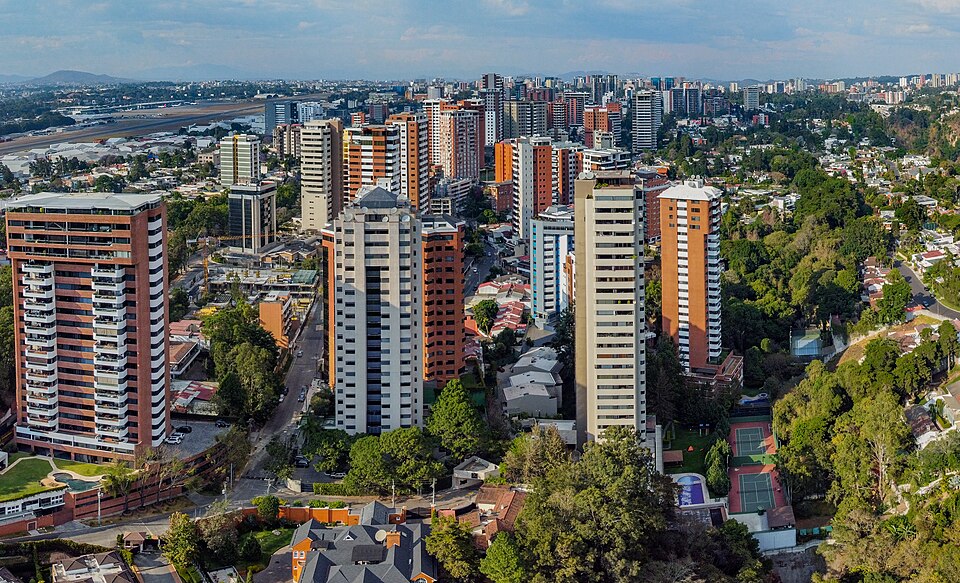
Guatemala City, affectionately known as "Guate" by locals, is the vibrant capital and largest city of the Republic of Guatemala. Perched high in the mountains of Central America, it serves as the cultural, political, and economic engine of the nation. The city's character reflects the layered complexity of Guatemala itself—a place where colonial heritage meets modern ambition, where indigenous traditions coexist with contemporary urban life, and where the challenges of rapid growth are met with resilience and creativity.
Guatemala City sits at an elevation of 1,508 meters above sea level in a mountain valley known as Valle de la Ermita, located in the south-central portion of the country. This high-altitude setting gives the city a temperate climate quite different from Guatemala's tropical lowlands, with cooler temperatures year-round that make it a comfortable place to visit. The geographical position—at coordinates 14.64072N, -90.51327E—places the city at the heart of Central America's largest metropolitan area, a sprawling urban zone that dominates the country's geography and infrastructure.
The surrounding valley topography has shaped Guatemala City's development for centuries. Ringed by volcanic peaks and mountains, the valley provides natural boundaries that have historically influenced settlement patterns and the city's relationship with the surrounding landscape. The elevation and mountain setting mean that visitors from lower altitudes should allow time to acclimate, as the thinner air can affect some travelers during their first day or two.
Guatemala City's history is one of relocations and reconstructions. The city was established in its current location in 1776 after the previous capital, Antigua Guatemala, was devastated by earthquakes. This relocation marked a significant moment in Guatemalan history—a decision to build anew in a different valley rather than rebuild in place. The Valle de la Ermita was chosen as the new site, and over the subsequent centuries, the city has grown into a major urban center.
The architectural and cultural legacy of this transition remains visible throughout the city. Colonial-era buildings stand alongside modernist structures and contemporary developments, creating a visual timeline of Guatemala's architectural evolution. The city bears the marks of its own seismic history as well, having experienced significant earthquakes since its founding, which has influenced building styles and urban planning decisions over time. These layers of history—from colonial foundations through republican development to modern growth—are woven into the fabric of neighborhoods and districts throughout Guatemala City.
Guatemala City offers visitors and residents alike a range of cultural and natural attractions. The city's museums and cultural institutions provide insight into Guatemalan history, indigenous heritage, and contemporary art. The surrounding valley landscape offers opportunities to experience the highland environment that characterizes this region of Central America. Many visitors use Guatemala City as a base for exploring the broader highland region, with day trips possible to nearby mountains, market towns, and cultural sites that showcase Guatemala's rich indigenous heritage.
The city itself contains neighborhoods with distinct characters—some known for commerce and tourism, others for residential or artistic communities. Walking through different areas reveals how Guatemala City functions as a living city rather than a museum piece. The urban environment reflects the energy and entrepreneurial spirit of its nearly one million residents, with markets, street vendors, and commercial districts bustling with activity. For those interested in experiencing authentic urban Guatemala, observing daily life in markets and public spaces provides genuine insight into how the city actually functions.
Guatemala City is the primary international gateway to the country, with direct flight connections to major cities throughout the Americas. The city's airport serves as the hub for most international travel to Guatemala. Domestic transportation radiates outward from the capital, with bus and other ground transport connections to destinations throughout the country. Within the city itself, various transportation options exist for navigating the urban area, though visitors should familiarize themselves with local conditions and traffic patterns before attempting to drive. Many travelers prefer using established transportation services rather than driving independently.
With a population of 994,938 people, Guatemala City represents a substantial concentration of Guatemala's population in a single urban center. The city is where government, finance, commerce, and industry cluster, making it essential to understanding how the country functions. For residents, the capital offers employment opportunities, educational institutions, and services that are concentrated here more than anywhere else in Guatemala. The economy of Guatemala City is diverse—spanning government work, retail and commerce, manufacturing, tourism, and service industries. The city's growth has been rapid, driven by rural-to-urban migration and the concentration of economic opportunity. This has created both dynamism and the social challenges typical of fast-growing cities in the developing world.
Guatemala City operates on America/Guatemala timezone. The elevation of 1,508 meters means the climate is mild compared to lower-altitude areas, with temperatures rarely extremely hot. Visitors should pack layers for cooler mornings and evenings. The city's high altitude and rapid urban growth mean that air quality can vary, and visitors with respiratory sensitivities should be aware of this. The city serves as the starting point for most visitors to Guatemala, making it unavoidable for most travelers—though many pass through quickly en route to other destinations. Those who take time to know the city itself, however, often find that Guatemala City offers genuine experiences of Guatemalan urban life and culture that enrich any visit to the country.
View larger map — © OpenStreetMap contributors
Flight delayed or cancelled?
You could be owed up to €600 compensation. Check your eligibility for free.Do you know Guatemala City, Guatemala?
Share local tips, recommend a hotel, list a business or add a photo.
✏️ Share your knowledge about Guatemala City, GuatemalaDo you know Guatemala City, Guatemala?
Share local tips, recommend a hotel, list a business or add a photo.
✏️ Share your knowledge about Guatemala City, Guatemala