Image: Wikipedia / Wikimedia Commons
Image: Wikipedia / Wikimedia Commons
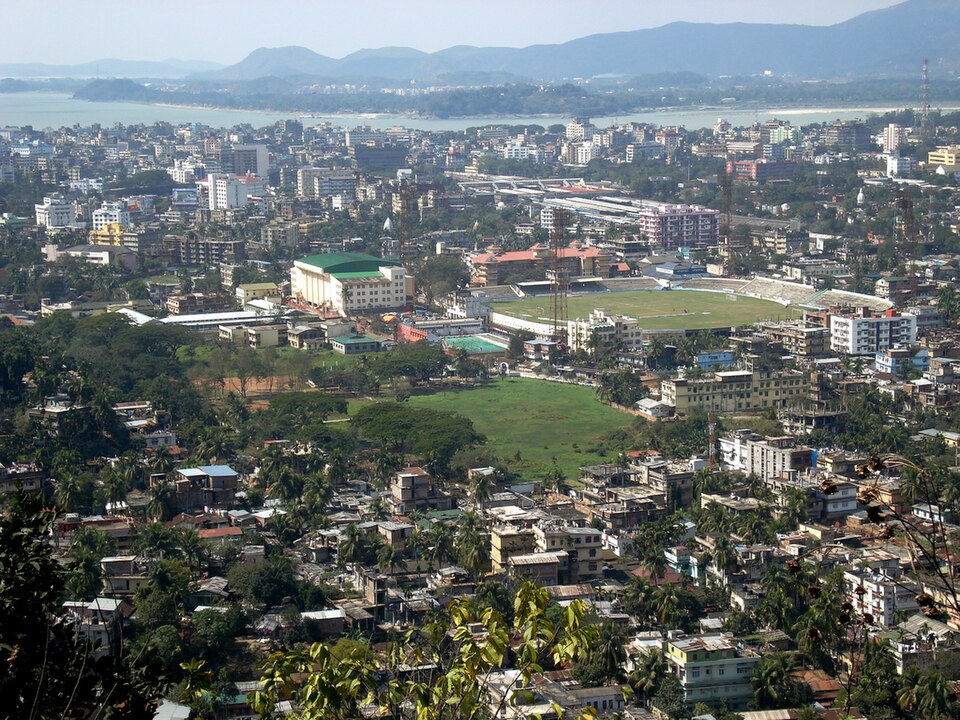
Guwāhāti stands as the vibrant heart of Assam and the largest metropolis in India's northeastern region. Situated on the southern bank of the mighty Brahmaputra River, this dynamic city serves as both the cultural and commercial nerve center of a region rich in history, natural beauty, and unique traditions. As Assam's gateway to the world, Guwāhāti embodies the blend of ancient heritage and rapid modern development that defines contemporary northeast India.
Guwāhāti occupies a strategic position at coordinates 26.1844°N, 91.7458°E, sitting just 59 meters above sea level. The city's most defining geographical feature is its relationship with the Brahmaputra, one of the Indian subcontinent's greatest rivers. The river's presence has shaped Guwāhāti's development for centuries, serving as a vital transportation artery and creating a landscape where water and urban life intermingle. The city's setting combines lowland areas near the river with nearby hills, creating a landscape of varied elevations and natural features. This geographical diversity gives Guwāhāti a distinctive character among Indian cities, where neighborhoods can range from river-level plains to elevated slopes offering views across the valley.
The city experiences the climate patterns typical of Assam, with significant rainfall during monsoon seasons and warm, humid conditions during much of the year. The Brahmaputra Valley's geography makes Guwāhāti particularly susceptible to seasonal flooding, a reality that shapes urban planning and the daily rhythms of city life. Despite these environmental challenges, the fertile alluvial plains surrounding the city have long supported agriculture and settlement.
The modern city of Guwāhāti, formerly known as Gauhati, carries within it layers of history stretching back centuries. The region has been a significant settlement and trading center for generations, with the Brahmaputra serving as a crucial trade route connecting the Indian plains with the eastern Himalayan regions and beyond. The city's strategic location made it a point of cultural exchange and commerce, drawing traders, migrants, and seekers from across the subcontinent.
The establishment of Dispur as Assam's capital within the greater Guwāhāti circuit city region represents a significant modern development. Today, Dispur serves as the seat of the Government of Assam, making the broader metropolitan area the political and administrative center of the state. This administrative importance adds another layer to Guwāhāti's contemporary identity, alongside its historical significance as a mercantile and cultural hub.
Guwāhāti's appeal lies as much in its natural setting as in its cultural offerings. The Brahmaputra itself is a draw for visitors, and riverbank areas provide spaces for walking, observation, and appreciation of the river's scale and power. The river's islands, including the notable Umananda Island, hold both natural and spiritual significance, with temples and shrines attracting pilgrims and visitors seeking quieter spaces away from urban activity.
The city's position as a cultural crossroads means visitors will encounter a rich tapestry of religious and cultural sites reflecting Assam's diverse communities. Hindu temples, Islamic mosques, Buddhist monasteries, and other places of worship are scattered throughout the city, each representing the traditions and histories of different communities. Local markets and bazaars offer genuine glimpses into Assamese daily life, with colorful displays of produce, textiles, handicrafts, and goods reflecting regional specialties and trading traditions. The nearby surrounding areas provide access to natural landscapes and hill stations that serve as respite from urban heat and congestion.
For those interested in understanding northeastern India more broadly, Guwāhāti's museums and cultural institutions offer context on Assam's history, geography, and people. Art, crafts, and performances rooted in Assamese traditions provide cultural experiences distinct from other parts of India.
Guwāhāti is well-connected to the rest of India through multiple transport modes. The Lokpriya Gopinath Bordoloi International Airport ranks among India's busiest airports and serves as the primary aviation hub for all of northeastern India, offering domestic and international flights. Railway connections link the city to major Indian cities, with the railway infrastructure reflecting its importance as a regional transportation hub. Road networks connect Guwāhāti to other cities across Assam and neighboring states. Within the city itself, local buses, auto-rickshaws, and taxis provide transportation options, though navigating the busy streets requires patience and familiarity with local traffic patterns.
Home to approximately 962,334 people, Guwāhāti functions as a major economic center for the region. The city's economy draws strength from its river port activities, commerce, and services sectors. Its status as a rapidly growing city attracts workers and entrepreneurs from across the region and beyond, creating a cosmopolitan urban environment amid strong local Assamese traditions. The city's growth reflects broader economic development in northeastern India, though challenges of urban infrastructure, transportation, and environmental management accompany this expansion. Daily life in Guwāhāti reflects the rhythms of a major Indian city—congested streets, vibrant commercial activity, and communities navigating the complexities of rapid urbanization while maintaining cultural continuity.
Guwāhāti operates on Asia/Kolkata timezone, standard across India. At 962,334 residents, the city represents a significant urban center. The city's elevation of 59 meters above sea level places it in the low-lying Brahmaputra Valley, a geographical fact relevant to seasonal flooding patterns and local climate conditions. For visitors and residents, understanding these basic facts helps contextualize the city's geography and practical considerations for daily life.
View larger map — © OpenStreetMap contributors
Flight delayed or cancelled?
You could be owed up to €600 compensation. Check your eligibility for free.Do you know Guwāhāti, Assam?
Share local tips, recommend a hotel, list a business or add a photo.
✏️ Share your knowledge about Guwāhāti, AssamDo you know Guwāhāti, Assam?
Share local tips, recommend a hotel, list a business or add a photo.
✏️ Share your knowledge about Guwāhāti, Assam