In This Guide
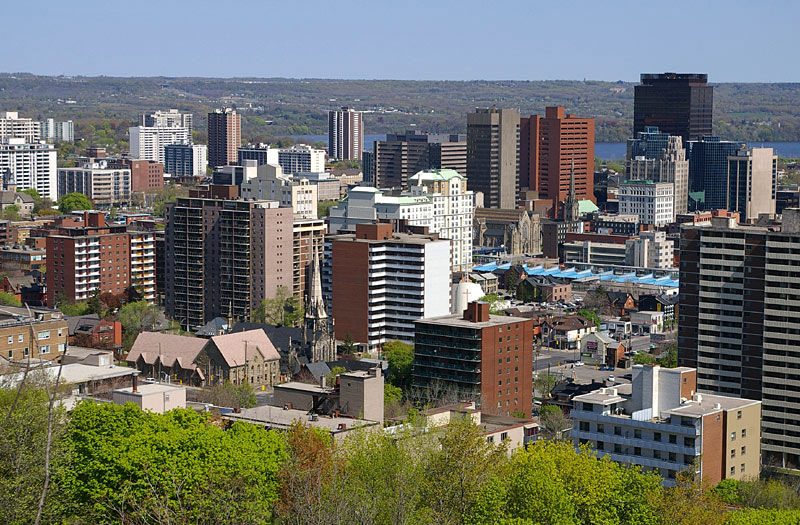
Hamilton sits on the southwestern shore of Lake Ontario, roughly 45 kilometres from Toronto. With a population of around 570,000 (2021 census), it is Ontario's third-largest city by area — a working port and former steel capital that is visibly remaking itself without erasing what came before. Visitors arriving with low expectations often leave with a more complicated picture: active industrial infrastructure alongside an ambitious arts scene, one of Canada's oldest public art galleries, and more than 100 waterfalls within city limits.
This is not a conventional tourist destination, and it does not pretend to be. What it offers is a city at an interesting moment — industrial legacy, geographic drama from the Niagara Escarpment, and a waterfront still in transition between port and public space.
Setting and Geography
Hamilton's physical geography is its defining feature. The Niagara Escarpment — a rock ridge stretching across the Great Lakes region — runs directly through the city, creating a sharp elevation change visible from much of the urban core. The city spreads from its natural harbour at low elevation up toward higher ground, with the escarpment forming a hard visual and physical boundary. Along and below this ridge, waterfalls cut through the landscape in unusual numbers; Hamilton is sometimes called the waterfall capital of the region, with more than 100 waterfalls recorded within city limits, many accessible from trails along the escarpment and the Bruce Trail.
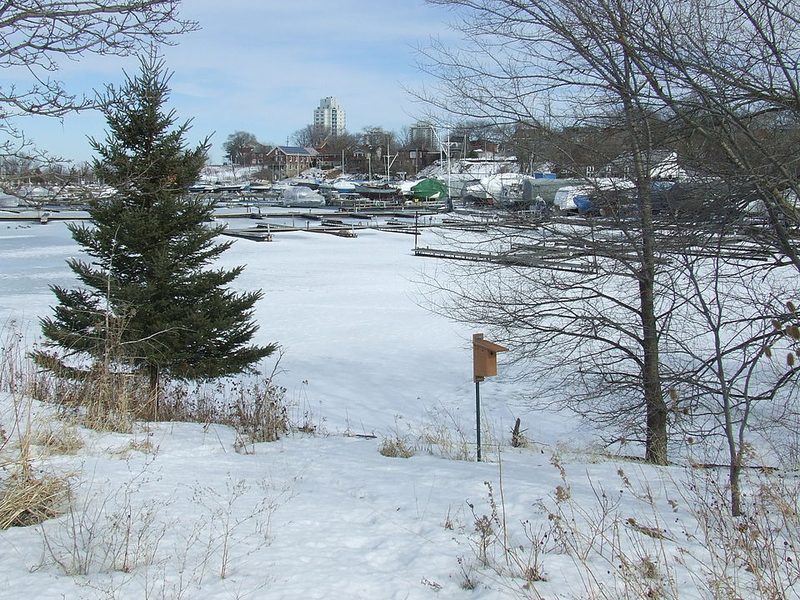
Hamilton Harbour opens into the western end of Lake Ontario. The Port of Hamilton, operated by the Hamilton-Oshawa Port Authority, remains Ontario's largest port — handling cargo, minerals, and raw materials central to regional and national supply chains. Ships move through the harbour regularly, and the working waterfront sets the city apart from the recreational lakefronts common elsewhere on Lake Ontario.
History and Industrial Identity
Hamilton became Canada's steel manufacturing centre during the twentieth century. That industrial economy shaped generations of employment, neighbourhood life, and civic identity. The physical evidence remains: old factory buildings, rail infrastructure, and the harbour itself all reflect a past that residents neither romanticise nor dismiss. Steel production has contracted significantly from its peak, and the city has spent recent decades diversifying its economic base and reimagining waterfront and downtown spaces — work that remains incomplete.
The area also carries War of 1812 significance. The Battle of Stoney Creek, fought on 6 June 1813, took place at what is now part of Hamilton. Battlefield House — built in 1796 and now a living history museum — marks the site, which is designated a National Historic Site of Canada. It is one of the region's clearest surviving connections to that early period of European settlement and conflict.
In 2001, Hamilton amalgamated several surrounding communities — Dundas, Ancaster, Flamborough, Glanbrook, and Stoney Creek — reshaping the municipality into a mix of urban industrial core, suburban areas, and rural land.
Arts, Culture and Heritage
The Art Gallery of Hamilton (AGH), founded in 1914, is the oldest and largest art museum in Southern Ontario. Its permanent collection of more than 10,000 works includes pieces by Emily Carr, the Group of Seven, Tom Thomson, and Alex Colville. The gallery opened with an inaugural exhibition of work by Hamilton-born artist William Blair Bruce (1859–1906), whose wife donated works to the city on condition that a permanent gallery be established. The AGH remains a significant regional cultural institution.
Hamilton's Farmers' Market, operating from the downtown core, is one of the oldest in Canada. The city's neighbourhoods reflect successive waves of working-class immigration — British, Italian, Portuguese, and others — whose presence shaped the built environment, food culture, and community institutions in ways that remain visible today.
Getting There
Hamilton is accessible from Toronto via the Queen Elizabeth Way (QEW), with the drive taking roughly 45 minutes to an hour depending on traffic. For current information on regional bus services, GO Transit rail connections, and local transit, consult the relevant transport authority websites and current travel planning tools directly. The 2026 FIFA World Cup is co-hosted in Canada from 11 June to 19 July; visitors planning travel during that period should check for any effect on transport and accommodation availability.
Practical Notes
Both the UK Foreign, Commonwealth & Development Office and the US State Department rate Canada at their lowest advisory levels — normal precautions. No specific threats or restrictions apply to Hamilton. Visitors should arrange travel insurance appropriate to their planned activities and check current official guidance before travelling.
Art Gallery of Hamilton
The Art Gallery of Hamilton (AGH) is the oldest and largest art museum in Southern Ontario. Founded in 1914, it holds a permanent collection of more than 10,000 works and occupies a central position in Hamilton's cultural life well beyond the city's industrial reputation.
Origins and the William Blair Bruce Connection
The AGH traces its founding directly to a Hamilton-born artist. William Blair Bruce (1859–1906) achieved international recognition as a painter, working extensively in France and later settling with his sculptor wife, Caroline Benedicks, on the Swedish island of Gotland, where the couple built a home they named Brucebo. After Bruce died in Sweden in 1906, Benedicks donated a significant number of his works to the City of Hamilton on the condition that an adequate gallery be established to house them. The Municipal Gallery of Hamilton was incorporated on 31 January 1914 with an annual operating budget of £1,000, and opened its doors on 28 June 1914 with an inaugural exhibition of Bruce's paintings. That founding moment — a donation from a local artist's estate, contingent on civic commitment — set the institution's character as a public trust rather than a private collection.
The Permanent Collection
The AGH's permanent collection of more than 10,000 works is considered one of the finest in Canada. It comprises approximately 5,000 Canadian works, 3,000 international works, and 2,000 contemporary pieces. Canadian representation is strong: the collection includes works by Group of Seven painters, Tom Thomson, Emily Carr, Alex Colville, and James Tissot, among others. For visitors with an interest in Canadian art history, the AGH provides access to canonical works in a mid-sized city setting that rarely requires the queuing or crowd management common at larger urban institutions. The gallery also holds works by Prudence Heward (1896–1947), a Canadian modernist painter whose Girl under a Tree (1931) is among the recognisable pieces in the collection.
Exhibitions and Programming
Beyond the permanent galleries, the AGH maintains a programme of temporary and touring exhibitions across its floor levels. The gallery offers guided tours and talks tied to both permanent collection highlights and current exhibitions. Visitors should check current schedules directly with the gallery, as exhibition programming changes and some gallery spaces require advance confirmation before visiting. The AGH's visitor services line is listed as (905) 527-6610. Admission details and hours are published on the gallery's official website and should be confirmed before travel, as these are subject to change.
Practical Orientation
The AGH is located in downtown Hamilton, making it accessible in combination with other central attractions such as the Hamilton Farmers' Market and the James Street North arts corridor. For visitors spending a day or two in the city, the gallery provides an anchor point for a walkable downtown itinerary. The institution celebrated its 110th anniversary in 2024, and its profile within the Canadian art world has grown steadily — the 2026 press coverage in Hamilton's local media described the city's gallery scene as a cultural draw in its own right.
Sources: Art Gallery of Hamilton - Official Site • Art Gallery of Hamilton - History • Art Gallery of Hamilton - Plan Your Visit • Art Gallery of Hamilton - Wikipedia • A Guide to the Art Gallery of Hamilton - Tourism Hamilton
Battle of Stoney Creek and Battlefield House
Battlefield House Museum and Park is a National Historic Site in the Stoney Creek district of Hamilton, marking the ground where one of the most consequential engagements of the War of 1812 took place. The site combines a preserved early settler farmhouse, a 100-foot monument, and an annual re-enactment that draws visitors each June.
Sources: Battlefield House Museum and Park - Hamilton Civic Museums • Battlefield House Museum and Park - City of Hamilton • Re-enactment of the Battle of Stoney Creek - City of Hamilton • Battle of Stoney Creek - Wikipedia • Parks Canada - Battle of Stoney Creek National Historic Site
Hamilton Farmers' Market
The Hamilton Farmers' Market, operating since 1837, is one of the oldest continuously running farmers' markets in Ontario. Located in downtown Hamilton within the Lloyd D. Jackson Square complex at the corner of James Street and York Boulevard, it operates year-round with around 50 vendors and serves as a practical, lived-in introduction to the city's food culture.
History
The market opened in 1837 and has operated without significant interruption since, making it one of the oldest of its kind in Ontario. A major renovation in 2011 modernised the physical space while maintaining the market's character as a neighbourhood institution. The 2011 works brought the historic facility up to contemporary standards without repositioning it as a purely tourist-facing attraction — it remains a working food market used by local residents.
What the Market Offers
The market's roughly 50 vendors cover a broad range: local produce stalls, meat, fish and poultry counters, flowers, baked goods, and a variety of prepared food counters. Tourism Hamilton describes it as offering a varied range of local produce alongside specialty food and lunch options. Its downtown position within Jackson Square makes it straightforward to reach on foot from the central business district.
Practical Notes
The market operates year-round, which distinguishes it from many seasonal Ontario markets. Visitors should check current trading hours directly with the market before visiting, as hours are subject to change. The official market website (hamiltonfarmersmarket.ca) publishes current vendor listings, hours and any seasonal adjustments.
Sources: Hamilton Farmers' Market - Official Site • Hamilton Farmers' Market History • Hamilton Farmer's Market - Wikipedia • Hamilton Farmers' Market Hot Spots - Tourism Hamilton
Port of Hamilton and Industrial Heritage
Hamilton's identity as a working industrial city is rooted in its harbour. The Port of Hamilton, operated by the Hamilton-Oshawa Port Authority, remains Ontario's largest port. For most of the twentieth century, that port was inseparable from steel — and the story of that steel industry, its peak, its contraction, and the current redevelopment of its land, is the story of the city itself.
Sources: Steelport - History and Context • Steelport reimagines Hamilton's historic steel-producing port - The Globe and Mail • Hamilton - The Steel City of Canada - Mann Supply