Image: Wikipedia / Wikimedia Commons
Image: Wikipedia / Wikimedia Commons
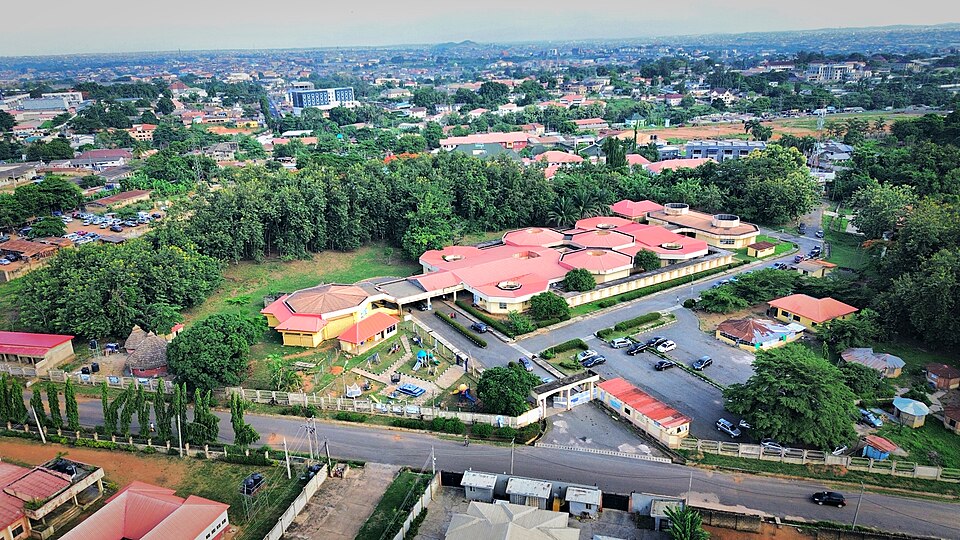
Ibadan stands as one of West Africa's most consequential cities, a sprawling urban centre that has shaped the region's political, cultural and intellectual landscape for centuries. With a population of 3.649 million within the city proper, and over 4 million in its metropolitan area, Ibadan is among Nigeria's largest urban centres by population and holds the distinction of being the country's largest city by land area at 3,080 square kilometres. What distinguishes Ibadan is not merely its size, but its character as a living repository of Yoruba heritage and a modern hub of education, innovation and commerce that continues to influence Nigeria's trajectory.
Ibadan sits at coordinates 7.37756 North, 3.90591 East in south-western Nigeria, serving as the capital of Oyo State. The city rises to an elevation of 181 metres above sea level, positioned within the forested zone of south-western Nigeria where tropical vegetation and rolling terrain characterise the landscape. This elevation and geography have historically made Ibadan a natural defensive position, one of the reasons it emerged as a powerful centre during the tumultuous politics of 19th-century Yorubaland.
The city's topography is marked by gentle hills and valleys, with the Oyo River system running through the surrounding region. The natural landscape has shaped Ibadan's urban layout, creating a city of distinct neighbourhoods and quarters that climb the hillsides, giving certain vantage points panoramic views across the sprawl. The city operates within the Africa/Lagos timezone, keeping pace with Nigeria's standard time.
During Nigeria's independence in 1960, Ibadan held a distinction few African cities could claim: it was the largest and most populous city in Nigeria and the second-largest in all of Africa, surpassed only by Cairo. This was not by accident but the culmination of centuries of development. During the 19th century, Ibadan rose to extraordinary prominence as the capital of the Ibadan Republic, one of the most powerful political entities in Yorubaland during that era. The city's reputation as a centre of military organisation and strategic influence spread across the region, attracting migrants, traders and scholars.
This historical depth runs through Ibadan's fabric. The old city districts still reflect the traditional Yoruba settlement patterns, with compounds and quarters arranged according to historical migrations and political allegiances. Many landmarks and thoroughfares carry names rooted in this history. The city's institutions, particularly its universities, emerged partly from colonial-era recognition of Ibadan's intellectual tradition and established importance. Today, Ibadan is ranked by the UN Human Settlements Program as one of the fastest-growing cities in sub-Saharan Africa, a testament to its continued economic and demographic momentum.
Ibadan's attractions reflect its dual character as both a historical centre and a dynamic modern metropolis. The old city quarters offer opportunities to explore traditional Yoruba architecture and settlement patterns, with narrow streets and communal spaces that reveal how the city was organised historically. Walking through these areas provides insight into how Ibadan functioned as a major political capital and how its communities have remained rooted in cultural practices.
Natural attractions include visits to the surrounding region, where the tropical forest environment and waterways offer respite from urban intensity. The city is also home to significant educational and cultural institutions. As a city that joined UNESCO's Global Network of Learning Cities in 2016, Ibadan continues to be a centre for intellectual engagement and knowledge production. The presence of major universities means the city hosts libraries, galleries and research facilities open to visitors interested in Nigerian scholarship and culture.
For those interested in contemporary Ibadan, the city is emerging as a significant player in Nigeria's technology sector, ranked third in Nigeria and fifth in West Africa in the tech startups index. Visiting markets, observing business districts and exploring how the city functions as an economic centre can provide valuable perspective on modern Nigeria's urban development.
Ibadan is accessible by road from Lagos and other major Nigerian cities, being located roughly 130 kilometres north-east of Lagos. Interstate transport services operate regularly between Ibadan and neighbouring cities. Within the city, movement is primarily by road using taxis, private vehicles, or ride-sharing services. The sprawling nature of Ibadan means that getting around requires either personal transport or local knowledge of transit options, so visitors should plan accordingly.
What animates Ibadan daily is the commerce, learning and community activity of its 3.649 million residents. The city functions as an economic centre for its region, with markets, wholesale operations and small-scale manufacturing supporting livelihoods across the metropolitan area. Education remains a cornerstone of local identity, with universities and schools employing thousands and attracting students from across Nigeria and beyond. Agriculture and food production continue to sustain many families in and around the city, reflecting Ibadan's connections to the broader Oyo State economy. The city pulses with the energy of young professionals, traders, students and families building lives in one of Nigeria's most historically significant urban centres.
Population: 3,649,000 (city proper); over 4 million metropolitan area. Elevation: 181 metres above sea level. Timezone: Africa/Lagos (UTC+1). Coordinates: 7.37756 North, 3.90591 East. Ibadan's size and complexity mean visitors should research specific neighbourhoods and attractions before arrival and consider engaging local guides for deeper exploration of the city's historical and cultural sites.
View larger map — © OpenStreetMap contributors
Flight delayed or cancelled?
You could be owed up to €600 compensation. Check your eligibility for free.Do you know Ibadan, Oyo State?
Share local tips, recommend a hotel, list a business or add a photo.
✏️ Share your knowledge about Ibadan, Oyo StateDo you know Ibadan, Oyo State?
Share local tips, recommend a hotel, list a business or add a photo.
✏️ Share your knowledge about Ibadan, Oyo State