Image: Wikipedia / Wikimedia Commons
Image: Wikipedia / Wikimedia Commons
İzmir is one of Turkey's most dynamic coastal cities, home to nearly three million people and a place where ancient heritage meets contemporary Mediterranean living. Positioned on the Aegean Sea with excellent natural harbour conditions, it has served as a crucial cultural and commercial crossroads for thousands of years. Today, it remains a city of movement and energy—where the rhythms of modern Turkish life blend seamlessly with the legacy of one of antiquity's great cities.
Located at coordinates 38.41273N, 27.13838E on Turkey's western coast, İzmir sits at an elevation of 122 metres above sea level. The city occupies a strategic position on the Aegean coastline, where the Gulf of İzmir (known locally as the Alsancak Gulf) creates a natural harbour of considerable depth and protection. This geographical advantage—the same factor that made the ancient settlement of Smyrna prosper—continues to define İzmir's character today. The surrounding landscape is typically Mediterranean, with pine forests, olive groves, and rocky outcrops descending to the coastline. Mountains rise inland from the city, creating a natural amphitheatre effect that frames the urban area.
The city's layout reflects its relationship with the water. The waterfront—known as the Alsancak district—forms the heart of contemporary İzmir, lined with cafes, promenades, and cultural institutions. Behind this lies the broader metropolitan area, which extends inland and along the gulf's shores. The timezone throughout İzmir is Europe/Istanbul, keeping the city aligned with Turkey's standard time.
İzmir's story spans millennia. The ancient city of Smyrna, established by Greek settlers on this same advantageous site, became one of the most important cities of the Ionian coast. Its strategic location—easy to defend, excellent for trade, with good connections inland through natural valleys—made it a natural hub of commerce and culture. The city witnessed countless transformations under Persian, Hellenistic, Roman, Byzantine, and Ottoman rule, each leaving traces in the urban fabric.
The modern name İzmir has been in use since approximately 1930, marking a transition in identity. The city played a significant role in Turkey's War of Independence and the formation of the modern Turkish state. Today, that historical complexity is woven into the city's character—not always visible in monuments alone, but present in the layers of the city itself. Archaeological museums hold treasures from the ancient Smyrnan period, while Ottoman-era structures dot the older quarters. This sense of historical depth gives İzmir a character distinct from newer Turkish cities, grounding it in centuries of continuous habitation and adaptation.
İzmir's appeal lies as much in its waterfront atmosphere as in specific sites. The Alsancak waterfront is the natural gathering place—a long promenade where locals and visitors alike walk in the early morning or evening, when the temperature moderates and the light softens across the water. The gulf itself is a backdrop to daily life here, not merely a scenic feature. The neighbourhoods surrounding the waterfront contain galleries, cultural centres, and spaces for contemporary art, reflecting İzmir's reputation as a culturally engaged city.
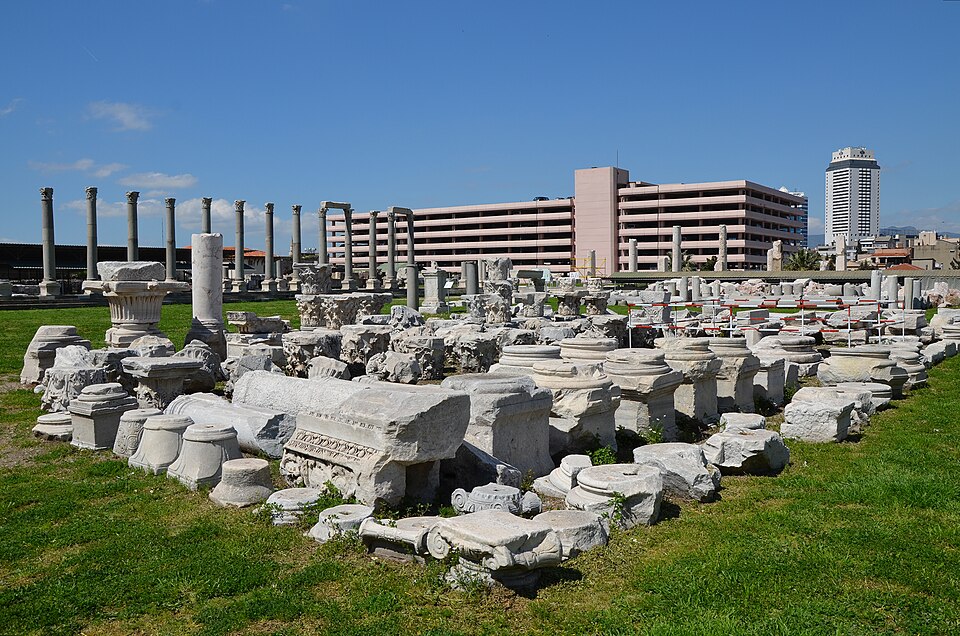
For those interested in antiquity, the archaeological heritage of ancient Smyrna can be explored through museum collections and some remaining ruins in the city and nearby areas. The natural landscape around İzmir—the pine forests, coastal paths, and small bays—offers opportunities for walking and experiencing the Aegean environment. The nearby Alsancak district and other quarters reward exploration on foot, revealing the texture of urban life and the blend of different historical periods. Markets and bazaars provide insight into local commerce and daily routines. Beyond the city proper, the surrounding region contains other significant ancient sites and natural areas worth visiting if you have time.
İzmir is well-connected by air, sea, and road. The city is served by Adnan Menderes Airport, connecting it to major Turkish and international destinations. Ferry services operate along the Aegean coast and across to Greek islands. Road connections link İzmir to other Turkish cities, and long-distance bus services are readily available. Within the city, public transport includes buses and a light-rail system, making it straightforward to navigate without a car, though taxis and ride-sharing services also operate. The waterfront location means many attractions are accessible by walking, especially in the central areas.
With a population of approximately 2,938,292, İzmir is very much a living city rather than a museum. It functions as a major trade and industrial hub, with the port remaining economically significant and sectors including manufacturing, tourism, and services all contributing to the local economy. The city has a distinct character shaped by its Aegean location and mercantile history—there is an openness and cosmopolitanism here that reflects centuries of contact with diverse peoples and ideas. For residents, İzmir represents a balance: access to modern urban amenities alongside proximity to nature, and a quality of life measured not only in economic terms but in the daily pleasures of a Mediterranean climate and waterfront living.
İzmir welcomes visitors year-round, with mild winters and warm, dry summers typical of the Mediterranean climate.
View larger map — © OpenStreetMap contributors
Flight delayed or cancelled?
You could be owed up to €600 compensation. Check your eligibility for free.Do you know İzmir, İzmir Province?
Share local tips, recommend a hotel, list a business or add a photo.
✏️ Share your knowledge about İzmir, İzmir ProvinceDo you know İzmir, İzmir Province?
Share local tips, recommend a hotel, list a business or add a photo.
✏️ Share your knowledge about İzmir, İzmir Province