




What Johor Bahru is known for
At the southern tip of the Malay Peninsula, where the Straits of Johor separate Malaysia from Singapore, sits Johor Bahru—a city of 858,118 that functions as the economic engine of Malaysia's southern region. This is not a tourist spectacle but a working Malaysian city shaped by 160 years of cross-border trade, where morning hawker stalls fuel office workers heading to business districts and the Sultan Abu Bakar State Mosque overlooks the straits. For visitors, Johor Bahru offers a genuine look at urban Malaysian life: multi-ethnic neighborhoods, practical commerce, and a city identity built on economic pragmatism rather than tourism.
Geography and First Impressions
Johor Bahru occupies 373.18 square kilometres of flat coastal terrain at sea level. The city's defining geographic feature is its proximity to water—the Straits of Johor to the south and various waterways threading through the urban fabric. There are no dramatic hills to orient by; instead, the landscape is organized around transport corridors, commercial strips, and the two bridge crossings to Singapore: the original Johor-Singapore Causeway and the Malaysia-Singapore Second Link opened in 1998.
The street-level experience mixes older shophouses with mid-rise office complexes, shopping malls, and residential blocks reflecting decades of development. Traffic is dense, motorcycles weave between cars, and signage in multiple languages reflects the city's Chinese, Malay, and Indian communities. The air carries tropical coastal humidity year-round, and the city's energy centers on commerce and movement rather than leisurely public gathering.
History and Identity
Johor Bahru's founding as a modern city dates to 1855, when Temenggong Daeng Ibrahim established an administrative center at a location originally called Tanjung Puteri. In 1866, Sultan Abu Bakar relocated the Sultanate of Johor's capital here and renamed it Johor Bahru—literally "New Johor." Sultan Abu Bakar, remembered as the "Father of Modern Johor," actively encouraged foreign investment and built economic partnerships with British and Chinese entrepreneurs, establishing the city's trajectory as a pragmatic commercial hub rather than a ceremonial capital.
During the 19th century, the local economy centered on pepper and gambier cultivation—gambier being a plant used in leather tanning. The strategic position on the straits made Johor Bahru an inevitable trade and transport hub, a role that continues to define the city. Unlike capitals chosen for symbolic or defensive purposes, Johor Bahru was purpose-built as an economic center, and that utilitarian character remains visible today.
The City Today
Johor Bahru serves as the capital of Johor state, which recorded a GDP of RM 148.2 billion in 2023 and supports a state population of 4.19 million. The city itself is Malaysia's largest state capital by population. The economy spans services, manufacturing, agriculture, and construction, with the state exporting RM 314.06 billion in goods in 2023. An unemployment rate of 2.4% indicates a relatively active labor market. The Johor Bahru Central Business District concentrates financial and professional services.
For residents, daily life revolves around work, family, hawker food courts, and shopping malls that serve as social gathering spaces. The city's multi-ethnic character is visible in its temples, mosques, churches, and cultural events such as the Chingay parade. The municipal motto—"Berkhidmat, Berbudaya, Berwawasan" (Service, Cultural, Visionary)—reflects how the city administration frames its identity.
Landmarks and Heritage Architecture
The Sultan Abu Bakar State Mosque, completed in 1892 during Sultan Abu Bakar's reign, stands as the city's most prominent religious and architectural landmark. Designed by architect Tuan Haji Mohamed Arif bin Punak, the mosque deliberately incorporated colonial English Victorian architecture, with minarets styled after British 19th-century clocktowers, combined with Moorish influences. The mosque overlooks the Tebrau Strait from its position along Jalan Skudai.
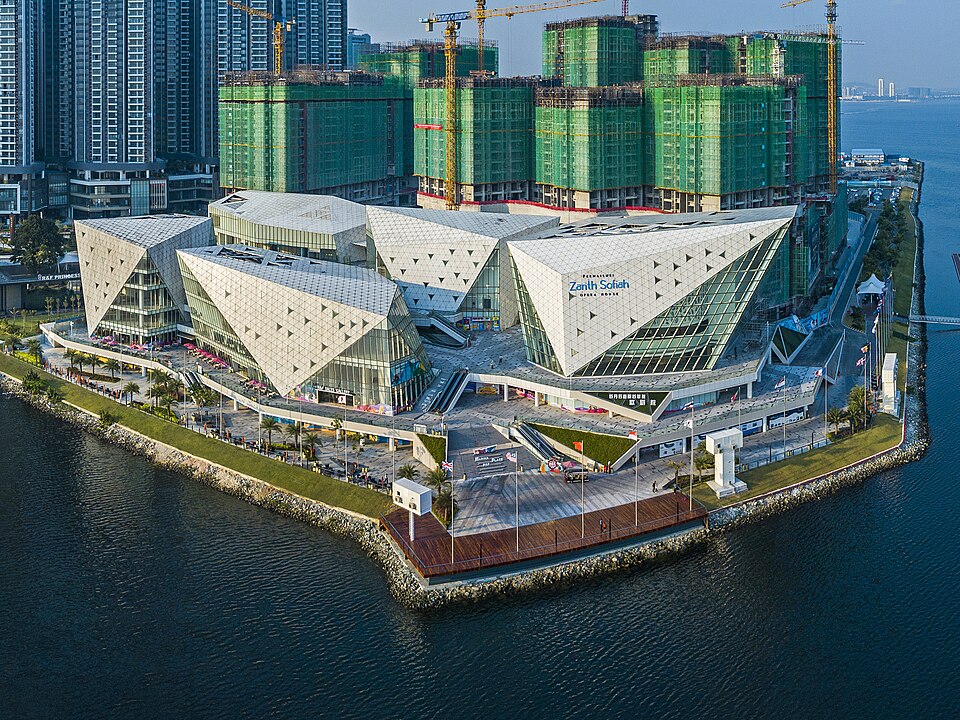
The Permaisuri Zarith Sofiah Opera House represents the city's cultural infrastructure. Other visitor-facing heritage sites include the Chinese Heritage Museum, the Arulmigu Sri Rajakaliamman Glass Temple—listed in the Malaysian Book of Records and located in Tebrau—and the Kwong Siew Heritage Gallery, which houses artifacts including a Qing dynasty bell. In older commercial areas, visitors encounter painted shophouses and modest colonial-era buildings that form a visual timeline of the city's development.
Food and Hawker Culture
Johor Bahru's hawker centers and food stalls reflect the city's multi-ethnic population and cross-border location. Common dishes include Mee Rebus, Char Kway Teow, and Roti Canai. Laksa Johor, a regional variation made with spaghetti, is a local specialty. The Taman Tasek Hawker Centre, established in the 1990s, houses longstanding stalls including Kway Teow Tia, a traditional Teochew stall that predates the center itself. These hawker spaces function as social meeting points, particularly during morning and lunch hours.
Connections and Transport
Johor Bahru Sentral station in the Bukit Chagar suburb functions as the city's integrated transport hub. The Malaysia-Singapore Second Link bridge, opened in 1998, provides a major crossing to Singapore, while the original Johor-Singapore Causeway remains the primary connection. This proximity to Singapore shapes daily life—cross-border employment, trade, and weekend travel are routine aspects of the city's character. Bus transport, both public and private, serves routes within the city and to regional destinations. Specific schedules and routes are best confirmed through local transport authority resources.
Day Trips and Nearby Areas
Desaru Coast, located roughly an hour east of Johor Bahru, offers beaches and coastal resort development. Day trips from Johor Bahru to Desaru are feasible, though renting a car provides more flexibility than urban transport options. The beaches along the southeastern Johor coast attract weekend visitors seeking a change from the city environment.
Is Johor Bahru Worth Visiting?
Johor Bahru is worth visiting for travelers interested in experiencing a working Malaysian city rather than a tourist destination. It offers genuine urban Malaysian life, multi-ethnic neighborhoods, accessible hawker food culture, and heritage architecture such as the Sultan Abu Bakar State Mosque. The city serves well as a base for onward travel in southern Peninsular Malaysia or as a stopover when crossing between Singapore and Malaysia. Visitors seeking heavily curated tourist attractions or resort-style experiences will find Johor Bahru less compelling than those interested in everyday urban Asia.
Where to Stay in Johor Bahru?
Accommodation options concentrate around the city center near Johor Bahru Sentral and the Central Business District, providing access to transport connections and commercial areas. The causeway area offers proximity to the Singapore crossing for those prioritizing cross-border convenience. Specific hotel recommendations require current booking resources, but positioning near Johor Bahru Sentral or within the central commercial district provides practical access to the city's transport and services.
How Many Days Do You Need in Johor Bahru?
One to two days suffices for experiencing Johor Bahru's core character—visiting the Sultan Abu Bakar State Mosque, exploring hawker food culture, and walking through heritage areas. Travelers using Johor Bahru as a base for day trips to Desaru Coast or as a stopover between Singapore and other Malaysian destinations may allocate three days. The city does not require extended stays unless used as a working base or transit hub for the region.
Is Johor Bahru Safe for Visitors?
Johor Bahru is not subject to UK FCDO or US State Department regional travel restrictions. The UK FCDO advises against all but essential travel to eastern Sabah's coastal islands and dive sites due to kidnapping threats, but this restriction does not apply to Johor Bahru, mainland Johor, or the southern peninsular region. Standard urban precautions apply. Visitors should consult current UK FCDO or US State Department guidance before travel for the most recent country-level advice.
Practical Information
Johor Bahru operates on Malaysia Standard Time (UTC+8) and sits at an elevation of 32 meters above sea level. The currency is the Malaysian Ringgit (MYR). The city experiences tropical humidity year-round. English is widely used alongside Malay, Mandarin, and Tamil, reflecting the multi-ethnic population. The city is accessible and functions as a normal Malaysian settlement without unusual barriers to visiting or moving around.