In This Guide
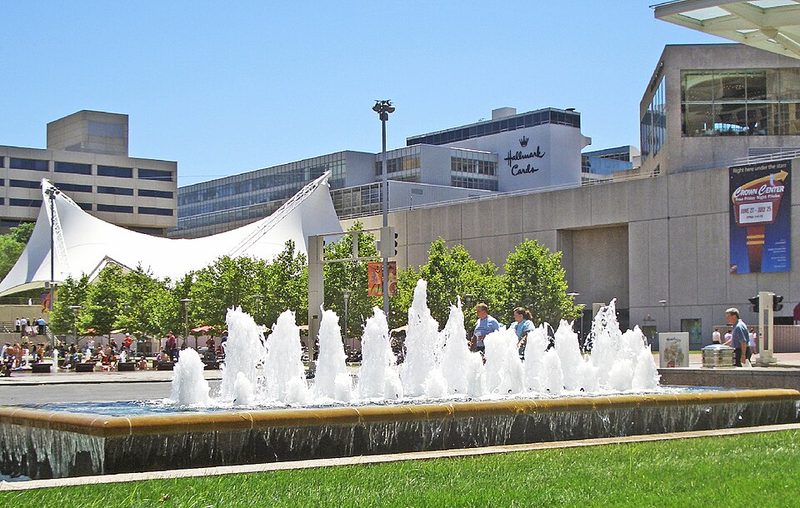
Kansas City sits at the confluence of the Missouri and Kansas rivers in northwestern Missouri — a location that shaped its development as a staging point for westward expansion, a rail and trade hub, and eventually a city of nearly half a million people. It is Missouri's largest city by population and area, and functions as the commercial and cultural centre of a metropolitan region of around 2.25 million spread across both Missouri and Kansas. Visitors come for its well-documented jazz heritage, its distinct barbecue tradition, an unusually high concentration of public art and fountains, and a range of museums that punch above the city's population size.
Kansas City is not a compact tourist city. Its scale — spanning Jackson, Clay, Platte and Cass counties — means that different districts have distinct characters, and navigating between them typically requires a car or deliberate planning. The rivers, while historically central, are partly obscured by modern development in places. What the city does offer is a genuine, working Midwestern city with layers of history still visible at street level.
History and Identity
The city's strategic river position made it a natural assembly point for trade and military movement throughout the 19th century. Its role in the American Civil War was significant: in October 1864, the Battle of Westport was fought within what is now Kansas City, when Union forces under Major General Samuel R. Curtis defeated a Confederate army led by Major General Sterling Price. More than 30,000 troops were engaged — one of the largest battles west of the Mississippi River. The Union victory effectively ended the last major Confederate offensive in the western theatre and secured Missouri for the remainder of the war.
The city's early 20th century identity was shaped by jazz. The 18th and Vine district, on Kansas City's east side, became a major centre of African-American cultural life and jazz performance during the 1920s, 30s and 40s — the era that produced musicians including Charlie Parker and Count Basie. That history is preserved at the American Jazz Museum and the adjacent Negro Leagues Baseball Museum, both located in the 18th and Vine Historic Jazz District.
Key Districts and Orientation
Understanding Kansas City means understanding it as a collection of distinct areas rather than a single walkable core.
The 18th and Vine Historic Jazz District, on the east side, is the city's primary African-American heritage precinct. It houses the American Jazz Museum, the Negro Leagues Baseball Museum, the Gem Theater, the Mutual Musicians Foundation and the Black Archives of Mid-America. The district underwent a $24 million redevelopment project, with the museums opening in September 1997.
The Crossroads Arts District, located south of downtown between roughly 22nd Street and Oak Street, occupies former warehouse buildings now used as galleries, studios, restaurants and creative businesses. The Kauffman Center for the Performing Arts — which hosts opera, ballet and orchestral performances — sits within the district. Public art, including large-scale murals on building exteriors, is a defining feature of the area.
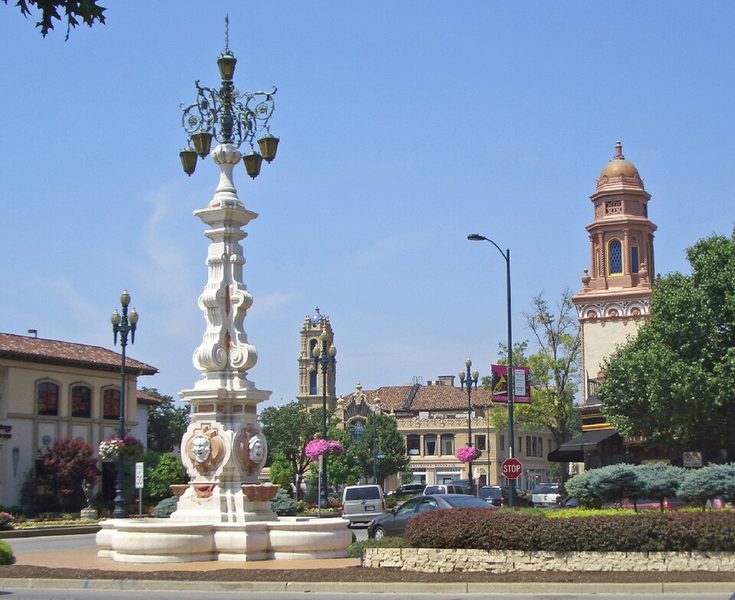
Country Club Plaza, developed in the early 20th century, is a well-known commercial and dining district frequently referenced as a visitor destination. It is notable for its architectural character and is among the city's more distinctive shopping and restaurant areas.
The Arabia Steamboat Museum, located in the historic City Market area, houses around 200 tons of cargo recovered from an 1856 riverboat that sank in the Missouri River. The collection — which includes clothing, tools, china, food items and everyday goods — offers a direct view of frontier-era material life. The museum was founded in 1991 after an unlikely recovery project involving the excavation of the vessel from a cornfield. Visitors should note that the museum has announced its closure in November 2026; those wishing to see the collection should plan accordingly.
Education and Research
The University of Missouri–Kansas City (UMKC), part of the state university system, is the largest university in the Kansas City metropolitan area, with more than 15,300 students. It holds Carnegie R1 classification — the highest research designation in the United States — and offers over 125 degree programmes including professional schools in medicine and law. The university's presence contributes to the city's institutional and intellectual life, and its campus anchors several surrounding residential and commercial areas.
Getting There and Around
Kansas City is served by Kansas City International Airport (MCI), which reopened a new single-terminal facility in 2023. Interstate highways connect the metropolitan area to the broader region. Visitors should be aware that Kansas City is primarily a car-dependent city; while some districts are walkable internally, moving between them without a vehicle is difficult. For current public transit options and routes, consult the Kansas City Area Transportation Authority (KCATA) directly, as services and coverage change. The city spans both Missouri and Kansas, so addresses in the metropolitan area may fall in either state.
Practical Notes
Kansas City operates on Central Time (UTC−6 in winter, UTC−5 during daylight saving). The city and wider metropolitan area straddle the Missouri–Kansas state line; visitors should confirm which state a specific address falls in, as tax rates, regulations and services can differ. The UK Foreign, Commonwealth and Development Office advises normal precautions for travel to the United States, with no specific regional restrictions applicable to Kansas City or Missouri. Standard travel security awareness applies. Visitors should check current official guidance from their home government before travelling.
Arabia Steamboat Museum
The Arabia Steamboat Museum houses more than 200 tons of artefacts recovered from a side-wheel steamboat that sank in the Missouri River in 1856. Opened in 1991 after a private team excavated the wreck from a cornfield, the museum holds what has been described as the largest collection of pre-Civil War artefacts in the world — frontier merchandise ranging from clothing and tools to fine china and children's toys, all preserved by decades of submersion in river silt.
Visitors should be aware that the museum has announced it will close permanently in November 2026 when its lease at Kansas City's City Market expires. The owners are exploring relocation options but have confirmed no new home as of late 2025. Visitors should check current status directly with the museum at 1856.com before planning a trip, as 2026 represents the last confirmed opportunity to see the collection at its existing location.
Read the full Arabia Steamboat Museum guide
Sources: Arabia Steamboat Museum - official site • Arabia Steamboat Museum - Visit KC • Arabia Steamboat Museum closing - KCUR • Arabia Steamboat Museum - Wikipedia • Arabia Steamboat Museum facts - Visit KC press
Battle of Westport
The Battle of Westport, fought on 23 October 1864, took place across what is now Kansas City, Missouri. Union forces under Major General Samuel R. Curtis decisively defeated a Confederate army under Major General Sterling Price, ending the last significant Confederate offensive west of the Mississippi River. The engagement involved more than 30,000 troops and remains one of the largest Civil War battles fought west of the river. Today, its sites are distributed across the modern city, accessible through a combination of park visits, monuments and guided battlefield tours.
Sources: Battle of Westport - Wikipedia • Battle of Westport - official preservation site • Battle of Westport - African American Heritage Trail of Kansas City • Big Blue Battlefield coverage - Flatland KC • Battle of Westport Visitor Center - Visit Missouri
18th and Vine Jazz District
The 18th and Vine Historic Jazz District is the African American cultural heart of Kansas City and the neighbourhood most directly associated with the city's place in the history of American jazz. Between roughly 1920 and 1940, the district was the centre of jazz innovation in the United States, a place where Count Basie, Charlie Parker, Ella Fitzgerald, Louis Armstrong, Lester Young and many others performed and developed the sounds that would reshape American music. Today the district anchors two major museums and a working live music venue that continues to programme jazz performances.
Sources: American Jazz Museum - official site • Jazz District history - Jazz District Renaissance and Redevelopment Corporation • 18th and Vine - Visit KC press facts • 18th and Vine Jazz District - Visit Missouri • 18th and Vine history - 18thandvinelives.com • Negro Leagues Baseball Museum - Visit page
Crossroads Arts District
The Crossroads Arts District occupies a section of Kansas City south of downtown, roughly bounded between 22nd Street and the area around Oak Street. Once a neighbourhood of industrial and commercial warehouses, it has developed since the 1990s into the city's primary arts and creative quarter, now housing galleries, studios, independent restaurants, breweries and performing arts venues. The Kauffman Center for the Performing Arts, which hosts opera, ballet and orchestral performances, sits at the edge of the district and serves as one of its anchoring institutions.
Sources: Crossroads Arts District - official site • Crossroads Arts District guide - Visit KC • Crossroads Arts District guide - KCUR • Crossroads Arts District - American Planning Association Great Places • First Friday - Crossroads Arts District • First Friday - Art Garden KC
Kansas City Barbecue Tradition
Kansas City barbecue is a distinct regional style of slow-smoked meat with a thick, sweet sauce, and it traces its origins directly to one man: Henry Perry, a Black entrepreneur who began serving smoked meats from an alley stand in Kansas City's Garment District in 1908. The style Perry developed — low-temperature smoking over wood — became the foundation of a culinary tradition that now defines the city's food identity more than any other single element. Two of the most historically significant Kansas City barbecue restaurants, Arthur Bryant's and Gates Bar-B-Q, trace their lineage directly back to Perry.
Sources: Henry Perry - Wikipedia • Arthur Bryant's - official site • Arthur Bryant's - Wikipedia • Henry Perry history - KCUR • Henry Perry - The Pendergast Years • Kansas City BBQ guide - Visit KC