Official Travel Advisory and Current Safety Context
The United States Department of State and United Kingdom Foreign, Commonwealth and Development Office advise against all travel to Russia. Both countries cite heightened security risks arising from Russia's continuing invasion of Ukraine. The primary concerns are armed clashes, missile strikes, drone activity, and the operational presence of air defence systems across Russian territory. Additionally, both advisories note a significant risk of terrorist attacks in major cities. The UK FCDO specifically warns of an increased likelihood of British nationals being detained, particularly if suspected of activities against Russian law. Return commercial flights to Western countries remain limited. Official government support for nationals requiring assistance is constrained.
These advisories apply to Krasnoyarsk without geographic exception. Krasnoyarsk lies in Central Siberia, approximately 4,200 km east of Moscow and well beyond the active conflict zone in Ukraine, but the countrywide security environment and restrictions on exit remain relevant to any consideration of presence in the country.
Historical Context
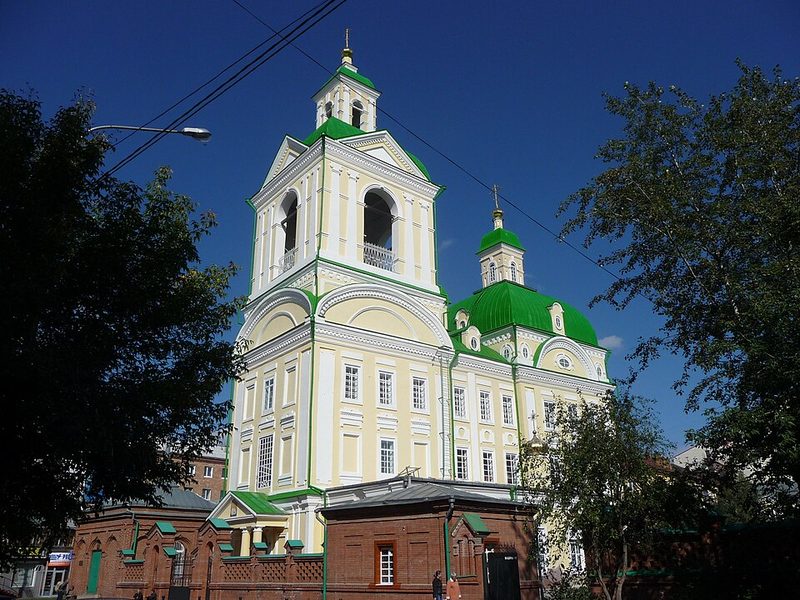
Krasnoyarsk was founded in 1628 as a military fortress by a Cossack detachment led by Andrei Dubensky. The original name, Krasniy Yar, translates as "Beautiful bank," a reference to its setting on the Yenisey River. The settlement received formal city status in 1690 when Siberia was formally incorporated into the Russian state. During the 18th century, the fortress transformed into a conventional Siberian administrative and commercial centre.
In 1822, a decree by the Russian crown established Yenisei Province with Krasnoyarsk as its administrative centre, cementing the city's regional importance. The decisive development came with the construction of the Great Siberian Railway, completed through Krasnoyarsk in 1895. The rail connection established the city as a major junction between Moscow and the Far East, fundamentally reshaping its economy and trajectory. The city became known to Russian and international observers; author Anton Chekhov, who travelled through Siberia in the 1890s, remarked that Krasnoyarsk was the most beautiful city he had encountered in Siberia, a judgement that reflected its natural landscape and riverside setting rather than urban amenities.
Geography and Settlement Setting
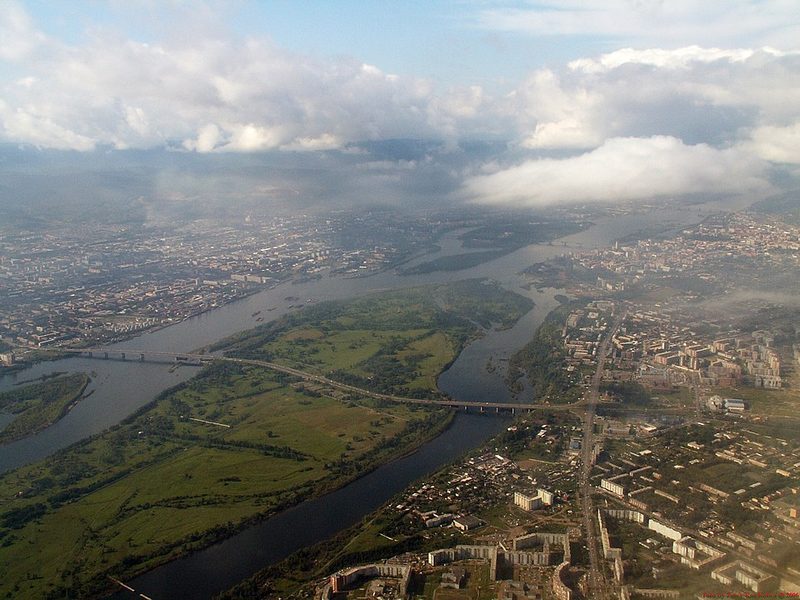
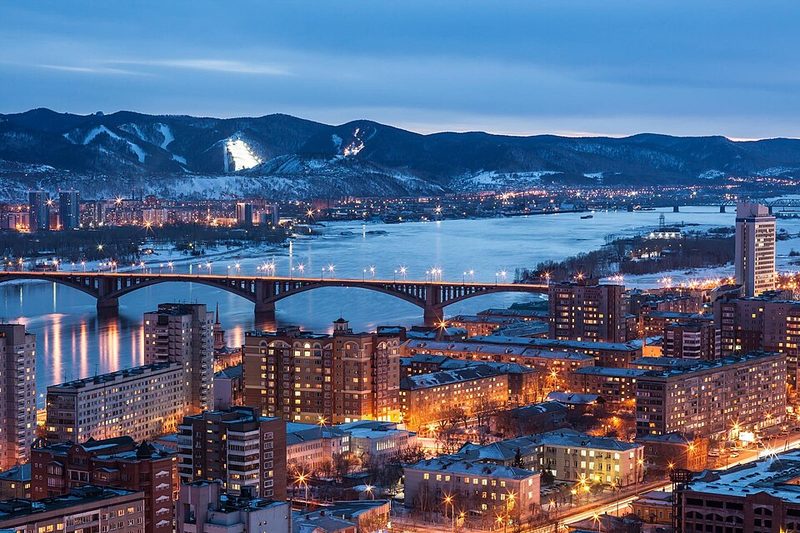
Krasnoyarsk is situated on the Yenisey River, one of the world's longest rivers, flowing northward through Siberia to the Arctic Ocean. The city is the largest urban centre and administrative capital of Krasnoyarsk Krai, a federal subject that covers approximately 2.37 million square kilometres across Central and Eastern Siberia and ranks as the second-largest federal subject by area in Russia.
The Yenisey River valley has long structured settlement and transport in the region. The river itself was historically crucial for navigation and trade; the Trans-Siberian Railway later followed a similar logic, connecting the river cities into a unified network. Krasnoyarsk's population, recorded at over 1.09 million, makes it the second-largest city in Siberia after Novosibirsk and one of the principal administrative and economic hubs of eastern Russia.
Economy and Industrial Character
Krasnoyarsk is recognized as one of the largest producers of aluminium in Russia. The city's industrial base reflects broader Soviet-era development patterns that favoured resource extraction and heavy manufacturing in Siberian locations with access to hydroelectric power and rail transport. This industrial character remains foundational to the city's regional role and employment base.
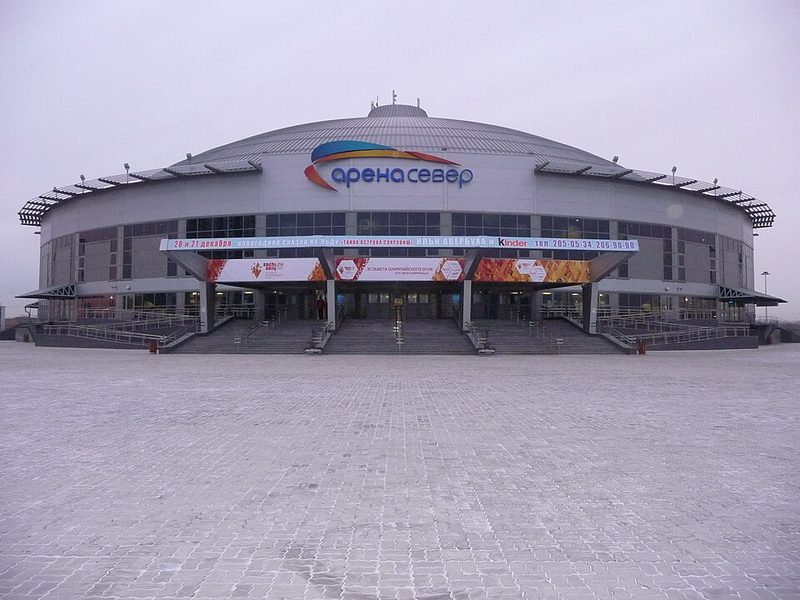
The settlement also functions as a major educational centre; Siberian Federal University is located in the city. The 2019 Winter Universiade, an international university sports competition, was hosted in Krasnoyarsk that year, representing a significant organizational effort and international engagement.
Krasnoyarsk Yemelyanovo Airport operates as the primary air transport hub for the region. The airport serves as a base for Volga-Dnepr Airlines, a cargo operator with global reach, indicating continued international connectivity despite broader current restrictions.
Natural and Regional Setting
The Stolby Nature Sanctuary lies approximately 10 kilometres south of the city and is part of the local natural landscape context. The Yenisey River valley, with its forested terrain and Siberian climate, defines the physical environment and has historically influenced both settlement patterns and economic activity in the region.
Practical Notes
Current official travel advisories from the United States and United Kingdom advise against all travel to Russia. These advisories remain in force and should be consulted directly before any consideration of travel. Persons considering any visit should verify current conditions with their respective national government travel advisory services and should not rely on information published before the current advisory period.
Limited diplomatic and consular support is available in Russia. The British Embassy in Moscow and British Consulate in Ekaterinburg remain open with reduced capacity; other nationalities should confirm the status of their own official representation.
Readers with current, verified local knowledge or updates on conditions in Krasnoyarsk are encouraged to contribute information to improve the accuracy and currency of this article.