Official Travel Advisory and Current Safety Context
The United States State Department maintains a Level 3 "Reconsider Travel" advisory for Pakistan, citing terrorism risk. The UK Foreign and Commonwealth Development Office (FCDO) advises against all but essential travel to most of Punjab Province, including Lahore, due to an ongoing risk of terrorism. No travel can be guaranteed safe. There remains a persistent threat of terrorist attacks in urban areas across Pakistan, including major cities. Persons considering travel to Lahore should be aware of this ongoing risk and monitor official sources for the latest security updates before and during any visit. Protests, demonstrations, and religious gatherings carry heightened risk in urban centres, and travellers are advised to avoid such gatherings and to follow instructions from local authorities at all times.
Recent Conflict and Risk Background
Terrorist attacks have occurred in major Pakistani cities in recent years. The security environment remains subject to change without warning. Official advisories note that the regional situation remains tense, and travellers should maintain awareness of their surroundings, particularly in crowded areas and public spaces. Persons in Lahore should register with their embassy or consulate, monitor local and international media for developments, and be prepared to shelter or move indoors on instruction from authorities. No travel is guaranteed safe.
Historical Context
Lahore has served as a capital and cultural centre of the wider Punjab region for centuries. Written records mention the city from at least 982 CE, when the Persian geographical treatise Hudud al-Alam described it as possessing impressive temples, large markets, and extensive gardens. The city was successively ruled by the Ghaznavid, Mamluk, and Tughluq sultanates, and experienced Mongol invasion during the medieval period. Under the Mughal emperors—particularly Akbar, Jahangir, Shah Jahan, and Aurangzeb—Lahore became a major hub of imperial administration, culture, and architecture. It served as capital of the Sikh Empire in the eighteenth and early nineteenth centuries, and was developed further under British colonial rule during the Raj period. Following the partition of India and independence in 1947, Lahore became the capital of Punjab Province in the newly independent Islamic Republic of Pakistan.
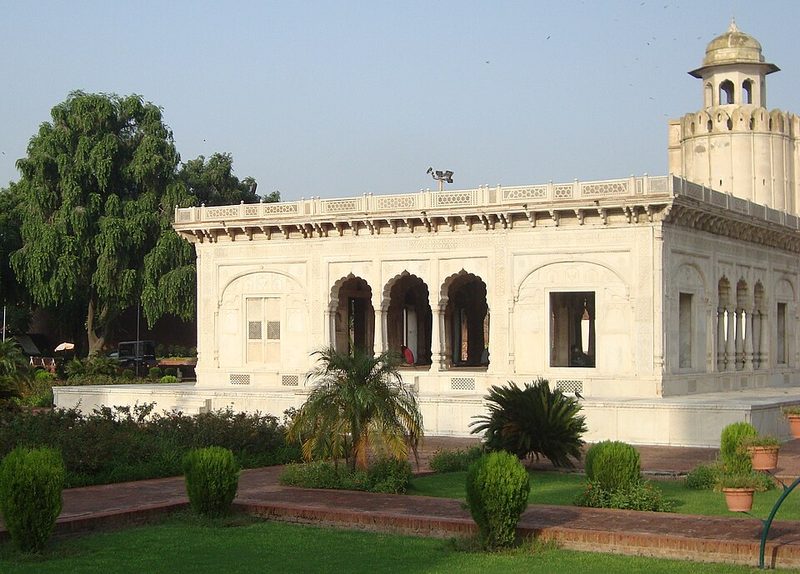
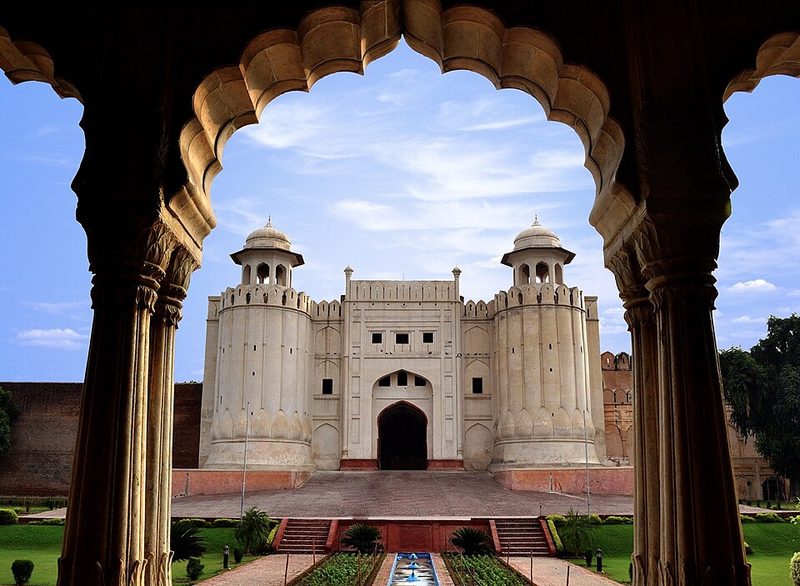
This layered history is visible in the city's built environment. The Badshahi Mosque, an iconic Mughal landmark, reflects the architectural ambitions of the imperial period. Lahore Fort, which contains within it a temple traditionally dedicated to Lava (the legendary founder from whom the city's name derives), embodies the cultural continuity of the site across centuries. The Old City retains distinct neighbourhoods with historical character, traditional bazaars, and heritage architecture including period havelis, or traditional mansions.
Geography and Settlement Setting
Lahore lies on the banks of the Rāvi River in the heart of Punjab Province. The city sits on the strategically important Grand Trunk Road, a historic caravan route that has connected Central Asia to India for centuries and remains a major transit corridor. This positioning has made Lahore central to the region's commerce and politics across multiple periods.
With a population of approximately 13 to 14 million, Lahore is Pakistan's second-largest city after Karachi. It serves as a major industrial, educational, and economic hub for the country. The textile industry has historically been significant, and the city supports diverse corporate sectors. The presence of major automotive manufacturers, including Hyundai Nishat Motors and MG Motor, reflects the breadth of Lahore's industrial economy. The University of the Punjab, founded in 1882, is among the oldest universities in the Indian subcontinent and remains an important educational institution.
Daily Life and Local Context
Lahore is described officially as one of Pakistan's most socially liberal, progressive, and cosmopolitan cities. The population is primarily Muslim, with minority religious communities present. Punjabi is the primary local language; Urdu and English are also widely spoken. The city is known for its architectural heritage spanning the Mughal and Sikh periods, its gardening traditions, and a food culture reflecting South Asian, Middle Eastern, Central Asian, and Western influences.
The city contains several museums, including the Army Museum Lahore, which documents Pakistan's military history. Parks and gardens are scattered throughout the settlement—Lahore is sometimes called the city of gardens. Historic religious sites, tombs, and samadhis are distributed across the city. The Fortress Stadium, located in Lahore Cantonment under Pakistan Army management, provides public space for sports, shopping, dining, and entertainment.
Lahore, like many large South Asian cities, faces significant challenges of wealth inequality, poverty, and air pollution. The warm climate and rapid urban growth have concentrated environmental stresses in recent decades.
Practical Notes
Before travelling to Lahore, consult the latest official travel advisories from your government. The UK FCDO and US State Department websites provide current security information and risk assessments. Register with your embassy or consulate, maintain contact with local authorities, keep informed through reputable media outlets, and have a plan for shelter and emergency communication. Allow extra time for travel, respect local restrictions, and avoid crowds and demonstrations. No official source guarantees safe travel.