

In This Guide
Read the guide as a story
London After Dark: A Walk Through the City's Ghost Stories
London, England
Few cities announce themselves quite as directly as London. Step off a train at Charing Cross, turn toward the river, and within minutes you are caught in a current of red buses, centuries-old stone, glass towers, street-food smells and a dozen languages being spoken at once. This is a city that has been reinventing itself for nearly two thousand years, and it shows no signs of slowing down.
First Impressions and Setting
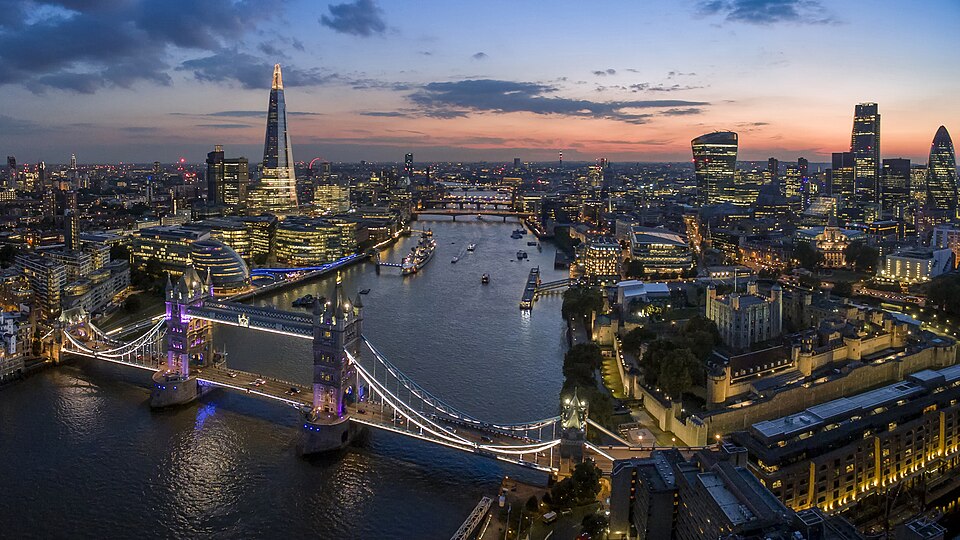
London sits on the River Thames in southeast England, on low-lying ground that rises gently away from the water on both banks. The Thames is not a decorative backdrop here; it is the reason the city exists. The river runs through the heart of the metropolis, bending and widening as it moves east toward a tidal estuary that feeds out to the North Sea some 80 kilometres downstream. Walking the South Bank on a clear morning, with the Tower of London on the opposite shore and the modern profile of the Shard rising behind it, gives a rare sense of history and the present occupying the same space.
The city's density is striking but rarely oppressive. London is built at a human scale in most neighbourhoods, with Victorian terraces, Georgian squares and market streets breaking up the skyline long before you reach any of the financial towers. Green space appears more often than first-time visitors expect. The city stretches across what was once a patchwork of separate counties, and the differences between districts still carry traces of those older identities.
History, Identity and Local Stories
The ancient core of what is now London was founded by the Romans, who established a settlement they called Londinium on the north bank of the Thames. The City of London, which occupies that same original footprint and retains its medieval boundaries to this day, remains the financial heart of the city and one of the most historically layered square miles anywhere in Europe. Immediately to its west, the City of Westminster became the centre of national government and Parliament over subsequent centuries, a role it still holds.
London grew with extraordinary speed during the nineteenth century, expanding outward from these two historic cores to absorb surrounding villages, towns and countryside. At the height of that expansion it was the largest city on earth. The modern administrative area of Greater London, which came into being in 1965, is governed by 33 local authorities alongside the Greater London Authority. The city's population stands at around 8.9 to 9.1 million within Greater London, while the wider metropolitan area reaches approximately 15 million, making it the largest urban area in Western Europe.
The Tower of London, rising from the north bank of the Thames, has served as fortress, royal palace and prison across nine centuries of history. Its association with some of the most dramatic episodes in English history — from the execution of Anne Boleyn to the imprisonment of figures whose names read, as one source puts it, like a who's who of English history — has made it one of the most visited historic sites in the country. The ghosts said to linger in the fortress, including the mysterious figure reported to appear in the White Tower, have generated a substantial body of local legend that forms a distinct strand of London's storytelling culture.
Daily Life, Economy and Culture
London functions simultaneously as a national capital, a global financial centre, a transport hub, a cultural engine and a collection of intensely local neighbourhoods that each have their own rhythms. The financial district concentrated in the City of London and the Canary Wharf area to the east employs hundreds of thousands of people, but the city's economy is far more varied than any single sector. Institutions, universities, the arts, media, hospitality and a vast service economy all shape how the city moves through a typical day.
Free Museums and Galleries
One of London's most practical advantages for visitors is the scale of free admission to major cultural institutions. The British Museum, in Bloomsbury, holds one of the world's great collections of human history and culture, including the Rosetta Stone and the Elgin Marbles, and does not charge general admission. The Natural History Museum in South Kensington similarly offers free entry to its permanent collection, which includes the celebrated blue whale skeleton and extensive natural science exhibits. The National Gallery on Trafalgar Square houses one of the finest collections of European painting in the world, also without a general admission charge.
For more specific interests, the London Transport Museum in Covent Garden charts the history of the city's transport network and the design culture that grew around it. The Charles Dickens Museum, housed in a home the novelist actually occupied at 48 Doughty Street between 1837 and 1839, offers a more intimate kind of contact with the city's literary past. Leighton House Museum, in Holland Park, gives a sense of Victorian artistic ambition — its Arab Hall in particular tends to stop visitors mid-step — that is genuinely surprising when you step inside. Visitors should check each venue's current admission policy directly, as charges, hours and temporary closure arrangements can change.
Markets and Food
Covent Garden, the historic market area in the West End, has been a focal point of London's public life since the seventeenth century. It draws visitors for its street performers, covered market hall and surrounding streets. The broader city has a strong market culture: Borough Market near London Bridge is one of the most established food markets in the capital, while Portobello Road in Notting Hill and Brick Lane in the East End serve different tastes and different days of the week. Market operating days and hours vary; visitors should check locally before making a specific trip around any single market.
West End Theatre
The West End theatre district, concentrated in and around Shaftesbury Avenue, Covent Garden and the Strand, is one of the largest and most active commercial theatre districts in the world. Long-running musicals occupy several of the larger houses, while straight plays, transfers from subsidised venues and new productions fill the rest of the calendar. Booking in advance is strongly recommended for popular shows, particularly at weekends and during school holiday periods. The Official London Theatre website and major booking platforms are the reliable starting points for current listings and availability.
What Visitors Notice
Whitehall, the broad ceremonial road connecting Trafalgar Square to the Houses of Parliament, passes through the administrative core of British government and is lined with buildings whose names carry considerable historical weight. St Martin-in-the-Fields on Trafalgar Square is one of the city's best-known churches, notable as much for its cultural programming and crypt café as for its architecture. The church has hosted concerts and community events for decades and remains an active venue rather than a purely tourist site.
The Thames itself rewards attention at any time of day. Boat services operate on the river and offer a different perspective on landmarks that can feel crowded at street level. The Thames Path, a waymarked walking route along both banks, is maintained by Transport for London and offers sections of varying length suitable for different levels of commitment, from a short South Bank stroll to a full-day walk east toward Greenwich.
Getting There and Around
London is one of the best-connected cities in the world. Multiple major airports serve the city, with connections to destinations across Europe, North America, Asia and beyond. London Charing Cross station, which sits close to the Embankment and the heart of the West End, is a key mainline rail terminus serving southeast England, with trains running to destinations including Kent and the southeast coast. Network Rail's station pages carry current information on facilities and services at Charing Cross.
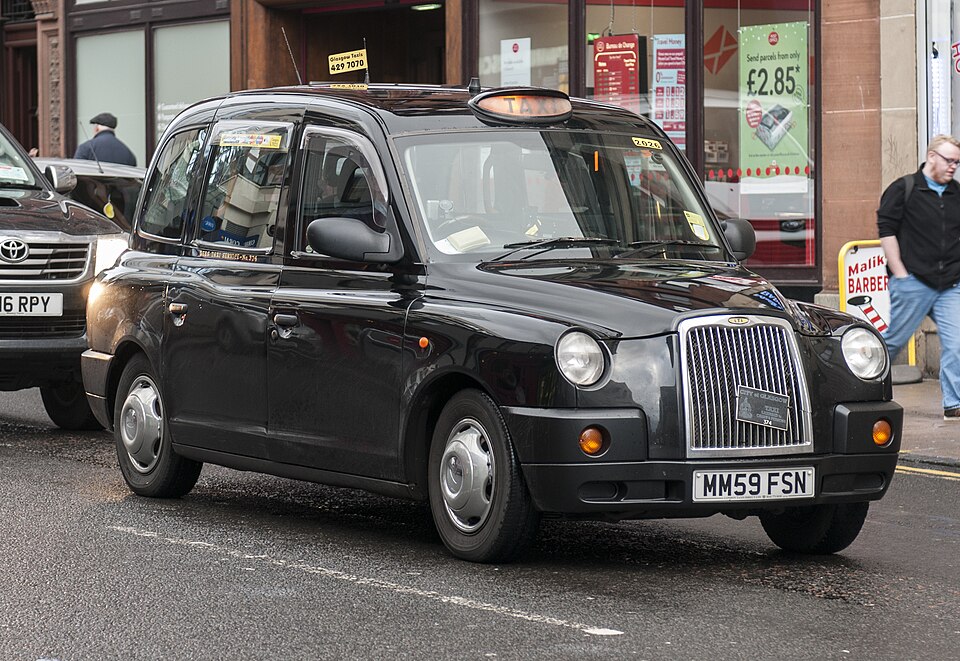
Within the city, the London Underground is the primary rapid transit network and covers most central and inner areas along with many outer districts. The network is supplemented by Overground rail, the Elizabeth line, the DLR, trams in south London, river bus services on the Thames, taxis and a cycle hire scheme. Bus route 6 connects Aldwych, Trafalgar Square and Charing Cross to Piccadilly Circus as one of the central routes; the full bus network map is available through Transport for London. The Oyster card and contactless bank card payment systems are accepted across buses, the Underground and many rail services, simplifying day-to-day travel considerably.
Visitors travelling without a car will find London functions well as a car-free destination. The combination of Underground, bus, Overground and river services means most major attractions and neighbourhoods are accessible without driving, and the Congestion Charge zone in central London makes car use an active cost consideration in any case. Transport for London's journey planner is the most reliable tool for planning specific routes and checking current service status.
Seasonal Considerations
London's peak visitor season runs broadly from late spring through summer, when crowds at major attractions, central accommodation prices and queue times are at their highest. July and August in particular see significant visitor pressure around landmarks such as the Tower of London, the British Museum and Buckingham Palace. Autumn, from September through November, tends to offer a more manageable balance of reasonable weather and reduced crowds. Winter brings cold temperatures and occasional frost or ice, and daylight hours are short, but the city's indoor offer — museums, theatres, markets — remains strong throughout. The Christmas period brings its own crowds and event programme. Visitors who dislike peak-season pressure should consider late September through November or January through early March as quieter windows.
Practical Notes
The US State Department currently rates the United Kingdom at Level 1, indicating that normal precautions apply. The UK's own FCDO guidance is consistent with standard travel conditions, with no specific regional restrictions affecting London at the time this guide was prepared. Visitors should check official advisory sources before travel. The city observes Greenwich Mean Time in winter and British Summer Time in the warmer months. English is the primary language, though given the city's extraordinary diversity, it is far from the only one you are likely to hear.
London's Free Museums and Galleries
Several of London's most significant museum and gallery collections charge no general admission fee, including the British Museum in Bloomsbury, the National Gallery on Trafalgar Square and the Natural History Museum in South Kensington. The London Transport Museum in Covent Garden, the Charles Dickens Museum on Doughty Street and Leighton House in Holland Park offer more specific interests, though some of these charge admission. Visitor numbers at major free museums peak during summer school holidays; weekday mornings in autumn and winter tend to be quieter. Always check current admission policies and opening hours directly with each venue before visiting.
Read the full London's Free Museums and Galleries guide
Sources: British Museum - Wikipedia • Charles Dickens Museum - Wikipedia • British Museum official site • National Gallery, London - Wikipedia • 25 Best Museums in London for 2026 - Time Out
West End Theatre and Booking
London's West End theatre district, concentrated around Shaftesbury Avenue, Covent Garden and the Strand, runs dozens of productions simultaneously across commercial and subsidised venues. Long-running musicals occupy the largest houses while smaller venues programme new plays and transfers. Booking in advance is strongly recommended for popular shows, particularly at weekends and during school holidays. The Official London Theatre website and individual theatre box offices are the most reliable booking routes. The National Theatre, Old Vic and Barbican offer strong alternatives outside the strictly commercial West End, often at lower prices.
Sources: Official London Theatre - West End Guide • West End Theatre Guide - Ticketmaster UK