

What Medina is known for
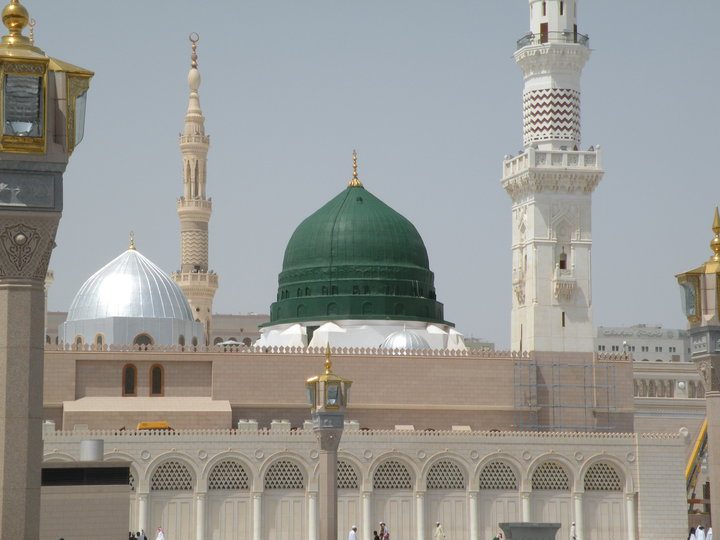
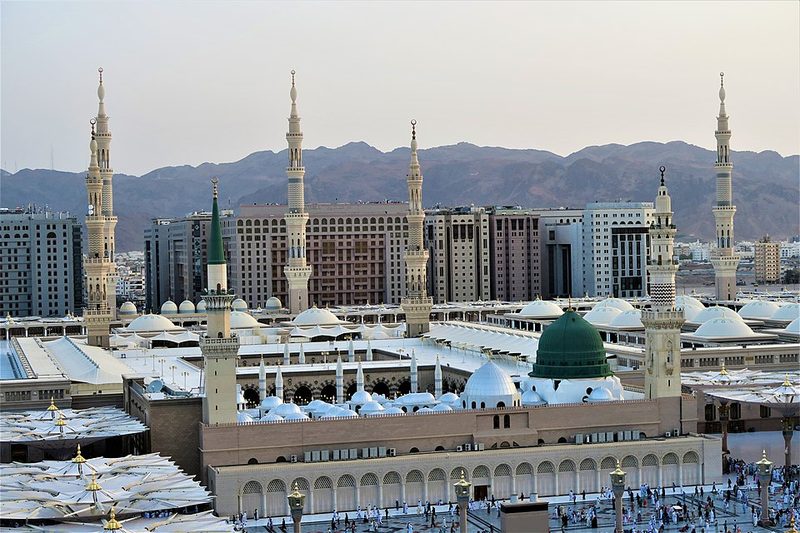
Medina is the second-holiest city in Islam, a city of approximately 1.3 million people in the Hejaz region of western Saudi Arabia. The Prophet's Mosque—Al-Masjid al-Nabawi—stands at its spiritual and physical centre, surrounded by fourteen centuries of accumulated history, scholarship, and pilgrimage tradition. The city sits at 603 metres above sea level in a valley framed by the Hejaz Mountains, with volcanic peaks visible from the urban core. Around 14 million visitors arrive annually, most on religious pilgrimage, though the city has opened more broadly to international visitors in recent years.
The urban landscape reflects this dual character. Modern commercial districts, hotels, and transport infrastructure serve the constant flow of pilgrims, while the older quarters near the mosque retain traditional street patterns and market activity. The city covers 589 square kilometres, with dense development in the valley and open volcanic terrain beyond. The climate is hot and arid year-round, and the rhythm of daily life follows Islamic prayer times closely.
History and Significance
The city was known as Yathrib before 622 CE, when Prophet Muhammad migrated here from Mecca—an event called the Hijra, which marks the beginning of the Islamic calendar. Muhammad established the first Muslim community in Medina and built Al-Masjid al-Nabawi, which remains the city's focal point. The early Islamic period saw pivotal battles nearby, including the Battle of Uhud in 625 CE and the Battle of the Trench, both critical to the survival and consolidation of the nascent Muslim community.
Medina served as the seat of Islamic governance and scholarship under successive caliphates—Umayyad, Abbasid, and later Mamluk—and remained a centre of learning and pilgrimage throughout. The Ottoman Empire held the city for centuries, followed by periods under Egyptian control, before incorporation into the modern Kingdom of Saudi Arabia in the twentieth century. This layered history is visible in the architecture, the layout of markets, and in Al-Baqi' Cemetery, which holds the graves of many figures important to early Islamic history.
The sources record over 1,500 archaeological and historical sites within the city boundaries, reflecting Medina's role as what many consider the cradle of Islamic culture and civilisation. UNESCO recognised Medina in 2024 as part of the Global Network of Learning Cities, acknowledging its ongoing significance as a centre of heritage and education.
The Prophet's Mosque and Central District
The Prophet's Mosque dominates the visitor experience. The complex blends traditional Islamic architecture with modern extensions to accommodate the flow of pilgrims. The mosque can hold vast numbers of worshippers, particularly during peak pilgrimage seasons, and the surrounding plaza and covered walkways expand capacity further. Prayer times structure the rhythm of activity across the city, with commerce and movement pausing five times daily.
The districts immediately surrounding the mosque retain character distinct from the modern suburbs. Traditional markets—souqs—sell religious texts, prayer items, dates, perfumes, and everyday goods. The Old Bazaar offers handicrafts, jewellery, spices, and the locally famous Medina dates. The Central Date Market, also known as Souq Al Tumor, offers over 150 varieties of dates and draws visitors from across the region.
Al-Baqi' Cemetery lies near the mosque and holds significant importance in Islamic tradition as the burial site of many companions of the Prophet and members of his family. Uhud Mountain, site of the 625 CE battle, stands north of the city. Visitors can reach the site, which includes the Martyrs' Cemetery where companions who died in the battle are buried. The mountain offers elevated views across the surrounding landscape and remains a place of reflection for many visitors.
Historic Mosques and Sites
Quba Mosque, located in the southern outskirts, is recognised as the first mosque built in Islam. The structure dates to the days immediately following the Hijra and remains an important pilgrimage site. Qiblatain Mosque is historically significant as the location where the direction of prayer (qibla) was changed from Jerusalem to Mecca during Muhammad's lifetime. The Seven Mosques, a cluster of small historic mosques, relate to the Battle of the Trench and attract visitors interested in early Islamic military history.
Wadi Aqiq, a valley west of the city, holds geographical and historical significance in Islamic tradition as a route used by prophets and travellers. The area offers natural scenery distinct from the urban core, though access and visitor facilities should be confirmed locally.
Museums and Cultural Sites
Dar al-Madinah Museum, also known as Al Madina Museum, presents the history and heritage of Medina through around 2,000 exhibits. The museum covers the city's pre-Islamic era, the arrival of Islam, the life of Prophet Muhammad, and the development of Medina over the centuries. Three halls focus on urban history, early Islamic narratives, and architectural styles unique to the region. The exhibits include rare paintings, artefacts, and displays on traditional Medinan craftsmanship.
The International Fairs and Museums of the Prophet's Biography and Islamic Civilization, a permanent museum opened in 2021, uses modern interactive methods to present the Prophet's biography and the message of Islam. The Hijaz Railway Museum documents the history of the Ottoman-era railway that once connected Damascus to Medina, a project of significant historical and technological importance in the region.
Food and Local Specialities
Medina's food culture reflects the wider Hejazi region. Ajwa dates, grown in the area, are particularly prized and widely available in the city's markets. Traditional dishes include madfoon (meat slow-cooked in a tandoor-like oven and served with fragrant rice), saleeg (a creamy rice dish), and jarish (a wheat-based dish). Mandi, popular across Saudi Arabia and Yemen, is available in specialist restaurants—lamb or chicken slow-cooked and served with spiced rice. Grilled meats, rice dishes, and date-based sweets feature prominently. All food in Medina is halal.
Practical Orientation
Medina is served by Prince Mohammad Bin Abdulaziz Airport, which handles both domestic and international flights. The city is connected to other Saudi cities by highway, including routes to Mecca, Jeddah, and Riyadh. Ground transport within the city includes taxis and private car hire; visitors should confirm current public transport routes and services locally, as systems continue to develop.
The population is approximately 58.5% Saudi citizens and 41.5% foreign nationals, reflecting the city's role as an international destination and hub for workers supporting the pilgrimage economy. The annual growth rate is around 2.34%, driven by religious tourism and urban development. Hospitality infrastructure has expanded accordingly, with accommodation options ranging from budget hotels to higher-end establishments, many concentrated near the Prophet's Mosque.
Visitors should be respectful of religious practices and dress codes, particularly in and around sacred sites. The city observes Islamic prayer times, and many businesses close temporarily during these periods. Non-Muslims are permitted in Medina (unlike Mecca, which remains closed to non-Muslims), though entry to the inner sanctum of the Prophet's Mosque is restricted to Muslims.
When to Visit
The climate is hot and arid year-round, with summer temperatures often exceeding 40°C. The cooler months between November and February offer more comfortable conditions for walking and outdoor exploration. The city is busiest during Ramadan, Hajj season, and Islamic holidays, when accommodation can be scarce and prices rise. Visitors planning to travel during these periods should book well in advance.
Is Medina Worth Visiting?
For Muslims, Medina holds profound spiritual significance as the city of the Prophet and the location of Al-Masjid al-Nabawi. The city offers an immersive experience of living Islamic tradition and access to over 1,500 historic sites connected to the early period of Islam. For those interested in Islamic history, architecture, and culture, Medina provides context and authenticity that few other places can match. Non-Muslim visitors are now permitted in the city, though access to the most sacred areas remains restricted, and the city's character is shaped fundamentally by its religious function.
Where to Stay in Medina
Accommodation is concentrated near the Prophet's Mosque, where proximity to the central religious site is the primary consideration for most visitors. The area immediately surrounding the mosque offers hotels at various price points, many within walking distance. Booking well in advance is essential during peak pilgrimage periods. Areas further from the mosque tend to be quieter and may offer better value, though transport to the central district should be considered.
How Many Days Do You Need in Medina?
Most visitors spend between two and four days in Medina. Two days allows time for visiting the Prophet's Mosque, Al-Baqi' Cemetery, and one or two of the historic mosques such as Quba. Three to four days permits a more thorough exploration, including Uhud Mountain, the date markets, museums such as Dar al-Madinah, and the outer historic sites. Those with a deep interest in early Islamic history may wish to stay longer to visit the many archaeological and historic locations within the wider city area.
Is Medina Safe for Visitors?
According to the UK FCDO and US State Department travel advisories, Saudi Arabia has regional restrictions. The FCDO advises against all but essential travel to Eastern Province and Riyadh Province. Medina, located in Medina Region in western Saudi Arabia, is not among the restricted areas. Country-level advice for Saudi Arabia notes general safety considerations including local laws and customs. Visitors should consult current official guidance from the UK FCDO and US State Department before travel, as conditions and regulations can change.