Official Travel Advisory and Current Safety Context
The UK Foreign, Commonwealth and Development Office (FCDO) advises against all travel to Belarus, including Minsk. This is the most serious level of official travel advice the FCDO issues. The stated reasons are significant: travellers face a substantial risk of arrest or detention for activities that the Belarusian authorities consider illegal, including conduct that would not be criminal in many other countries. Political activities connected to Belarus, even those undertaken outside the country prior to arrival, may attract questioning, arrest, or detention. The FCDO also notes that Belarus does not recognise dual nationality, which severely limits the practical assistance the British government can offer to dual nationals in difficulty. A further stated concern is a low but real risk that direct conflict linked to the war in Ukraine could extend to Belarusian territory. The FCDO advises that UK government support would be severely limited in such circumstances. Readers are directed to the official FCDO Belarus travel advice page and to the US State Department advisory at travel.state.gov for the most current information. This article does not constitute safety advice; consult official sources before making any decisions.
Recent Conflict and Risk Background
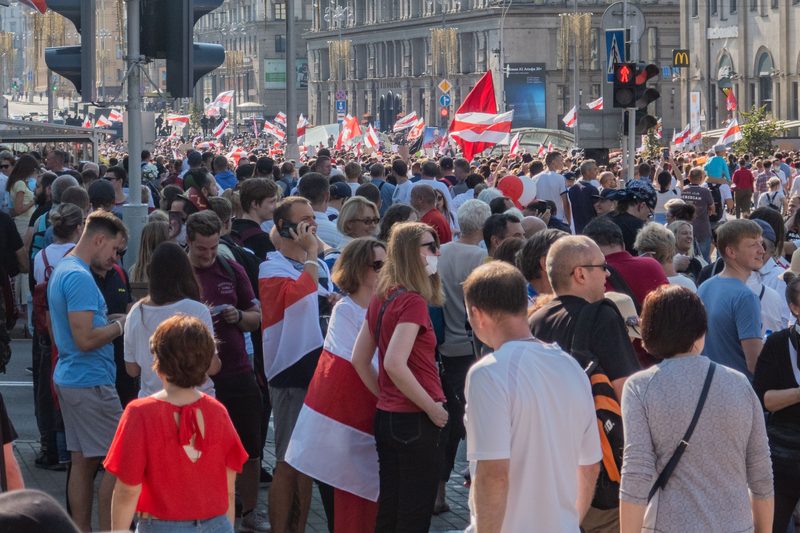
The political environment in Belarus has been under sustained international scrutiny since the disputed presidential election of August 2020, which was followed by large-scale protest rallies in Minsk and other cities. Subsequent years saw significant suppression of civil society, independent media, and political opposition activity. Images from that period documented substantial public demonstrations in the capital. Official advisories reflect concerns that this environment continues to present material risks to foreign nationals, including those who have previously expressed views on Belarusian politics or participated in protest-related activity abroad. The proximity of Belarus to the ongoing conflict in Ukraine is separately cited by official sources as a contributing risk factor, though Belarus itself has not been the site of declared armed conflict. All risk assessments in this section are drawn from published official advisory sources and should be verified against current guidance.
Historical Context
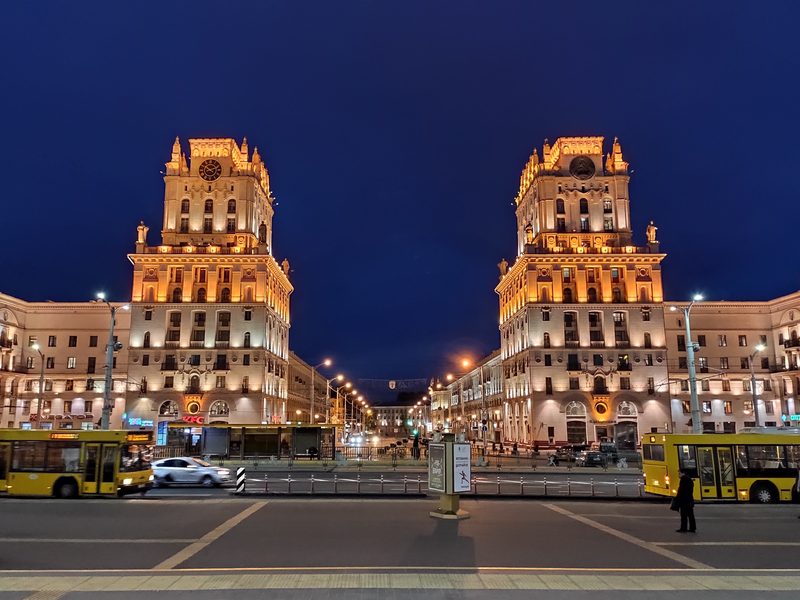
Minsk is the capital and largest city of Belarus. The city has historical roots stretching back to medieval times and has undergone substantial reconstruction, most notably following near-total destruction during the Second World War. The post-war rebuilding produced the wide boulevards, monumental architecture, and formal urban planning that remain characteristic of the city's central districts today. This physical legacy, including the broad axis of Independence Avenue, is among the most visually distinctive features of the Belarusian capital.
Geography and Settlement Setting
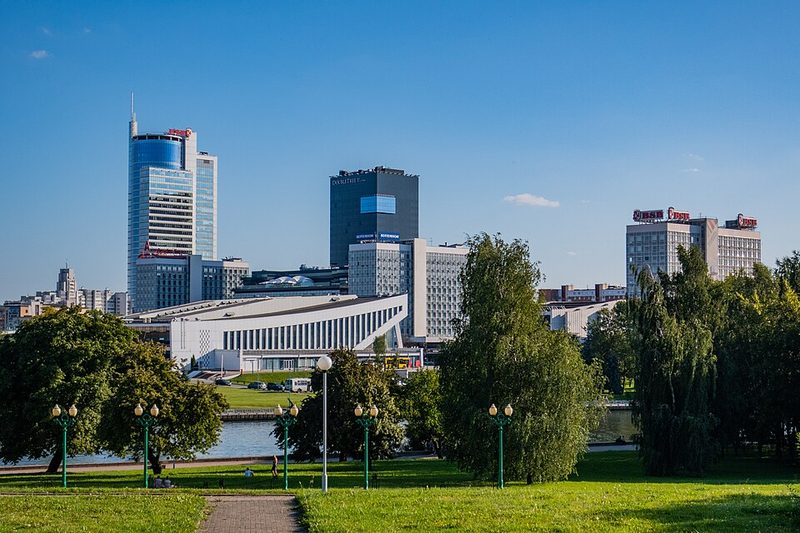
Minsk sits in the central part of Belarus, positioned on the Svislach River and the now-subterranean Nyamiha River. The city lies at an elevation of 222 metres above sea level and occupies a relatively flat landscape within the broader East European Plain. Its coordinates place it at approximately 53.9 degrees north, 27.6 degrees east. With a recorded population of 1,742,124, Minsk is one of the most populous cities in Europe and functions as both the national capital and the administrative centre of Minsk region and Minsk district. The city holds a special administrative status within Belarus. Beyond its national role, Minsk serves as one of the administrative capitals of the Commonwealth of Independent States and the Eurasian Economic Union, reflecting its regional significance in post-Soviet institutional arrangements.
Daily Life and Local Context
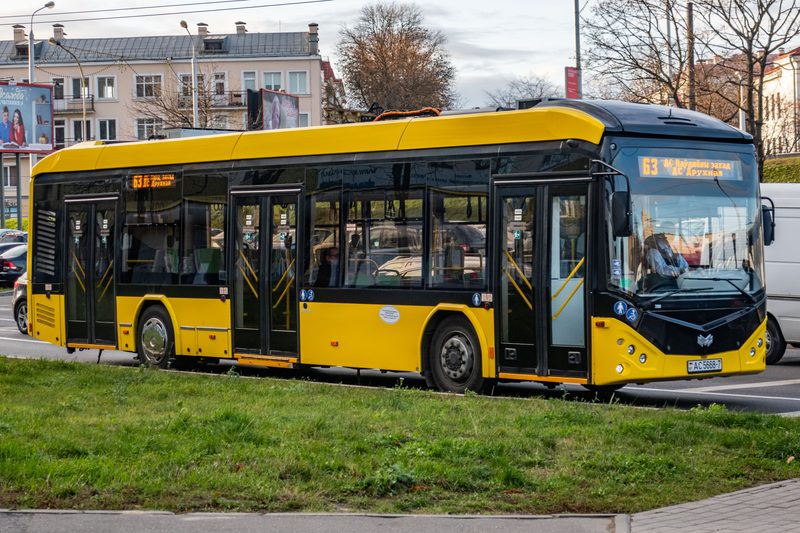
Minsk is a dense metropolitan centre with a well-developed urban infrastructure. The city contains several rail stations serving different functions: Stantsyya Minsk-Pasazhyrski is the principal passenger rail terminus, while Stantsyya Minsk-Uskhodni and Stantsyya Minsk-Pawnochny serve additional passenger functions. Minsk-Sortirovochniy operates in a freight and marshalling capacity. The city's transport network includes metro, bus, and trolleybus services, and the electrobus has become part of the urban fleet in recent years. Among the cultural institutions documented in available sources are the National Art Museum, the Belarusian State Youth Theatre, and the Zair Azgur Memorial. The Cathedral of the Virgin Mary and the Church of the Exaltation of the Holy Cross at the Calvary Cemetery are among the religious buildings recorded in the city. Gorky Park is referenced as a public green space. The Svislach River passes through the city and has been associated with waterfront and park areas, though current access and conditions should not be assumed from this reference alone.
Practical Notes
Any person considering travel to Minsk or anywhere in Belarus should consult the FCDO Belarus travel advice and the US State Department Belarus advisory before taking any steps. Both the UK and US governments have issued their most serious levels of travel warning. Operational details for transport, institutions, and public services in Minsk can change without notice and should be verified through current official or consular channels. This article is provided as a reference resource only and does not encourage or facilitate travel to an area under active do-not-travel advice.
Frequently Asked Questions
What is the current official travel advice for Minsk?
The UK FCDO advises against all travel to Belarus, which includes Minsk. This is the highest level of travel warning the FCDO issues. The stated reasons include a significant risk of arrest or detention under Belarusian law, a low risk of spillover from the war in Ukraine, and severely limited capacity for the UK government to assist nationals in difficulty. Readers should check the FCDO Belarus travel advice page and the US State Department advisory at travel.state.gov for current information.
What are the main rail stations in Minsk?
The principal passenger rail terminal is Stantsyya Minsk-Pasazhyrski. Stantsyya Minsk-Uskhodni and Stantsyya Minsk-Pawnochny also serve passenger functions. Minsk-Sortirovochniy is a freight and marshalling facility. Current schedules and operational status should be verified through official transport sources.
What is the population of Minsk?
The recorded population of Minsk is 1,742,124. Sources indicate the population is approaching two million, placing Minsk among the most populous cities in Europe.
Does Belarus recognise dual nationality?
According to the FCDO, Belarus does not recognise dual nationality. This limits the practical consular assistance available to dual nationals who encounter difficulties in the country.
What timezone does Minsk observe?
Minsk observes the Europe/Minsk timezone, which corresponds to UTC+3 with no daylight saving adjustment.