Mombasa is Kenya's oldest city and its principal port — a place where Indian Ocean trade history is readable in its streets rather than reconstructed in a museum. The Old Town's carved wooden doors, the Swaminarayan and Jain temples of the Gujarati merchant quarter, the harbour that still handles container ships and traditional dhows, and a music culture rooted in Taarab and coastal rhythms all give the city a character distinct from anywhere else in Kenya. The Standard Gauge Railway connects it to Nairobi in a few hours, the Likoni Ferry links it south along the coast, and Moi International Airport handles domestic and international arrivals. First-time visitors should allow at least two or three days to move through the Old Town properly, reach the waterfront, and understand the city's layered geography.
In This Guide
Read the guide as a story
The Ghost Drummers of Mombasa Old Town
Setting and First Impressions
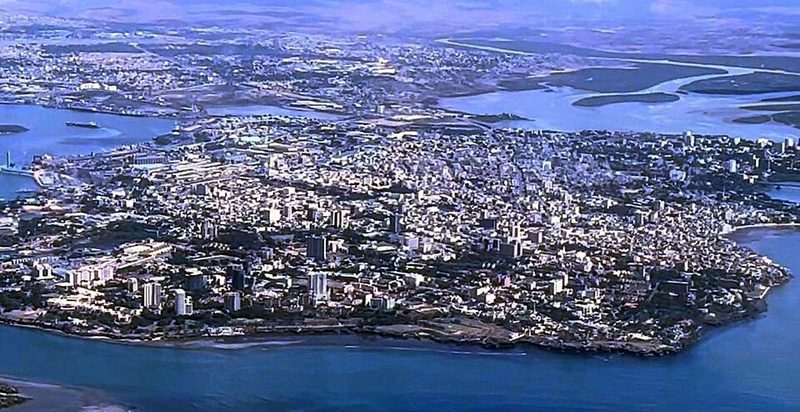
Mombasa occupies a compact island — Mombasa Island — separated from the mainland by Tudor Creek to the north and Kilindini Harbour to the south. The mainland area north of the island lies just across the water, one of several reminders that the city extends outward in every direction via bridges and ferries onto the mainland. At roughly 20 metres above sea level the terrain is flat, the horizon open, and the Indian Ocean is never far from sight.
Arriving for the first time, many visitors are struck by how much the island contains: a working port, a dense commercial centre, ancient mosques, ornate temples, colonial-era churches, and residential neighbourhoods that shift character from street to street. The CBD's blue-and-white colour scheme — intended to evoke the Indian Ocean — gives the commercial centre a visual identity unusual among East African cities. The station area around Central, the SGR terminus, is functional rather than scenic; the Old Town, a ten-minute journey away, is where the city's texture becomes most distinctive.
History and Identity
Mombasa's position on the East African coast made it one of the most strategically important ports on the Indian Ocean trade routes for centuries. It served as the first administrative capital of British East Africa before Nairobi assumed that role in 1907, and that chapter is still readable in the city's street layout and architecture. Long before the British arrived, Arab, Persian, Indian and African commerce had already made the city a crossroads, according to Encyclopaedia Britannica's account of its early settlement history.
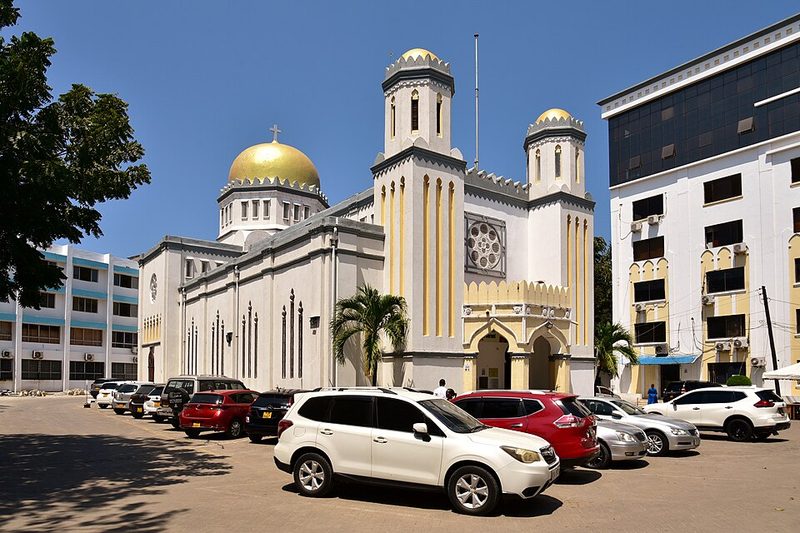
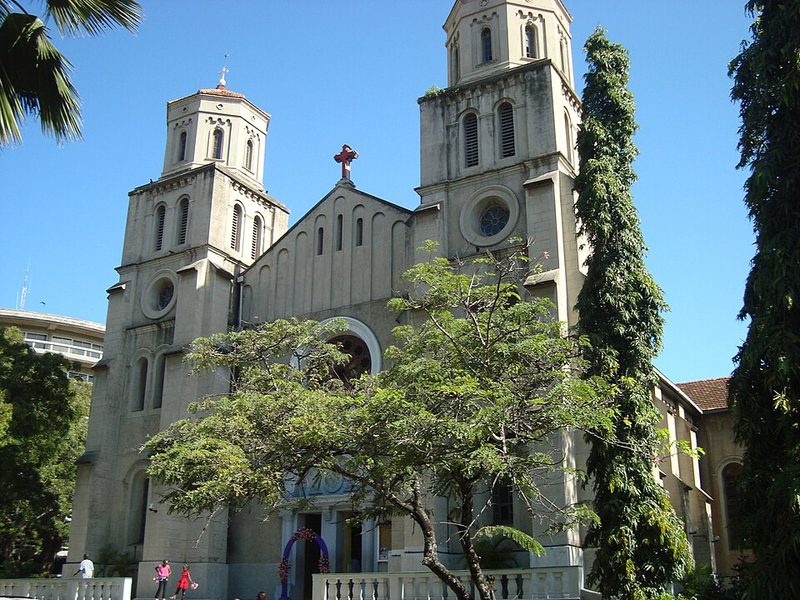
The Indian Ocean connections remain visible in the city's religious geography. The Swaminarayan Temple on the island is one of the most noted landmarks of Mombasa's Gujarati Hindu community — a community with deep roots in the city's commercial life documented across multiple local sources. A short distance away, the Jain Temple (formally the Shree Parshva Vallabh Jain Temple, also documented as the Mombasa Derasar) represents a community that has been part of the city's civic and trading life for well over a century; Jain Treasures records it as a functioning place of worship and heritage site. The ACK Mombasa Memorial Cathedral and a Catholic church near the waterfront complete a picture of multiple faiths having built lasting institutions in unusually close proximity.
The city's original Swahili communities — the Wakilindini, Wachangamwe and Watangana, documented in Swahili-language historical sources — settled along the island's southern channels and are considered the indigenous inhabitants of the settlement that grew into modern Mombasa.
Music, Culture and Nightlife
Mombasa has historically been a creative hub for East African music. Taarab — a coastal vocal and orchestral form with roots in Arab, Indian and African musical traditions — has a real and documented presence here, as does Benga and other coastal popular genres. The city's New Year is known for beach parties hosted by local radio stations with live music, a tradition noted in regional festival coverage.
The Little Theatre Club is one of the city's most significant cultural institutions. Located on land owned by Kenya Railways, it has served as a performing arts venue for the coastal region for decades, hosting international acts including Louis Armstrong in the 1960s, and has nurtured local performers through its programming. Local reporting in KenyanVibe and The Standard newspaper both document the venue's history and an ongoing campaign by arts supporters to preserve it against land-tenure pressures. Its current operating status should be verified locally before visiting, but its history as a cultural anchor for the city is well established.
Mombasa's nightlife scene, concentrated largely in the Bamburi and Nyali areas north of the island, has a documented history as one of the most active on the Kenyan coast. Bora Bora International Night Club was a prominent name in that scene; its current status is uncertain and visitors should verify locally. The Mombasa Carnival, a celebration of coastal Kenyan culture, is among the city's recurring public events — dates and current scheduling should be confirmed with official Kenyan tourism sources before travel.
What Visitors Notice
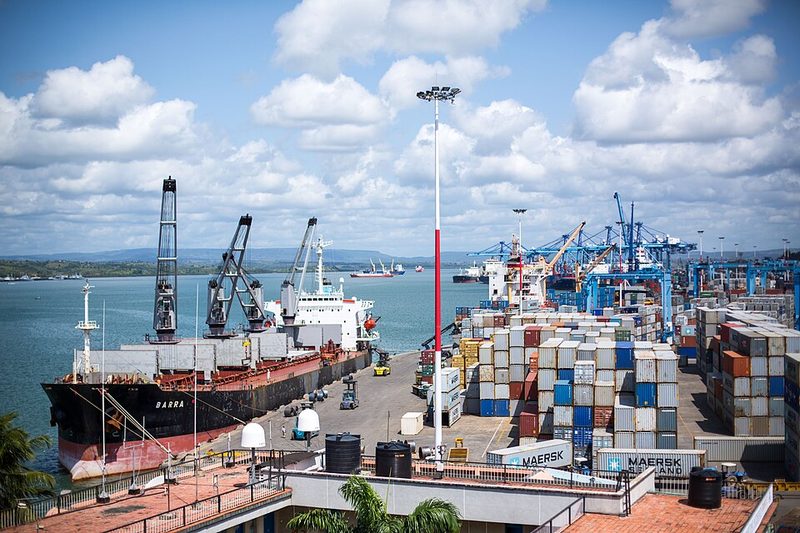
The Old Mombasa area rewards slow walking. The narrow lanes, the elaborately carved wooden doors that are a signature of old Swahili merchant houses, and the compressed sense of layered history make it the part of the city that most clearly does not feel like anywhere else in Kenya. Along the waterfront, container ships and traditional dhows are not an uncommon combination on the same horizon — Kilindini Harbour, one of the largest natural harbours in Africa, remains the engine of the city's economy and Kenya's principal port for international cargo.
The Mombasa Golf Club is one of the older leisure institutions in the city, noted in local sources. Rabai, a community a short distance from the city, is accessible for day trips. The city's community of Gujarati Hindu and Jain families has given the island a density of religious architecture — temples, mosques and churches in proximity — that is worth navigating deliberately rather than stumbling across.
Fort Jesus, the 16th-century Portuguese fortification near the Old Town waterfront and a UNESCO World Heritage Site, is the most prominent heritage attraction and is covered in a dedicated WorldTownGuide page at Fort Jesus Museum, alongside current official resources at fortjesusmombasa.com. No visit to the Old Town is complete without at least passing its walls.
Getting There and Around
Mombasa is served by Moi International Airport on the mainland, which handles domestic and international flights. Kenya Airways and Jambojet are among the operators serving the airport, with routes including connections to Nairobi and onward regional destinations; current routes and schedules should be confirmed directly with airlines.
The Standard Gauge Railway (Madaraka Express), operated by Kenya Railways, connects Mombasa to Nairobi with the city-side terminus at Central station. The journey has become a popular alternative to road travel between Kenya's two largest cities; book ahead and check current schedules directly with Kenya Railways. The station area is the practical arrival point for rail travellers, and onward transport into the island is straightforward from there.
The Likoni Ferry, operated by the Kenya Ports Authority, crosses Kilindini Harbour between Mombasa Island and the mainland suburb of Likoni. It carries both road traffic and foot passengers, making it a key route for anyone heading toward the south coast. The Mtongwe channel crossing is a second ferry option. Within the city, matatus (shared minibuses) and tuk-tuks are the most common local transport; taxis and ride-hailing apps are available for longer distances or late-night journeys.
Practical Notes
Both the UK Foreign, Commonwealth and Development Office and the US State Department maintain travel advisories for Kenya. Mombasa is not in any area subject to do-not-travel or avoid-all-travel restrictions; the FCDO's regional restrictions apply to border areas near Somalia and Ethiopia and to parts of Lamu and Tana River counties. Both advisories recommend increased general caution across Kenya, including awareness of crime and the potential for civil unrest. Visitors should read the full current guidance at gov.uk/foreign-travel-advice/kenya and at travel.state.gov before travelling and monitor updates during their stay.
Mombasa observes East Africa Time (UTC+3). The currency is the Kenyan Shilling (KES).