Image: Wikipedia / Wikimedia Commons
Image: Wikipedia / Wikimedia Commons
Montevideo is a city that rewards curiosity. As the capital and largest city of Uruguay, it serves as the cultural, political, and economic heartbeat of the nation, yet maintains an approachable, human-scaled character quite different from other major South American capitals. Perched on the northeastern bank of the Río de la Plata, this coastal metropolis blends European architectural influences with distinctly Rioplatense culture, creating a place where old quarters whisper their histories while contemporary neighborhoods pulse with creative energy.
Montevideo occupies a strategic position on the southern coast of Uruguay, situated on the northeastern bank of the Río de la Plata estuary at coordinates -34.90328N, -56.18816E. The city sits at just 34 meters above sea level, making it a low-lying coastal settlement that has always maintained intimate contact with the water. The city proper covers an area of 201 square kilometers and is home to approximately 1,270,737 residents, though the metropolitan region extends well beyond the formal city limits.
The Río de la Plata, one of South America's most important waterways, forms the city's western and southern boundaries. This massive estuary—wider in many places than it is long—creates a distinctive landscape where the water often takes on a muddy, pale appearance quite different from the Atlantic proper. The city's coastline has shaped its identity for centuries, serving as both gateway and protector. The terrain is predominantly flat, with subtle variations that hardly register as hills by most standards, yet these gentle rises have historically influenced settlement patterns and neighborhood character.
Montevideo's origins lie in the 18th century, when Spanish colonizers established a fortified settlement as a strategic counterpoint to Buenos Aires across the water. The city grew from this modest military foundation into a thriving port and commercial center. The old city, particularly the area around the Cathedral and the Plaza Constitución, preserves many colonial-era buildings that testify to these early centuries. Narrow streets in the Cuidad Vieja (Old City) reflect the tight urban planning of the Spanish period.
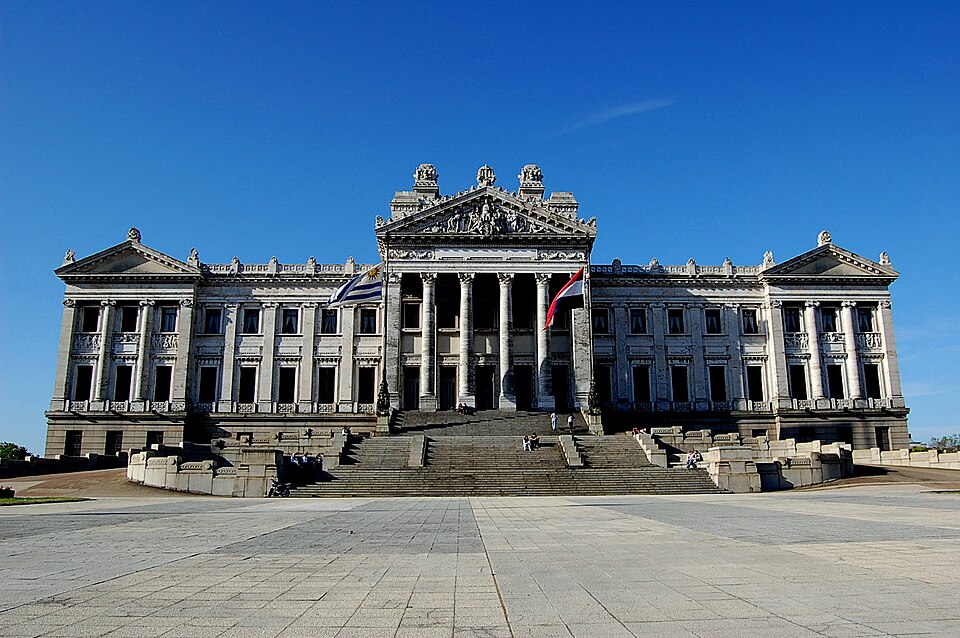
The 19th and early 20th centuries saw Montevideo transformed by waves of European immigration and economic development based on livestock export and trade. This period left an architectural legacy visible throughout the city center, with grand buildings reflecting Belle Époque sensibilities and neoclassical proportions. Montevideo became known for its progressive politics and cultural sophistication—Uruguay itself pioneered social reforms in the region, and Montevideo was where many of these innovations were first implemented. This heritage of progressivism and cultural openness remains part of the city's identity today.
The Old City remains the natural starting point for exploration. The densely built quarter preserves centuries of urban layering, where colonial churches stand near 19th-century commercial buildings, and narrow passages open onto small plazas. The Cathedral, the Teatro Solís, and the various museums housed in historic structures offer glimpses into the city's past. Walking these streets, you encounter the texture of real urban history—not a theme park version, but the actual living core of the city where people continue to work and shop and meet.
Beyond the Old City, Montevideo's character spreads outward through distinct neighborhoods, each with its own feel and attractions. The waterfront has been progressively developed with parks and promenades that allow public access to the Río de la Plata. These green spaces, particularly toward the east, offer escape from the urban density and provide venues for walking, cycling, and simply watching the water. The city's cultural institutions—museums, galleries, theaters, and libraries—are scattered throughout, reflecting the strong intellectual and artistic traditions for which Montevideo is known.
The broader metropolitan area includes suburban neighborhoods and smaller towns that have grown together with the capital. Parks and natural areas exist within and around the city, offering respite from urban streets and opportunities for more active recreation. The landscape here is gentle and unspectacular by dramatic standards, but possesses a quiet appeal once you attune yourself to it.
Montevideo is served by Carrasco International Airport, located roughly 25 kilometers east of the city center, which receives flights from major South American hubs and beyond. This is the primary entry point for air travelers. The city is also connected by long-distance bus services throughout the region and maintains ferry connections across the Río de la Plata to Buenos Aires.
Within Montevideo itself, transportation relies primarily on a network of buses that cover the sprawling city efficiently, supplemented by walking in denser neighborhoods. The flat terrain makes the city navigable by bicycle as well. While the city is large in area, distances are manageable, and most neighborhoods are accessible through relatively straightforward transit.
Montevideo's economy has traditionally centered on port commerce, livestock processing, and financial services. The city serves as headquarters for much of Uruguay's governmental and financial apparatus. In contemporary Montevideo, you'll find growing creative industries, technology sectors, and tourism infrastructure layered over these traditional economic bases.
For residents, Montevideo offers a particular quality of life often remarked upon by those who have lived elsewhere in Latin America—it is a functioning, orderly city where institutions generally work as intended. The pace is notably less frenetic than Buenos Aires or São Paulo. There exists a strong civic culture, cafes serve as genuine social centers rather than mere consumption points, and intellectual and artistic pursuits command social respect.
Montevideo proper has a population of approximately 1,270,737 residents, comprising roughly one-third of Uruguay's entire national population. The city sits at an elevation of 34 meters above sea level. The local timezone is America/Montevideo, which is three hours behind Coordinated Universal Time.
The city's character derives substantially from being Uruguay's national capital in a small, prosperous country—there is a European orderliness here combined with Spanish-American social patterns and, increasingly, a cosmopolitan layer of contemporary culture. For visitors, this translates into a city that is accessible, safe, and interesting without overwhelming sensory demands—a place where genuine exploration and conversation remain possible.
View larger map — © OpenStreetMap contributors
Flight delayed or cancelled?
You could be owed up to €600 compensation. Check your eligibility for free.Do you know Montevideo, Montevideo Department?
Share local tips, recommend a hotel, list a business or add a photo.
✏️ Share your knowledge about Montevideo, Montevideo DepartmentDo you know Montevideo, Montevideo Department?
Share local tips, recommend a hotel, list a business or add a photo.
✏️ Share your knowledge about Montevideo, Montevideo Department