


Official Travel Advisory and Current Safety Context
Both the US State Department and UK Foreign Commonwealth & Development Office maintain Level 4 "Do Not Travel" advisories for Iraq, including Mosul and Nineveh Governorate. The official guidance cites terrorism, armed conflict, kidnapping, civil unrest, and missile strikes as primary security risks. Regional escalation and fast-moving unpredictable events have created conditions that official sources assess as presenting serious and ongoing danger to international travellers and residents. Potential targets include locations with US or international connections, civilian infrastructure, and security force positions. These advisories apply to all areas of Iraq, including northern regions.
Recent Conflict and Risk Background
Mosul was occupied by the Islamic State from June 2014 until its liberation in July 2017. During the three-year occupation, the city served as one of the Islamic State's principal bases in Iraq. Mass executions of civilians, military personnel, and individuals accused of offences by the occupying force were documented as a regular occurrence. The conflict and occupation caused widespread destruction of infrastructure and cultural sites.
Following liberation in 2017, the city has undergone reconstruction efforts. The Mosul Cultural Museum, which houses archaeological collections spanning thousands of years, underwent major rehabilitation work after the conflict period. However, recovery remains ongoing, and official travel advisories continue to identify Iraq as subject to heightened security risk due to remaining terrorist threats, armed clashes, and regional instability.
Historical Context
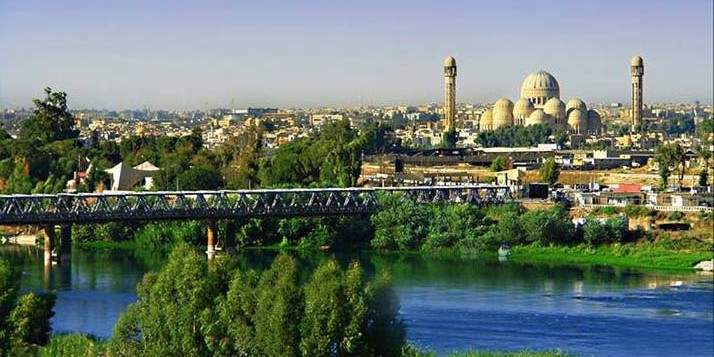
Mosul stands on the western bank of the Tigris River, across from the archaeological mound of ancient Nineveh, once the capital of the Assyrian Empire and among the largest cities in the ancient world. The region carries significance spanning multiple historical periods: the Assyrian civilizations that flourished here thousands of years ago, the medieval Islamic period, and the Ottoman era, traces of which remain visible in the Old City's architecture and layout.
The University of Mosul is recorded as one of the largest educational and research centres in the Middle East and the second largest university in Iraq. The settlement has historically functioned as a major commercial and administrative hub for northern Iraq.
Geography and Settlement Setting
Mosul is Iraq's second-largest city by population and the capital of Nineveh Governorate in northern Iraq. It sits at 228 metres above sea level. The Tigris River flows through the area, and the archaeological remains of ancient Nineveh lie on the eastern bank, making the settlement a point where contemporary urban life adjoins sites of ancient civilisation.
The city's regional role centres on commerce, education, and administration for northern Iraq. Its location in Nineveh Governorate places it within a region of significant historical and cultural heritage but also an area historically vulnerable to instability and conflict.
Daily Life and Local Context
Limited current information is publicly available regarding everyday conditions in Mosul. The available sources indicate that the city is described as undergoing reconstruction following the 2017 liberation, with efforts to rehabilitate cultural institutions and infrastructure. The Mosul Cultural Museum, designed by architect Mohamed Makiya, represents an important cultural anchor; the museum houses collections reflecting the region's archaeological heritage.
The Old City exhibits Ottoman-period architecture and urban patterns. A multicultural character is attributed to the settlement in available descriptions, though detailed contemporary accounts of neighbourhood life, local industry, markets, and daily practices are sparse in current sources.
Tourism and cultural sector initiatives have been launched under Iraq's "Visit Iraq" programme as of 2025, with organised tours reportedly available to explore Assyrian civilisation remains at the ancient Nineveh site and Ottoman heritage in the Old City. However, these developments operate within the context of the official Do Not Travel advisory, and intending visitors should treat any tourism activity as dependent on current security conditions and official guidance.
Practical Notes
Intending visitors or those with professional obligations in Mosul should consult the most current official travel advisories from their government before any consideration of travel. The US State Department (travel.state.gov) and UK FCDO (gov.uk/foreign-travel-advice/iraq) maintain up-to-date guidance on security conditions and restrictions.
Professional access, humanitarian work, or essential business travel may be possible under specific circumstances, but such decisions require direct consultation with official sources and relevant security expertise. Local conditions can change rapidly, and decisions should be based on the latest official risk assessment rather than historical or cultural information alone.