Image: Wikipedia / Wikimedia Commons
Image: Wikipedia / Wikimedia Commons
Multān is a city that refuses to fade into history despite the weight of millennia upon its shoulders. Located in Punjab province in eastern Pakistan, this ancient settlement stands as one of Asia's oldest continuously inhabited cities, a place where the past breathes through the present in unexpected moments. With a population of 2,169,915, Multān functions as a major cultural, religious, and economic centre of the Punjab region, serving as the administrative headquarters for both the Multān Division and Multān District.
Multān sits along the eastern bank of the Chenab River at an elevation of 126 metres above sea level, positioned at coordinates 30.19679N, 71.47824E in the Asia/Karachi timezone. The city's location on the Chenab has shaped its character and prosperity for centuries, providing water for irrigation and serving as a natural artery for trade and communication. The river landscape creates a striking geographical feature that distinguishes Multān from other Punjab cities; the annual flooding patterns and the fertile plains surrounding the waterway have historically determined settlement patterns and agricultural practices in the region.
The terrain around Multān is relatively flat, characteristic of the Punjab plains, though the river introduces topographical variation and lush vegetation along its banks. This geography has made the region naturally suited to agriculture, particularly cotton and wheat production, industries that remain central to local life today. The landscape itself tells a story of human adaptation and settlement stretching back further than most people realize.
Multān's history is profound and complex, extending back into antiquity in ways that few South Asian cities can claim. The city has witnessed the rise and fall of empires, the passage of conquerors, and the evolution of cultures across its long lifespan. This deep historical presence permeates the city's character, visible in its architecture, its spiritual significance, and the stories that locals still tell about their home.
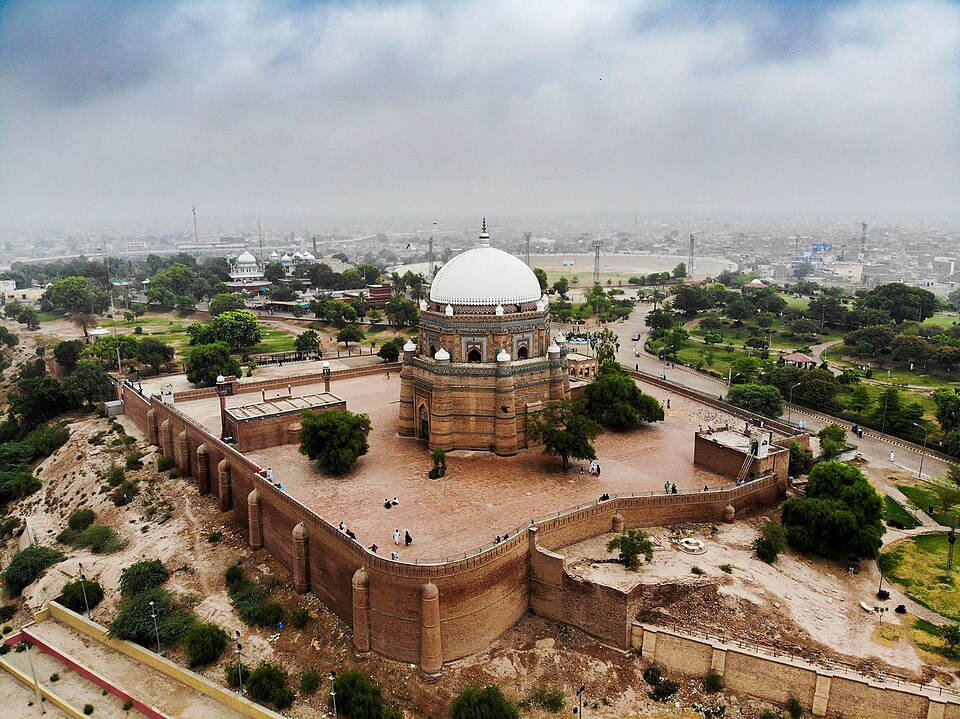
The city holds particular religious significance in Islamic tradition and has been an important centre of Sufi spiritual culture. This heritage remains evident in the city's character and in the various historical structures that dot the urban landscape, many of which reflect different periods of the city's multilayered past. For visitors and residents alike, walking through Multān often feels like moving through layers of time, each era leaving its mark on the physical and cultural fabric of the place.
Multān's appeal lies primarily in its historical and cultural dimensions rather than in conventional tourist attractions. The city contains numerous shrines and monuments that reflect its long history and religious importance, though visitors should approach these spaces with cultural sensitivity and respect. The Chenab River itself provides a natural focal point for the city, and walks along its banks offer perspectives on both the landscape and local life.
The city's bazaars and markets reflect the commercial energy that has long characterized Multān as a trading centre. These spaces provide genuine insights into daily life, local commerce, and traditional crafts. The atmosphere in the old city quarters preserves something of Multān's historical character, though like many ancient cities, it exists in constant dialogue between preservation and contemporary urban change. Visitors interested in textiles, ceramics, and other traditional crafts will find living examples of these traditions throughout the city, produced by artisans who continue methods passed down through generations.
For those with specific historical or religious interests, local guides and community members can provide deeper context about particular sites and their significance. The city's spiritual dimension continues to attract pilgrims and scholars, making it an active centre of religious life rather than merely a historical museum.
Multān is connected to other major Pakistani cities by road, rail, and air. The city serves as a significant transport hub within Punjab, with bus services connecting it to Lahore, Karachi, and other major centres. The railway network provides another option for intercity travel, while those flying can access the city via Muhammad Zia-ul-Haq International Airport. Within the city itself, local transport options include taxis, auto-rickshaws, and the informal minibus system that characterizes Punjab's transport culture. Walking remains viable in certain areas, particularly the older quarters, though distances can be significant in parts of the modern city.
For the 2.17 million people who call Multān home, the city functions as an economic and cultural centre rather than a destination frozen in time. Agriculture remains fundamental to the regional economy, with cotton production particularly important historically and continuing in present forms. Trade, commerce, and small-scale manufacturing provide livelihoods for many residents. The city pulses with the energy of a working city where people pursue daily life, raise families, and conduct business. This reality—of Multān as a living, breathing place where ordinary life unfolds—is perhaps more valuable than any heritage narrative. Visitors who take time to observe how people actually live here, to sit in tea shops, to watch markets in motion, understand Multān far better than those who merely check off historical sites.
Multān lies at an elevation of 126 metres above sea level and operates on Asia/Karachi timezone. The city's population of approximately 2.17 million makes it Pakistan's sixth-largest city, a significant urban centre whose importance extends well beyond its historical significance. The climate follows Punjab's patterns, with hot summers and mild winters, so visitors should prepare accordingly. The city is accessible year-round, though spring and autumn offer the most pleasant conditions for exploration.
View larger map — © OpenStreetMap contributors
Flight delayed or cancelled?
You could be owed up to €600 compensation. Check your eligibility for free.Do you know Multān, Punjab?
Share local tips, recommend a hotel, list a business or add a photo.
✏️ Share your knowledge about Multān, PunjabDo you know Multān, Punjab?
Share local tips, recommend a hotel, list a business or add a photo.
✏️ Share your knowledge about Multān, Punjab