In This Guide
Newcastle is a coastal city of around 508,000 people, roughly 160 kilometres north of Sydney on the New South Wales coast. Built on coal, steel and shipping, it carries that industrial history openly—in its architecture, its conversations, and the active port that still anchors the Hunter River mouth. It is not a resort city, and it does not pretend to be. What it offers instead is a working city that has been reinventing itself since the closure of BHP's steelmaking plant in the late 1990s and the 1989 earthquake that demolished more than 300 buildings, including the Newcastle Workers Club and the Century Theatre. The results of that reinvention are visible across the waterfront, in refurbished heritage streetscapes, and in a city that has a clearer sense of its own identity than many places twice its size.
Setting and Orientation
Newcastle sits at sea level on a broad coastal plain where the Hunter River meets the Pacific Ocean. The geography is relatively flat and open—quite different from Sydney's hilly, harbour-fragmented layout. The climate is warm and humid; the Australian spring and summer months (October to February) bring higher bushfire risk, and visitors travelling during that period should monitor local bushfire advice. The city proper anchors the broader Greater Newcastle metropolitan area, which takes in Lake Macquarie to the south and the Lower Hunter region, including Maitland, Cessnock, and Port Stephens.
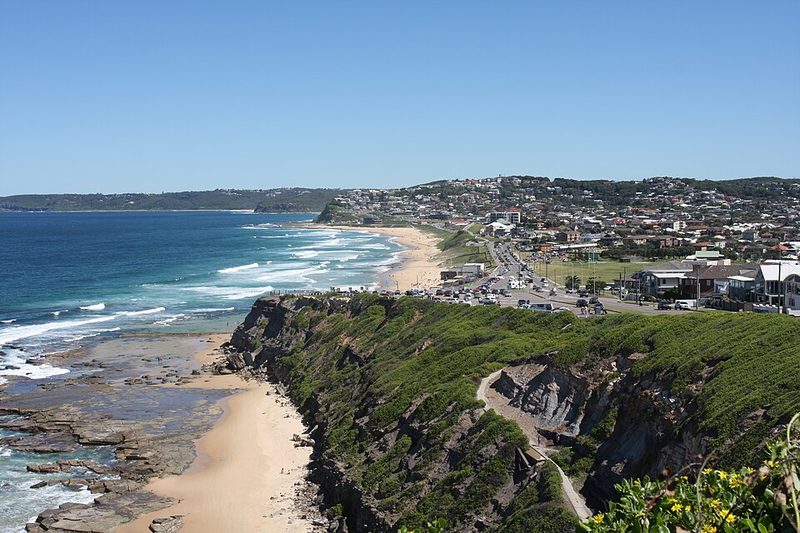
The waterfront and central city beaches are the most immediate orientation points for arriving visitors. Nobbys Beach marks the northern tip of the city's beach strip; Merewether Beach lies to the south. Between them, the Bathers Way—a 6-kilometre coastal walk—connects the city's beaches and ocean baths, passing through the Newcastle Memorial Walk section along the way. The walk is one of the more practical ways to get a quick read on the city: it covers heritage foreshore, ocean pools, and active surf beaches within a single route.
History and Industrial Identity
Coal was discovered in the region in the early 19th century, transforming a small convict settlement into an industrial hub. For much of the 20th century, the city's economy was dominated by BHP's steelworks—one of Australia's largest industrial operations—along with coalmining and the export port. BHP closed its Newcastle steelmaking operations in the late 1990s, ending an era that had defined the city for generations. The 1989 earthquake, which hospitalised 160 people and damaged approximately 50,000 buildings, accelerated the city's reckoning with its built environment and its future.
Residents often call themselves Novocastrians—a term with classical roots—and the city's colloquial nickname, "Newy", reflects a working-class directness that is still evident in local character. The industrial past is treated as identity rather than embarrassment: former industrial sites, heritage buildings, and the remnants of working docks remain woven into the urban fabric rather than erased by redevelopment.
The traditional country of the Awabakal and Worimi peoples predates European settlement. The City of Newcastle formally acknowledges this continuing cultural heritage.
The Waterfront and Beaches
The waterfront area has seen the most visible investment in recent decades, moving from pure industrial function toward mixed public use. The heritage-listed former Newcastle railway station remains a landmark at the city's historic centre. The Newcastle Art Gallery holds a nationally significant collection, and the Newcastle Museum covers the area's history, including the industrial era and the 1989 earthquake. Blackbutt Reserve, a bushland reserve within the metropolitan area, offers around 10 kilometres of boardwalks and walking trails.
The Bathers Way walk (6 km, Merewether Ocean Baths to Nobbys Beach) is the most practical coastal route for visitors on foot. Merewether Ocean Baths and other ocean pools along the strip are a consistent feature of the local coastline. Swimming conditions vary seasonally; local surf conditions should be checked before entering the water.
Getting There and Around
Newcastle is accessible by road from Sydney via the Pacific Motorway (M1), approximately 160 kilometres south of the city. Newcastle Airport handles domestic and some international services; visitors should check current flight schedules and ground transport options directly with the airport and airlines, as routes and frequencies change. The former Newcastle city railway terminus has been curtailed as part of transport restructuring; current rail access should be confirmed with Transport for NSW before travel. Local bus services operate within the city and surrounding areas. The city centre and waterfront are manageable on foot; distances across the broader metropolitan area require other transport.
Practical Notes
Both the UK Foreign, Commonwealth & Development Office and the US State Department rate Australia at their lowest advisory level—normal precautions—with no regional restrictions. No specific advisories apply to Newcastle. Visitors should be aware of bushfire risk during spring and summer (October to February) and monitor the NSW Rural Fire Service and local emergency services for current conditions during those months. Newcastle's climate is warm and humid year-round; accommodation should be booked ahead, particularly during summer and during major local events.
Newcastle Art Gallery
Newcastle Art Gallery holds one of the most significant public art collections in Australia, housed in a 1970s brutalist building in the city's Civic precinct. With a permanent collection exceeding 7,000 works, the gallery spans Australian art from the colonial era through to contemporary practice, including a substantial body of First Nations work. Its scale and depth are often underestimated by visitors who associate major public galleries primarily with Sydney or Melbourne.
The Permanent Collection
The collection traces Australian art history in breadth rarely matched outside the capital cities. Colonial works include paintings of early Newcastle by Joseph Lycett, a convict artist whose depictions of the Hunter River settlement remain important documentary records. The Australian Impressionist holdings include works by Arthur Streeton, Hans Heysen, Elioth Grüner, Sydney Long, and Lloyd Rees. The twentieth-century modernist holdings feature work by William Dobell, who was born in Newcastle, giving the gallery a particular connection to one of Australia's most recognised portrait painters. The collection also holds important Indigenous barks and poles, alongside a growing collection of contemporary First Nations paintings, and works on paper, photography, and sculpture.
Exhibition Programme
The gallery presents up to 20 local, national and international exhibitions each year, with around 90 per cent curated in-house. This means the programme draws substantially on the permanent collection rather than relying on travelling blockbusters, which gives even repeat visitors reason to return. The gallery has also commissioned site-specific new works as part of its expansion, including pieces by Newcastle-based artists Renae Lamb and Adam Manning installed in the front entry and central atrium.
Recent Expansion
The City of Newcastle has undertaken a significant expansion of the gallery building. New gallery spaces and a double-height atrium opened during the New Annual festival, an arts and culture event held in the city. First Nations works from the collection were among the first displayed in the new spaces. The expansion represents a considered investment in the city's cultural infrastructure, positioning the gallery more prominently within the national conversation about regional arts.
Practical Information for Visitors
The gallery is located in the Civic precinct in Newcastle's city centre, making it walkable from central accommodation and public transport. Admission to the permanent collection is free, though some special exhibitions may carry an entry fee — visitors should confirm current arrangements before attending. The gallery is open Tuesday through Sunday; it closes Monday. Opening hours are broadly morning to late afternoon, with a late opening on the last Friday of each month except December. As hours and exhibition schedules change, visitors should check the official gallery website for current details before visiting.
Sources: Newcastle Art Gallery - Wikipedia • Newcastle Art Gallery - Museums & Galleries NSW • Newcastle Art Gallery Expansion - City of Newcastle • Newcastle Art Gallery - Art Collector Magazine
The Bathers Way Coastal Walk
The Bathers Way is a 6-kilometre coastal walking route that connects Nobbys Beach in the north of Newcastle's city beaches to Merewether Ocean Baths in the south. It is consistently described as one of the premier coastal walks in New South Wales, and for most visitors it is the most direct way to experience Newcastle's geography — the relationship between the city's working heritage, its headlands, and the Pacific Ocean.
The Route and What It Passes
Walking south from Nobbys Beach, the path passes through Newcastle Ocean Baths, along clifftop sections, through King Edward Park, past the Bogey Hole — a convict-hewn ocean pool cut from sandstone rock platform, dating to the early colonial period — and continues through Bar Beach and Dixon Park Beach before reaching Merewether Beach and Merewether Ocean Baths at the southern end. The Newcastle Memorial Walk forms part of the route. Each section offers different character: harbour mouth views near Nobbys, clifftop exposure mid-route, and calmer surf beach approaches toward Merewether.
The Bogey Hole
One of the walk's most historically significant stops is the Bogey Hole, a rock pool carved by convicts on the orders of the colonial commandant and cut directly into the sandstone platform below the cliffs. It has been in continuous use since the early colonial era and serves as both an unusual swimming spot and a reminder of the city's convict history. It is freely accessible at low tide conditions, though visitors should check conditions locally as ocean pools are subject to weather and wave exposure.
Practical Notes for Walkers
The 6-kilometre length is manageable for most walkers at a relaxed pace; the route is not technically demanding. It can be walked in either direction. Newcastle's city beaches are patrolled during peak seasons, but conditions vary — visitors should swim only at patrolled areas and within flags. The route is best walked in dry, clear conditions given cliff and headland exposure. Public transport and walking access from the city centre to Nobbys or Merewether means the walk need not be a return trip. Cafes and public facilities are present at several points along the route; visitors should check current availability locally.
Sources: Bathers Way - City of Newcastle • The Bathers Way - Visit NSW • Walk the Bathers Way - Visit Newcastle • Important Moments in Newcastle History (Bogey Hole) - Hunter Living Histories
Newcastle Jazz Festival
The Newcastle Jazz Festival is an annual event held at Newcastle City Hall, drawing audiences from across Australia and internationally. Now in its fourth decade, it is one of the longer-running music festivals of its kind in regional Australia and is managed by the Newcastle Hunter Jazz Club.
History and Scale
The festival has been running for more than 35 years, a duration the Newcastle Jazz Club's president has described as a significant achievement for a regional event. It has built a reputation among music fans that extends well beyond the Hunter region, attracting visitors from all Australian states and from New Zealand. The programme covers a range of jazz styles, from traditional to contemporary, with the intent of reaching audiences with varied tastes.
Venue
The festival is held at Newcastle City Hall, a heritage venue in the city centre that the event's organisers describe as iconic and conveniently located. Holding the festival in a single venue rather than across multiple sites gives it a concentrated character different from sprawling multi-stage festivals.
Practical Notes for Visitors
The festival is typically held in August, though visitors should confirm dates and programme details with the Newcastle Jazz Club or the official NSW Government events listing before making travel plans, as schedules vary year to year. The NSW Government recognises the event in its official events directory. Tickets and specific performance times should be checked with the event organiser directly, as the most current information will not be available through third-party sources.
Sources: Newcastle Jazz Festival - Newcastle Hunter Jazz Club • Newcastle Jazz Festival - NSW Government • 36th Newcastle Jazz Festival - What's On Newcastle
Awabakal and Worimi Peoples - Country and Heritage
The Newcastle region sits on the traditional country of the Awabakal and Worimi peoples. Their connection to this land predates European settlement by many thousands of years, and that relationship — to the Hunter River, the coastal headlands, and the surrounding country — continues today. The City of Newcastle formally acknowledges this in its official communications and on its heritage pages.
Country and Boundaries
The Awabakal people are the traditional custodians of the land centred on the lower Hunter River and the coast around Newcastle. The Worimi people's country extends to the north, including the Port Stephens area. The two groups' territories overlap in the broader Newcastle region, and both are formally acknowledged by the City of Newcastle as traditional custodians of the land on which the city operates. For Aboriginal peoples, Country is understood as an interconnected set of relationships — to land, water, sky, and living things — rather than simply a geographic boundary.
Pre-contact and Colonial History
Prior to European arrival, both groups maintained deep relationships with the coastal and riverine environment. Awabakal language and culture were documented in part by early colonial missionaries, though this documentation was shaped by the constraints and assumptions of the period. At Birubi, near Port Stephens, excavations of shell middens have been conducted at an Aboriginal site that served as an important burial and ceremonial location for the Worimi people before 1788. The arrival of a British penal settlement in the early 19th century — bringing coal extraction, timber cutting, and then large-scale industry — fundamentally disrupted the lives and lands of both peoples.
Contemporary Presence
Both the Awabakal and Worimi peoples maintain a presence in the region today. The University of Newcastle hosts the Wollotuka Institute, an all-Indigenous academic unit that moved into its building, Birabahn, in 2002 and was officially established as an institute in 2009. The City of Newcastle's heritage programme includes Aboriginal cultural heritage as a distinct strand, and the city's official Aboriginal culture page acknowledges the ongoing relationship of both peoples to the land. Visitors who want to engage with this history will find some information through the City of Newcastle's heritage pages, though the depth of visitor-facing programming varies and those seeking more substantive engagement should seek out specific cultural organisations and events.
Sources: Aboriginal Culture - City of Newcastle • Awabakal - Wikipedia • Awabakal Language and Aboriginal History • Our country, our culture - the land of Awabakal and Worimi - Move to Newcastle