

What Ordos is known for
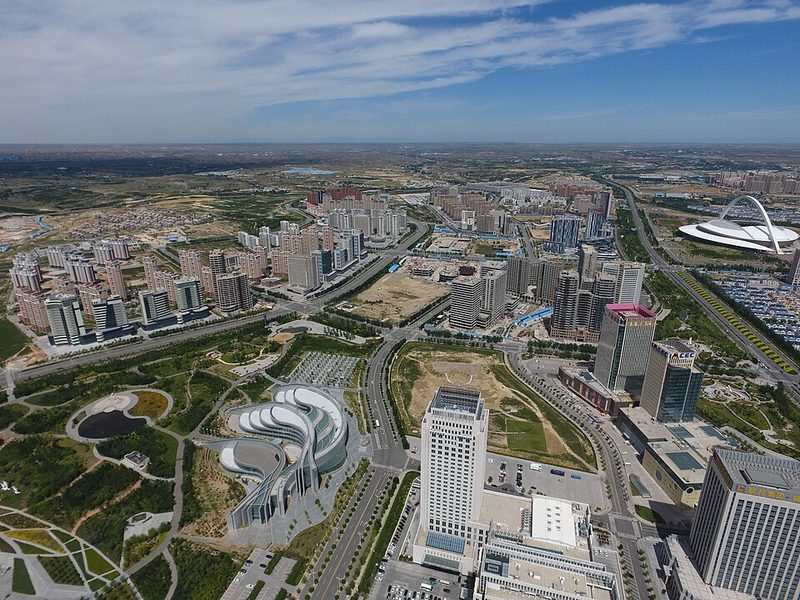
Ordos sits on the Ordos Plateau, where the Yellow River bends northward through Inner Mongolia. With nearly two million residents spread across a prefecture-level city that covers a vast area, this is less a compact urban centre than a collection of separate districts—each with distinct character. The older historical core at Dongsheng carries the weight of the region's past, while Kangbashi represents something altogether different: a newly built urban area designed at ambitious scale. Between them lies Altan Xire, completing the picture of a city in transition.
Arriving in Ordos
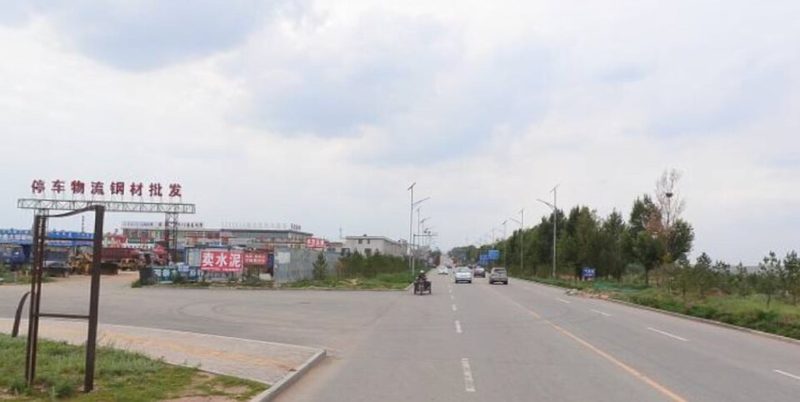
You arrive at high elevation on plateau terrain. The landscape is open and expansive, shaped by the Yellow River's loop around the Ordos region. The climate is continental, with cold, dry winters and warm summers. The plateau setting means clear skies are common, though spring dust storms occur. Streets in Kangbashi are notably spacious, with modern Chinese urban planning evident in wide avenues and geometric layouts. Dongsheng, by contrast, retains older urban texture and serves as the administrative and cultural anchor. The scale of development reflects decades of investment, particularly since Ordos gained prefecture-level city status in 2001.
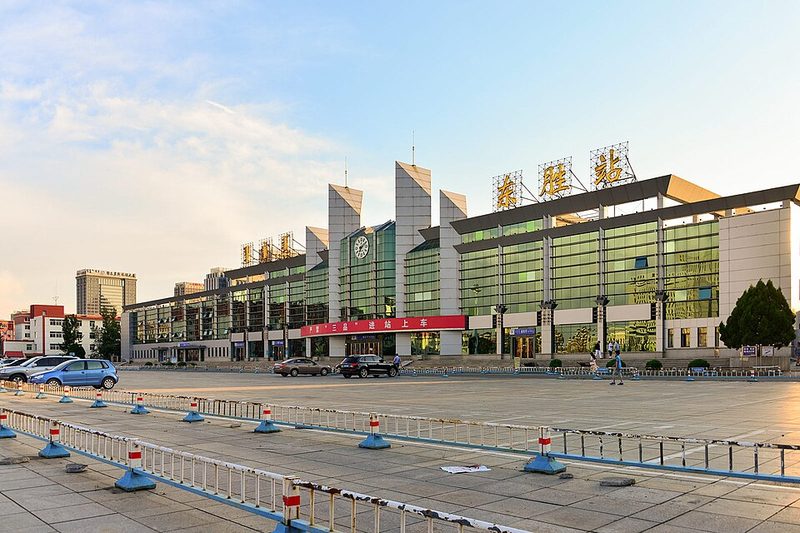
Ordos is served by Ordos Yitai Airport, with domestic connections to major Chinese cities. Ground transport from the airport operates via taxi or arranged transfer; confirm specifics on arrival or in advance. Within the municipality, the considerable distances between Dongsheng, Kangbashi and Altan Xire mean taxi services or local buses are necessary for moving between districts. The spacing makes walking impractical for inter-district travel. Road networks connect the city to other regions of Inner Mongolia.
The Kangbashi District
The most distinctive feature of contemporary Ordos is Kangbashi New Area, developed largely from the early 2000s onwards. The district presents wide streets, planned infrastructure and modern architecture built at confident scale. The Ordos Museum, designed by MAD Architects, stands as a notable example of contemporary Chinese architecture. Kangbashi was designated as a 4A-level scenic spot based on its urban landscape—the first Chinese city district to receive this classification. Notable public spaces include Genghis Khan Square and the Wulan Mulun River Scenic Spot. The Ordos International Circuit, built in 2010 and designed to resemble a galloping horse, hosted touring car and formula racing events.
Kangbashi gained international attention as a so-called "ghost city" due to low initial occupancy rates following its rapid construction. Population has grown since the early years, though the sense of scale and newness remains striking compared to older Chinese cities with deeper continuity of settlement.
History and Economic Foundations
The Ordos Plateau region has deep historical roots tied to movement and trade along the Yellow River. Ancient sources record the presence of the Xiongnu, a confederation of nomadic peoples who inhabited the eastern Eurasian Steppe from around the 3rd century BC through the late 1st century AD. The plateau itself, bounded by the Yellow River on three sides, shaped the rhythms of settlement and conflict across centuries.
The visible economy reflects manufacturing and automotive industry. The city hosts automotive production facilities, including operations by Hawtai Motor Group, which manufactures passenger vehicles and SUVs at its Ordos location. Battery manufacturing for electric vehicles operates in the region through Envision and related joint ventures. Coal resources have historically underpinned the regional economy, though the industrial mix reflects China's broader shift toward cleaner energy and modern manufacturing. Ordos is also known as "China's Cashmere Capital," with the cashmere industry producing millions of products annually. Major brands including Erdos Group operate from the city, with brand valuations reaching 180.97 billion yuan in 2024.
Beyond the City: Desert and Grassland
The region around Ordos offers access to distinctive Inner Mongolian landscapes. The Kubuqi Desert, the seventh-largest desert in China, lies nearby and has become a popular tourism destination. The name means "string on a bow" in Mongolian—the bow being the winding Yellow River, with the golden sand belt forming the string. Xiangshawan, also known as Resonant Sand Bay (the breeze-blown dunes produce sonorous sounds), operates as a developed desert resort. The area includes activities, accommodation and transport infrastructure.
The Ordos Grassland in Ejin Horo Banner provides access to Inner Mongolian steppe landscape. The region combines grassland terrain with cultural sites connected to Mongolian heritage.
The Mausoleum of Genghis Khan
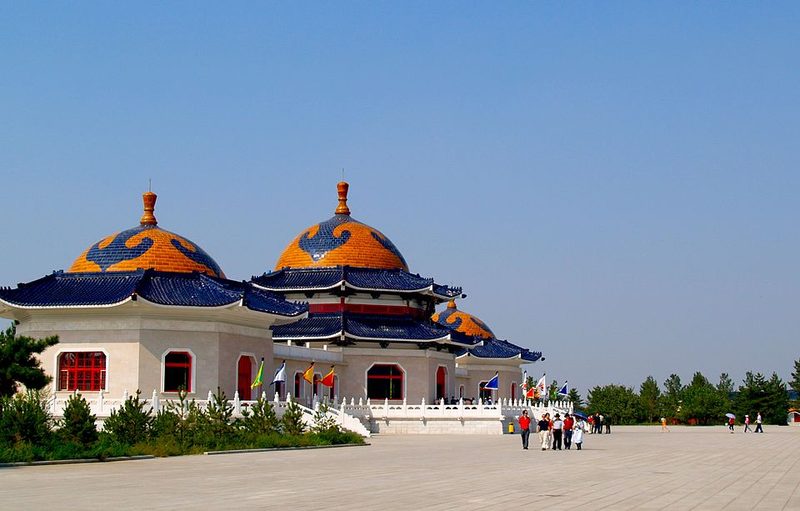
Located on the Ordos Grassland in Ejin Horo Banner, approximately 28 kilometres from central areas, the Mausoleum of Genghis Khan serves as the main centre of worship dedicated to the founder of the Mongol Empire (c. 1162–1227). The site lies in the town of Xinjie and houses relics and artworks related to Genghis Khan's life and the history of the Mongol Empire. The main hall features a white marble statue of Genghis Khan over four metres tall, with a map of the Yuan Dynasty territory behind it. The East Hall contains the coffin of one of Genghis Khan's wives and his fourth son. The mausoleum functions as a sacred Mongolian shrine and a heritage tourism site.
Practical Considerations
Standard apps for travel in China apply: Dianping serves as the local equivalent of Yelp and TripAdvisor for finding restaurants and activities; WeChat is essential for communication and services; Alipay is recommended for foreign card use and public transport payment. Renting a vehicle provides flexibility for reaching sites outside urban centres, as distances are considerable and public transport to remote sites is limited. Information about specific accommodation, restaurants and seasonal events can be gathered from local tourism offices or through advance research with official travel resources for Inner Mongolia.
Travel insurance covering your itinerary and activities is advisable. Temperature and humidity during summer are moderate for China, reducing air conditioning concerns. The city's continued development means infrastructure and services are modern by Chinese standards.