Image: Wikipedia / Wikimedia Commons
Image: Wikipedia / Wikimedia Commons
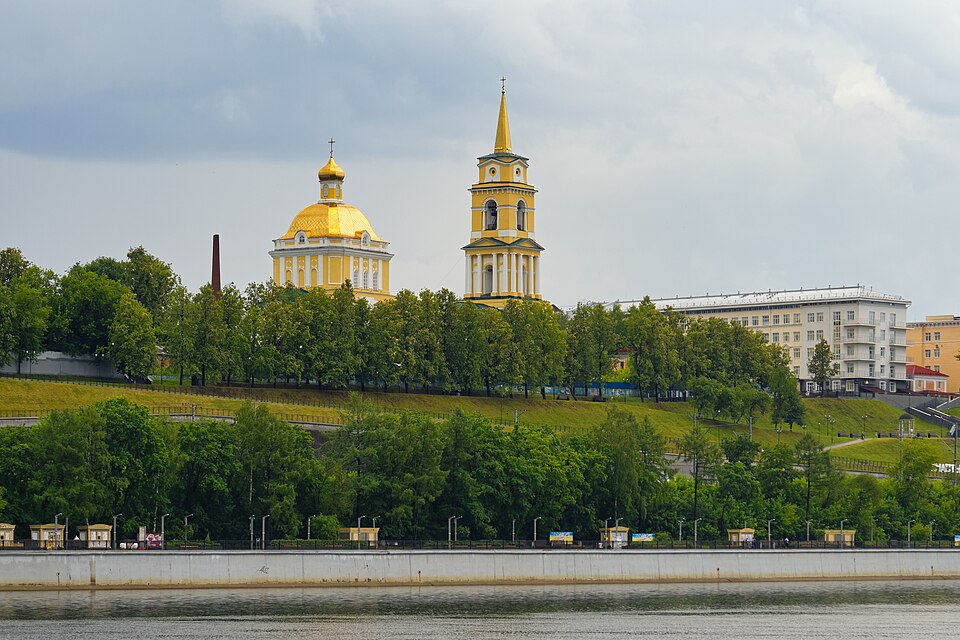
Perched on the banks of the Kama River where European Russia meets the foothills of the Ural Mountains, Perm is a city of surprising cultural depth and dramatic geography. With nearly a million residents, it stands as Russia's 15th-largest city and the fifth-largest in the Volga Federal District, yet it remains far less visited by international travelers than its size and significance might suggest. For those willing to venture beyond the better-known cities of western Russia, Perm rewards exploration with a distinctive blend of Siberian frontier character, industrial heritage, and emerging cultural vitality.
Perm occupies a remarkable position that has defined its entire history. The city sits at coordinates 58.01046 North, 56.25017 East, elevated 149 meters above sea level on the western bank of the Kama River. The Kama is one of Russia's great waterways, the largest tributary of the Volga, and Perm's relationship with this river has always been central to its identity. The city spreads across 799.68 square kilometers of terrain that transitions between the flatlands of European Russia and the rising slopes of the Ural Mountains to the east.
This geographical positioning places Perm in a liminal space—European by traditional geography, yet oriented toward Siberia in spirit and economic ties. The river itself remains a defining feature of the urban landscape, and the nearby Ural Mountains, while visible from the city, frame the skyline with a sense of wild geography that many Russian cities lack. The region experiences a continental climate typical of this latitude, with warm summers and substantial winters that make the seasonal rhythms of life here quite pronounced.
The settlement that became Perm has a long and layered past. Originally known as Yagoshikha, the site grew in importance during the 18th century when its location on the Kama River made it valuable for commerce and industry. The city's name changed several times—most notably becoming Molotov during the Soviet period, a name that persisted for decades before reverting to Perm after the Soviet Union's collapse. These name changes reflect the broader transformations Russia itself has undergone, and walking through Perm means walking through centuries of shifting identities and purposes.
The industrial development of Perm accelerated dramatically during the Soviet era, when the city became a major center for manufacturing, particularly in machinery and specialized industrial production. This heritage left the city with substantial Soviet-era architecture and infrastructure, much of which remains visible today. The Soviet period also brought significant population growth and urban expansion, establishing Perm as a major regional center. Understanding Perm means understanding this Soviet industrial legacy, which shaped not only the physical city but also the character of its residents and the rhythms of daily life.
Perm's attractions reflect its character as both a cultural and natural crossroads. The Kama River itself is a major draw—boat trips along its waters offer perspective on the city's relationship with this important waterway, and the river corridors provide access to the surrounding landscape. The proximity to the Ural Mountains means that those interested in hiking, nature walks, or simply experiencing the transition between European Russia and the Urals can do so relatively easily from the city.
Culturally, Perm has emerged in recent years as an unexpectedly dynamic center. The city hosts theaters, museums, and galleries that reflect both Soviet-era cultural institutions and newer contemporary art spaces. Art galleries and performance venues have proliferated, particularly in recent decades, giving Perm a reputation as a place where cultural experimentation happens. The local theater traditions run deep, and performances ranging from classical drama to contemporary works reflect the city's serious engagement with the arts. For visitors interested in understanding how Russian cultural life functions outside Moscow and Saint Petersburg, Perm offers genuine insight.
The urban landscape itself tells stories—from distinctive Soviet-era apartment blocks to older pre-revolutionary buildings that survived the transformations of the 20th century. Walking through different neighborhoods reveals how the city has grown and changed. The waterfront areas and parks provide respite from urban density and are central to how residents spend leisure time, particularly during the warmer months when outdoor life becomes possible after long winters.
Perm is well-connected by major transportation networks. The city has an airport serving both domestic and some international routes, making it accessible to travelers from across Russia and beyond. Rail connections link Perm to major cities including Moscow and other regional centers, making train travel a viable option for those coming from elsewhere in Russia. Long-distance bus services also connect the city to surrounding regions. Within Perm itself, public transportation including buses and trams serves the sprawling urban area, though distances can be substantial given the city's size and the terrain it covers.
For the nearly 982,419 people who call Perm home, the city functions as a genuine regional capital and economic hub. Beyond its Soviet industrial heritage, Perm's economy has diversified, with services, education, and cultural sectors growing in importance. The city hosts universities and research institutions, giving it a population that includes significant numbers of students and young professionals. The Kama River continues to matter economically and culturally—river transport, hydroelectric generation, and recreation all depend on its presence.
What makes Perm distinctive to those who live here is a certain combination of Siberian frontier spirit with genuine urban sophistication. The city feels neither entirely European nor entirely Siberian, but rather a bridge between these identities. Long winters create strong community bonds and seasonal awareness. The cultural scene draws talented people and generates creative energy. For residents, Perm is a place where serious work happens, where cultural life matters, and where the natural world—the river, the approaching mountains—remains always present at the edge of daily life.
Perm is located in the Asia/Yekaterinburg timezone. The city's population of 982,419 makes it one of Russia's major urban centers, while its elevation of 149 meters above sea level reflects its position in the Kama River valley. The city spans a substantial area and requires time to explore meaningfully, making multi-day visits worthwhile for those interested in understanding this distinctive corner of Russia.
View larger map — © OpenStreetMap contributors
Flight delayed or cancelled?
You could be owed up to €600 compensation. Check your eligibility for free.Do you know Perm’, Perm Krai?
Share local tips, recommend a hotel, list a business or add a photo.
✏️ Share your knowledge about Perm’, Perm KraiDo you know Perm’, Perm Krai?
Share local tips, recommend a hotel, list a business or add a photo.
✏️ Share your knowledge about Perm’, Perm Krai