Image: Wikipedia / Wikimedia Commons
Image: Wikipedia / Wikimedia Commons
# Quito, Pichincha, Ecuador: A Guide to Ecuador's Capital City
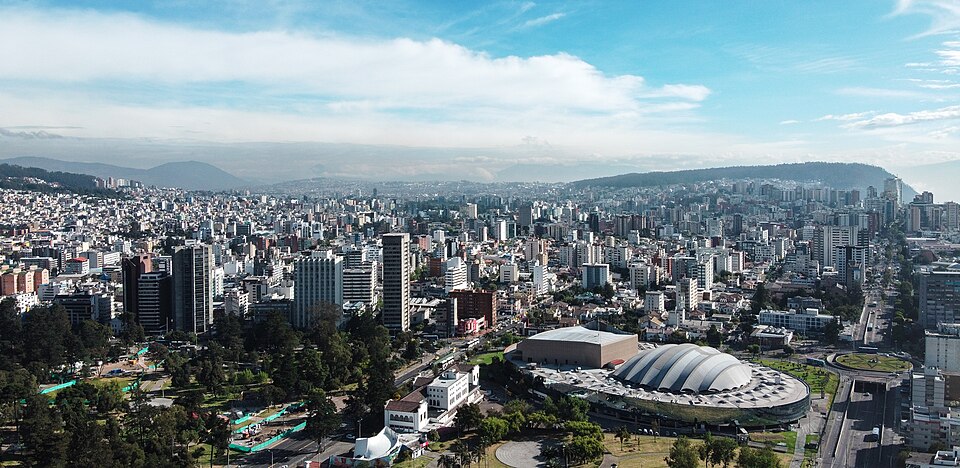
Quito is Ecuador's capital and the gateway to understanding one of South America's most geographically diverse countries. Perched at one of the highest capital cities in the world, Quito blends Spanish colonial heritage with modern urban life, all while sitting in a valley framed by volcanic peaks. For visitors and residents alike, the city offers a unique combination of cultural richness, natural drama, and the constant reminder that you are standing at the edge of the Andes.
Quito occupies a valley on the eastern slopes of Pichincha, an active stratovolcano that towers above the city and remains a defining feature of the landscape. At 2,854 meters (9,364 feet) above sea level, Quito is one of the highest capital cities in the world, a fact that immediately shapes the experience of anyone arriving in the city. The thin mountain air, cool temperatures year-round, and dramatic elevation changes between neighborhoods create a distinctive environment that requires some adjustment for visitors arriving from lower altitudes.
The city is located at coordinates -0.22985N, -78.52495W, placing it very close to the equator despite its mountainous position. This equatorial location means that Quito experiences relatively consistent day length and temperature throughout the year, though elevation plays a much larger role in determining climate than season. The metropolitan area now extends across multiple valleys, home to approximately 2.78 million people, making it Ecuador's second-largest city after Guayaquil.
Quito's history stretches back centuries before Spanish colonization, when the city was an important settlement of the Inca Empire. The Spanish conquest and subsequent colonial period transformed Quito into a major administrative center, and many of the city's most striking buildings—churches, convents, and colonial houses—date from the 16th, 17th, and 18th centuries. This colonial architecture remains remarkably well-preserved in certain neighborhoods, earning recognition as one of the Western Hemisphere's most intact Spanish colonial cities.
The city played a significant role in Ecuador's independence movement and continues to be the political and cultural heart of the nation. Quito's history is written into its streets: you can walk through neighborhoods where centuries-old religious buildings stand alongside modern developments, where the echoes of indigenous culture persist beneath Spanish colonial layers, and where Ecuador's contemporary identity continues to form.
The most striking aspect of visiting Quito is navigating its dramatic topography and competing neighborhoods, each with distinct character. The historic center, with its narrow streets and colonial plazas, requires patient exploration on foot—the cobblestone terrain can be challenging, but it rewards walkers with unexpected views of churches, convents, and mountain vistas between buildings. The city's religious architecture is particularly notable, reflecting the importance of the Catholic Church during colonial times and the continuing role of faith in Ecuadorian culture.
Beyond the city proper, the surrounding landscape offers dramatic natural attractions. Pichincha itself remains an active volcano, and the mountain environments around Quito provide opportunities for hiking, birdwatching, and experiencing high-altitude ecosystems. The valley setting means that within relatively short distances, travelers can experience significant variations in elevation, vegetation, and wildlife. The region's position on the equator and its mountainous terrain make it a biodiversity hotspot, with species found nowhere else on Earth. Nature enthusiasts should prepare for weather changes—the saying goes that Quito can experience "four seasons in one day" due to rapid elevation changes and shifting cloud patterns.
The city's cultural life extends beyond monuments and natural attractions. Museums, galleries, cultural centers, and public spaces throughout Quito showcase Ecuadorian art, indigenous heritage, and contemporary creativity. Markets and neighborhood plazas remain vibrant centers of local life where commerce, social interaction, and tradition intersect.
Quito is accessible by air through Mariscal Sucre International Airport, which connects to major hubs throughout South America and beyond. The city also has bus connections to other regions of Ecuador and neighboring countries, though the mountainous terrain means journey times can be substantial. Within Quito itself, transportation relies on buses, which are inexpensive but require familiarity with routes, and taxis or ride-sharing services for convenience. The elevation and hilly terrain mean that traveling between neighborhoods often involves significant elevation changes; visitors should be prepared for walking uphill and adjust activity levels during the first days to acclimatize.
For the 2.78 million residents of metropolitan Quito, the city functions as the center of Ecuadorian political, economic, and cultural life. Government institutions, educational universities, and business operations concentrate in the capital, making it the engine of national development. The city serves as a hub for commerce, culture, and administration, while neighborhoods throughout the metropolitan area reflect different economic circumstances and histories. Local residents navigate the challenges and advantages of living at high altitude, in a city where colonial history mingles with modern development, where traffic congestion is a daily reality, and where community and tradition remain central to urban life.
Quito, officially San Francisco de Quito, has a metropolitan population of approximately 2.78 million people. The city operates in the America/Guayaquil timezone (UTC-5, with no daylight saving time). The elevation of 2,854 meters above sea level is one of the first practical concerns for visitors, who should allow time to acclimatize before undertaking strenuous activities. The combination of altitude, equatorial location, and mountainous terrain creates an environment unlike most other major world cities, making Quito a destination that rewards patience and careful observation.
View larger map — © OpenStreetMap contributors
Flight delayed or cancelled?
You could be owed up to €600 compensation. Check your eligibility for free.Do you know Quito, Pichincha?
Share local tips, recommend a hotel, list a business or add a photo.
✏️ Share your knowledge about Quito, PichinchaDo you know Quito, Pichincha?
Share local tips, recommend a hotel, list a business or add a photo.
✏️ Share your knowledge about Quito, Pichincha