
In This Guide
Read the guide as a story
The Night São Paulo Never Stopped
Flying into São Paulo on a clear day, the metropolis stretches in every direction until it dissolves into haze — an ocean of buildings, elevated highways, and punctuating green canopies that seems simply too large to be a single city. And in a sense it is: São Paulo is the most populous city in the Americas, the largest Portuguese-speaking city on earth, and the undisputed economic and cultural capital of Brazil. Its Latin motto, Non ducor, duco — "I am not led, I lead" — was not chosen lightly by the paulistanos who call this place home.
First Impressions and Setting
São Paulo sits on a broad plateau in southeastern Brazil, elevated enough that its air carries a freshness that surprises visitors who expected tropical humidity. The city's topography is shaped by rolling hills and river valleys, and the density of the urban fabric is broken in places by parks, preserved squares, and long avenues lined with mature trees. The historic centre around the Sé district gives the city a grounded, slightly gritty heart, while neighbourhoods like República and further-flung districts each carry their own distinct character. The scale can be disorienting at first — distances that look short on a map can involve significant journeys by road — but the city's grid of landmarks and transit lines makes orientation possible once you find your footing.
History, Identity and Local Stories
The city takes its name from the Apostle Paul, and its foundation by Jesuit missionaries in 1554 is one of the anchoring facts of Brazilian history. From those origins, São Paulo grew slowly, then explosively, shaped by waves of immigration from Italy, Japan, Lebanon, Spain, Germany, and dozens of other countries. The city's Japanese-Brazilian community, one of the largest outside Japan, has left a particular cultural imprint on the Liberdade neighbourhood. The centro histórico preserves layers of colonial, imperial, and republican-era architecture. The Catedral da Sé — the monumental neo-Gothic cathedral anchoring the city's historic core — took over seventy years to complete and remains one of the most recognisable structures on the São Paulo skyline. Nearby, the Igreja de Nossa Senhora do Carmo and the Igreja Nossa Senhora da Consolação represent the city's long Catholic architectural tradition across different eras and styles.
Daily Life, Economy and Culture
São Paulo is one of the world's significant financial and commercial centres, and the pace of daily life reflects that reality. The city has been recognised by UNESCO's Creative Cities Network as a City of Film and has been associated with the title of World Capital of Gastronomy — a designation that resonates on the ground. The food culture here is genuinely extraordinary in its diversity, shaped by successive waves of immigration into something distinctly paulistano. The arts scene is extensive, anchored by institutions along the Avenida Paulista corridor, including the Museu de Arte de São Paulo — known universally as MASP — whose elevated glass-and-concrete structure above a public plaza has become one of Brazil's most iconic pieces of modernist architecture, designed by Lina Bo Bardi and completed in 1968. The city also exerts international influence in fashion, technology, media, and entertainment.
São Paulo's cultural calendar includes the Virada Cultural, a 24-hour free arts and music festival organised by the city's Secretariat of Culture. It takes place across the city — stages, squares, and streets — and attracts hundreds of thousands of people. The event's scale and energy give a genuine sense of how the city moves when it decides to celebrate. Check the Prefeitura de São Paulo's official culture pages for current-year dates before you plan.
What Visitors Notice
Walking the historic centre, visitors typically move between the broad, traffic-heavy praças of Sé and República and narrower streets where the commercial city shows its working character. Praça Paulo Kobayashi, within the city's central area, offers a pause from the surrounding density — a reminder that the city has been deliberate, at least in places, about preserving public green space amid the concrete. The Luz district, a short distance from the historic core, is a transport and cultural hub built around one of São Paulo's historic railway stations. The nearby Pinacoteca do Estado de São Paulo is one of the country's most important fine arts museums, and Parque da Luz provides an adjacent green space. Together, this cluster gives a sense of the city's nineteenth-century ambitions as well as its layered, sometimes contradictory present.
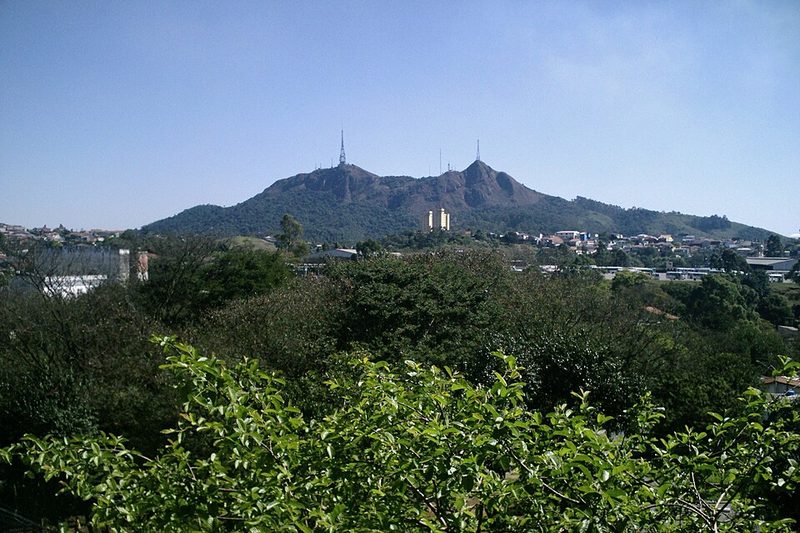
Ibirapuera Park, on a larger scale, functions as the city's most significant green lung, drawing residents for exercise, weekend leisure, and outdoor events. It sits beside the Assembleia Legislativa do Estado de São Paulo (ALESP), the state legislature building, in the Moema district. For those willing to travel to the city's western zone, Pico do Jaraguá offers hiking terrain and, on clear days, sweeping views across the metropolitan sprawl — a reminder that São Paulo, for all its density, is also a walking and outdoor base with real hills and forested terrain within reach.
The neighbourhood of Vila Madalena is associated with street art and bohemian culture. The alleyway known as Beco do Batman has attracted visitors through its concentration of painted murals. The work changes regularly as new pieces go up over old ones, so the specific images you encounter will depend on when you visit. The broader Vila Madalena neighbourhood offers bars, restaurants, and independent shops alongside the street art.
Getting There
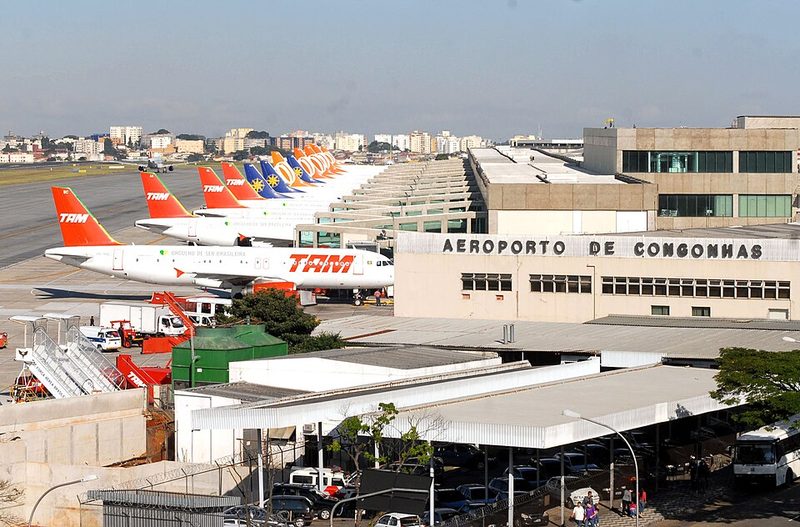
Most international and long-haul flights arrive at Aeroporto Internacional de Guarulhos (GRU), located in the metropolitan area to the northeast. Domestic flights and some regional services use Aeroporto de Congonhas (CGH), which sits within the city itself, significantly closer to the centre.
A direct rail link between Guarulhos airport and the city centre is provided by CPTM Line 13 (the Jade Line), which connects the airport to Engenheiro Goulart and onward into the Metro network. This is the most practical car-free option for arrivals at Guarulhos. The official CPTM site at cptm.sp.gov.br is the authoritative source for current service information. Road access by taxi and app-based ride services is also available from both airports, though São Paulo traffic can make journey times unpredictable.
Getting Around the City
São Paulo operates an extensive Metro network (the Metrô), suburban rail services run by CPTM, a monorail line serving part of the south zone, and a large bus network managed by SPTrans. Driving in the city is genuinely difficult: traffic is heavy, parking is challenging, and periodic vehicle-restriction schemes operate on weekdays. For most visitor itineraries, the Metro and CPTM combination is the practical backbone. The Bilhete Único card allows integrated travel across Metro, CPTM, and SPTrans bus routes; it can be obtained and topped up at Metro stations and newsstands. For bus fares, lines, and itineraries, the official SPTrans information line is 156, and the website is sptrans.com.br.
The Luz station area — served by Metro Lines 1 (Blue) and 4 (Yellow) and CPTM Lines 7, 10, 11, and 12 — is one of the city's major interchange points, making it a practical reference for navigating from the centre outward. App-based ride services operate widely across the city and are a useful supplement when rail coverage is limited.
Current fares, schedules, and any service changes should always be confirmed with the official operators — Metro (metro.sp.gov.br), CPTM (cptm.sp.gov.br), and SPTrans (sptrans.com.br) — before travel.
Practical Notes
Portuguese is the official and everyday language. Given the city's international character and large business community, some English is spoken in hotels, larger restaurants, and tourist-facing settings, but Portuguese is essential for day-to-day navigation. São Paulo is also informally known as Sampa in local usage.
Both the UK Foreign, Commonwealth and Development Office and the US State Department maintain active advisories for Brazil. The UK FCDO advisory includes restrictions on travel to specific river areas in western Amazonas State, which do not apply to São Paulo. The US State Department maintains a Level 2 advisory — Exercise Increased Caution — for the country as a whole, citing crime and security concerns in urban areas. The majority of Brazil, including São Paulo, remains accessible, but visitors should take the same common-sense precautions they would in any large international metropolis: be aware of your surroundings, avoid displaying expensive items unnecessarily, and familiarise yourself with the neighbourhoods you plan to visit. For current guidance, consult the FCDO at gov.uk/foreign-travel-advice/brazil and the US State Department at travel.state.gov before you travel.
Avenida Paulista and MASP
Avenida Paulista is São Paulo's best-known address — a 2.8-kilometre boulevard that closes to traffic on Sundays and becomes a public promenade. At its heart, MASP (Museu de Arte de São Paulo) is suspended above a free public plaza on a pair of concrete beams, a 1968 design by Lina Bo Bardi that has become one of Brazil's most recognised modernist buildings. The collection spans European old masters, Brazilian modernists, and design and fashion holdings. Check current hours and ticket prices at masp.org.br/en/visit before you visit.
Read the full Avenida Paulista and MASP guide
Sources: Sao Paulo Museum of Art - Wikipedia • MASP - About - official site • MASP - Visit - official site • AD Classics - Sao Paulo Museum of Art (MASP) / Lina Bo Bardi - ArchDaily
Ibirapuera Park
Ibirapuera Park is São Paulo's most visited green space — 158 hectares of Burle Marx landscape design and Oscar Niemeyer pavilions in the Moema district. Within the park, MAM (Museu de Arte Moderna) and the Pavilhão da Bienal — home of the São Paulo Art Biennial — make it as much a cultural destination as a park. The official operator is Urbia Parques; check current hours at urbiaparques.com.br.
Read the full Ibirapuera Park guide
Sources: Ibirapuera Park - Urbia Parques (official operator) • MAM Sao Paulo - official site • Ibirapuera Park - Wikipedia
Guarulhos airport rail connection
Guarulhos International Airport (GRU) connects to the city by CPTM Line 13 (the Jade Line), which runs to Engenheiro Goulart for interchange with the broader Metro/CPTM network. This is the most predictable car-free option for arrivals. Check current timetables at cptm.sp.gov.br before travel. Congonhas Airport (CGH), handling domestic routes within the city, relies on taxis and ride services.
Read the full Guarulhos airport rail connection guide
Sources: Aeroporto - CPTM official page • Transport in Sao Paulo - Wikipedia • Line 13 (CPTM) - Wikipedia
Virada Cultural
Virada Cultural
The Virada Cultural is São Paulo's annual 24-hour arts and music festival, organised by the city's Secretaria Municipal de Cultura e Economia Criativa. It runs continuously from Saturday morning through Sunday — no breaks, no closing time — across stages, public squares, parks, museums, cinemas, and streets throughout the city. Admission to most events is free. The scale is substantial: hundreds of performances, visual art installations, film screenings, and cultural activities running simultaneously across multiple districts.
The festival was created in 2005 and has grown into one of the largest free cultural events in the Americas. It typically takes place in May, though the exact dates vary by year. The city of São Paulo announces confirmed dates and the programme through the Prefeitura de São Paulo's official culture pages; the 2026 edition information is available at prefeitura.sp.gov.br.
For visitors, the Virada Cultural offers a rare opportunity to experience São Paulo's cultural breadth at no cost and at an intensity the city rarely matches at any other point in the year. The practical challenges are predictable: public transport is busier than usual, some areas become very crowded, and accommodation books out early if you are travelling specifically for the event. The Metro and SPTrans bus network run extended services during the Virada; check current operating arrangements with the official transport operators as the dates approach.
The event also reflects something true about the city's self-image. Non ducor, duco is not just a motto carved on civic buildings — in May, for 24 hours, São Paulo genuinely leads.
Sources: Virada Cultural 2026 - Secretaria Municipal de Cultura e Economia Criativa - Prefeitura de • Virada Cultural 2026 e oportunidade para conhecer culturas - Prefeitura de Sao Paulo • Prefeitura de Sao Paulo anuncia primeiros nomes da Virada Cultural 2026