Image: Wikipedia / Wikimedia Commons
Image: Wikipedia / Wikimedia Commons
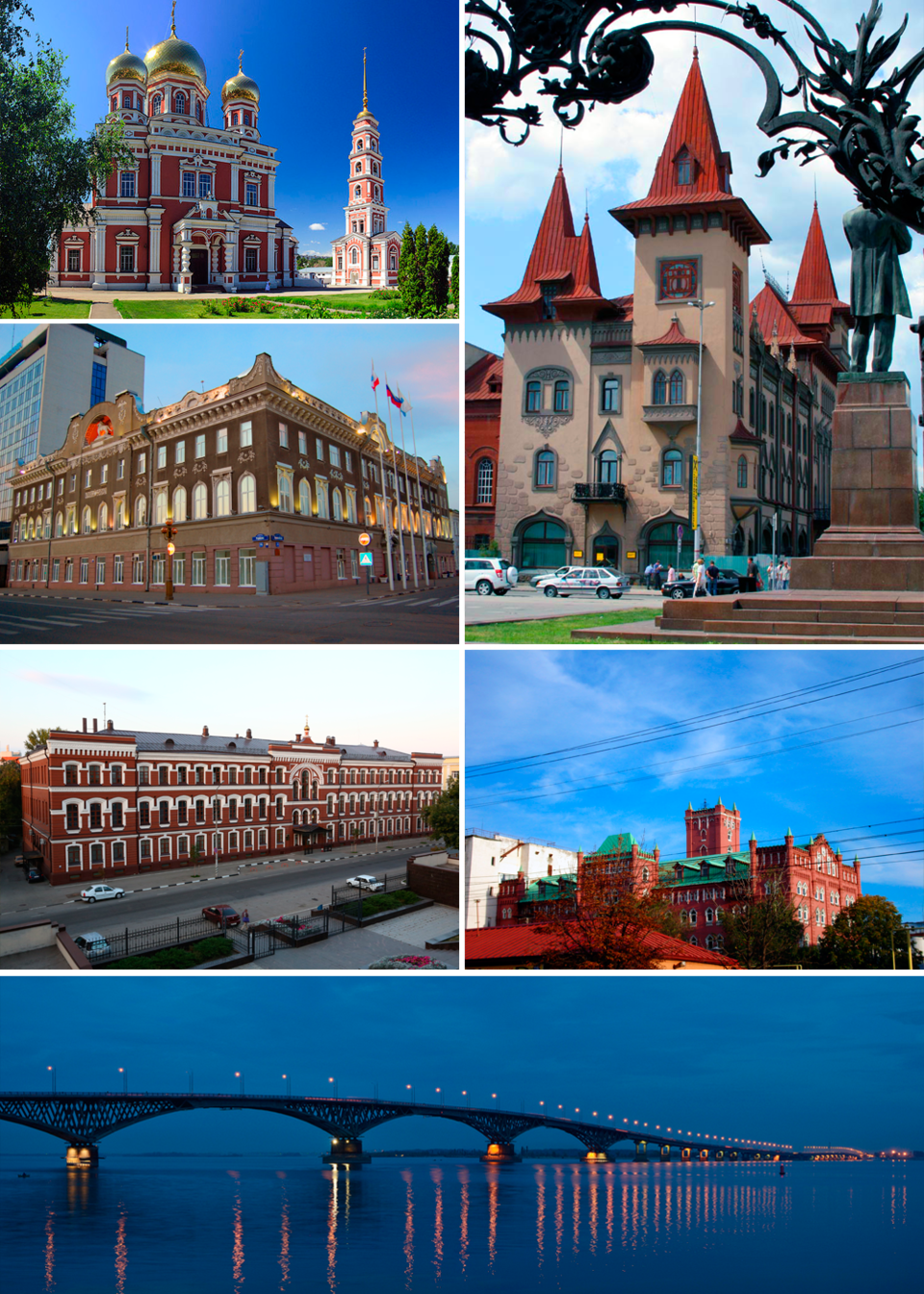
Saratov stands as one of Russia's significant regional cities and the administrative heart of Saratov Oblast. Positioned majestically along the Volga River, this city of nearly 845,000 residents embodies the character of southern Russian life where European and Asian influences meet. With deep historical roots stretching back centuries, Saratov represents both the industrial heartbeat of the region and a gateway to understanding the vast Russian interior.
Saratov occupies a strategic position on the right bank of the Volga River, one of Europe's mightiest waterways and a vital artery of Russian commerce and culture. The city sits at coordinates 51.54048N and 45.9901E, placing it firmly within the southern reaches of European Russia. Geographically, Saratov functions as a crucial junction point between Russia's heartland and its southern frontier—positioned 389 kilometers north of Volgograd, 442 kilometers south of Samara, and 858 kilometers southeast of Moscow. The Volga's presence defines the city's entire character, providing transportation routes, economic opportunity, and a natural boundary that has shaped settlement patterns for generations.
The terrain surrounding Saratov reflects the transition zones of southern Russia, with the river valley creating distinctive geography that has made this location attractive for habitation and commerce throughout history. The Volga's considerable width at this latitude makes Saratov a natural port city, and this advantage has been leveraged throughout the modern era. Time in Saratov follows the Europe/Saratov timezone, keeping pace with Moscow Standard Time plus three hours.
Saratov's story is inseparable from the Volga River and Russia's gradual expansion southward during the medieval and early modern periods. The city was established as a fortress settlement in the late 16th century, when Russian territorial ambitions extended into lands previously dominated by Turkic peoples. Over the centuries, Saratov transformed from a military outpost into a thriving commercial center, its position on the Volga making it an inevitable hub for trade flowing between northern Europe and the southern steppes.
The city's growth accelerated dramatically during the 19th and 20th centuries as industrialization reached the Volga region. Saratov became known for its grain trade, oil refining, and mechanical manufacturing—industries that continue to define the regional economy. This industrial heritage is written into the urban landscape, where Soviet-era architecture stands alongside older merchant quarters and modern developments. The river's importance to Russian culture and history is everywhere apparent in Saratov, reflecting centuries of navigation, trade, and human settlement along this great waterway.
Saratov's primary attraction for visitors is undoubtedly the Volga River itself. The riverside promenades and embankments offer extended opportunities for walking, observation, and simply absorbing the scale and presence of Russia's most iconic river. The broad expanse of water, the traffic of barges and boats, and the views across to the left bank create an ever-changing landscape that rewards spending time along the water's edge. The Volga connects Saratov to centuries of Russian history and culture, and simply walking beside it provides insight into what has drawn people to this region for so long.
Beyond the river, Saratov presents the character of a substantial Russian city with Soviet-era urban planning, cultural institutions, parks, and the everyday rhythms of a major regional center. The city supports museums, theaters, and cultural venues that reflect both local heritage and broader Russian artistic traditions. The surrounding Oblast offers opportunities for those interested in exploring the rural Volga region, with agricultural landscapes, smaller towns, and glimpses of life beyond the metropolitan area. Nature enthusiasts can find forests, waterways, and protected areas in the region, though access and infrastructure vary considerably. For visitors seeking to understand contemporary Russia beyond Moscow and St. Petersburg, Saratov provides authentic engagement with regional city life, commerce, and the importance of the Volga to Russian civilization.
Saratov is well-connected by Russia's major transportation networks. The city is served by both rail and air connections, with trains connecting it to Moscow, St. Petersburg, and other major Russian cities. The Volga River itself remains a transportation corridor, with passenger boats operating during warmer months. Within the city, public transportation systems including buses and other transit options serve residents and visitors. The distances to other major cities—under 400 kilometers to Volgograd and similar distances to Samara—make Saratov accessible from neighboring regional centers as well.
For those who live in Saratov, the city represents a major economic and cultural center for the surrounding Oblast. The local economy remains anchored in traditional industries including oil refining, mechanical manufacturing, and grain processing, though like all Russian regions, the economy has diversified and evolved in recent decades. The Volga's role as a transportation corridor ensures Saratov maintains commercial significance. The city is home to educational institutions, medical facilities, and cultural amenities befitting a major regional center. For locals, Saratov offers the advantages of significant urban infrastructure while remaining far from the intensity of Moscow or St. Petersburg—a balance that appeals to those seeking Russian city life without megacity pressures.
Saratov's current population stands at approximately 844,858 residents, making it one of Russia's substantial cities and consistently ranking among the nation's largest by population. The city operates in the Europe/Saratov timezone. The city's geographic coordinates are 51.54048N latitude and 45.9901E longitude. Visitors should plan for continental climate conditions typical of southern Russia, with warm summers and cold winters requiring appropriate seasonal preparation. Those traveling from abroad should ensure they have necessary documentation for Russia and should check current travel advisories, as circumstances can change.
View larger map — © OpenStreetMap contributors
Flight delayed or cancelled?
You could be owed up to €600 compensation. Check your eligibility for free.Do you know Saratov, Saratov Oblast?
Share local tips, recommend a hotel, list a business or add a photo.
✏️ Share your knowledge about Saratov, Saratov OblastDo you know Saratov, Saratov Oblast?
Share local tips, recommend a hotel, list a business or add a photo.
✏️ Share your knowledge about Saratov, Saratov Oblast