

Settlement Guide: Shenzhen, Guangdong
From a fishing village of a few thousand people in the late 1970s, Shenzhen transformed into one of the world's most dynamic coastal cities. Today, it sprawls across the Pearl River estuary with nearly 17.5 million residents, sitting as China's third-largest urban center and home to some of the country's most recognizable technology companies. The city's identity is defined by speed, reinvention, and its position as a gateway between mainland China and Hong Kong—a relationship that shapes everything from its architecture to its rhythm.
First Impressions and Setting
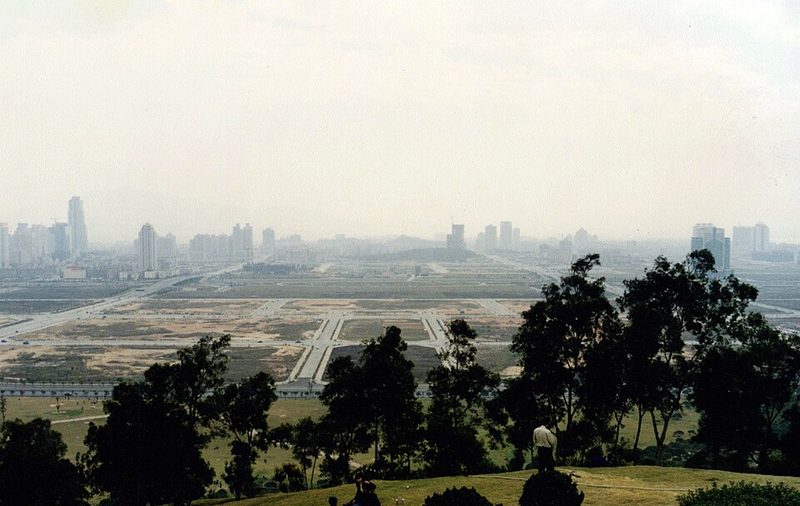
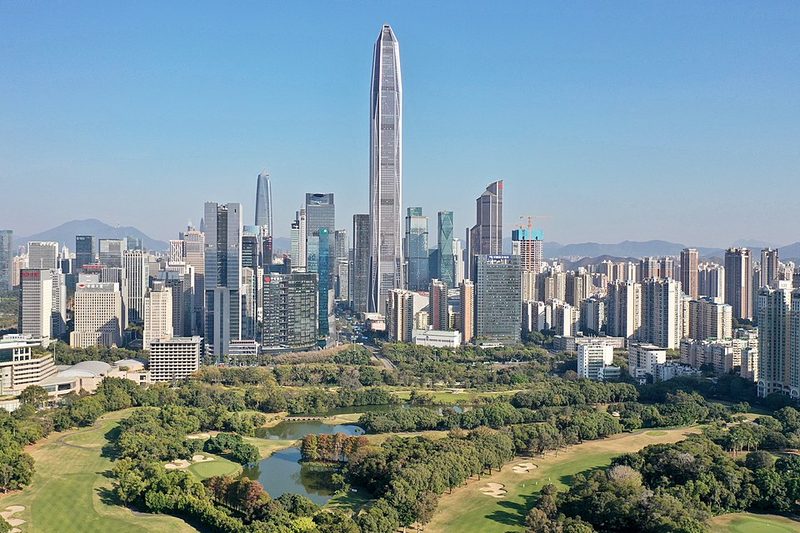
Shenzhen occupies low-lying terrain at the mouth of the Pearl River, just 4 meters above sea level, on the central coast of Guangdong province. The city's landscape is shaped by its maritime position: the river estuary to the west, Hong Kong's border to the south, and hinterland to the north and northeast toward Dongguan and Huizhou. The terrain is relatively flat but dense with development. Visitors often encounter a skyline of mixed modern towers, older industrial neighborhoods, and pockets of ongoing construction. The subtropical climate brings humidity year-round, with a typhoon season that typically runs from May through November—a reality that shapes building codes and seasonal planning across the city.
The cityscape feels less monolithic than Shanghai or Beijing; instead, Shenzhen reads as a patchwork of neighborhoods at different stages of development and redevelopment. Commercial districts sit adjacent to older residential quarters and industrial zones that still function as major employment hubs.
History, Identity and Local Stories
Shenzhen's modern identity begins in 1979, when the Chinese government designated it as a special economic zone. Before that, it was a small coastal settlement. The SEZ status opened it to foreign investment and manufacturing, launching a migration wave that brought workers from across China seeking opportunity. This history is felt in the city's entrepreneurial character and its status as an outsider-friendly environment compared to many Chinese cities.
The Port of Shenzhen developed into the world's fourth-busiest container port, making logistics and maritime trade fundamental to the city's economy. This success tied Shenzhen directly to global supply chains, particularly in electronics, textiles, and goods manufacturing. The city became a testing ground for economic reform in China, and that experimental quality persists in its willingness to adopt new technologies and business models.
Daily Life, Economy and Culture
Shenzhen functions as a working city first. Manufacturing remains significant, but the urban economy has diversified into finance, technology, and services. The presence of companies like DJI—the globally dominant commercial drone manufacturer—signals the city's role as an innovation hub. Robotics, artificial intelligence, and software development are growing sectors that draw talent from across Asia.
The resident population is remarkably transient compared to older Chinese cities. Many people move to Shenzhen for work, creating a culture where professional ambition often takes precedence over deep neighborhood roots. Residential neighborhoods tend to be newer and more mixed-income than historical Chinese cities. Street food vendors, noodle shops, and small family restaurants are ubiquitous, serving the working population. Cantonese and Mandarin dominate; English is more widely spoken than in inland cities, partly because of the international business community.
What Visitors Notice
The railway station at Luohu, in the Luohu District, sits across from the Luohu Commercial City and marks the southern terminus of the Guangzhou-Shenzhen Railway—a major regional link. This station area has historically been a gateway for people crossing to and from Hong Kong, and it retains that transitional character.
The Museum of Contemporary Art and Urban Planning, located in Futian District, opened in 2016 and occupies significant space (nearly 30,000 square meters of land). Designed by the architecture firm Coop Himmelb(l)au, it reflects Shenzhen's self-conscious approach to documenting its own rapid development—a rare institutional focus on how a city transforms itself in real time.
Public spaces and waterfront areas have been developed in recent years, though the city's character remains decidedly commercial rather than leisure-oriented. The coastline and river are industrial and semi-industrial; this is not a tourist beach destination. The urban rhythm is fast-paced, with heavy traffic, crowded transit, and dense foot traffic in commercial districts.
Getting There and Around
Shenzhen is well-connected by rail. The Shenzhen Railway Station (Luohu) connects to the Guangzhou-Shenzhen Railway line, linking the city northward to Guangzhou and beyond. The city also has regional highway connections and serves as a gateway point for travelers moving between Guangdong and Hong Kong.
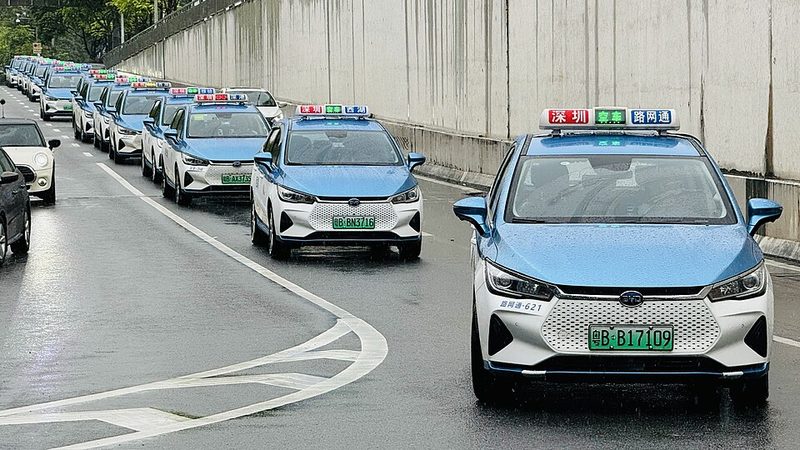
The Port of Shenzhen handles massive container traffic and supports ferry connections, particularly to Hong Kong and nearby ports across the Pearl River estuary. For most residents and workers, movement within the city relies on taxis, ride-hailing services, and local bus networks. The city continues to expand its public transport infrastructure.
Practical Notes
Shenzhen experiences tropical typhoon risk during the May-to-November season; travelers should monitor weather forecasts during these months. The city sits in a coastal region where such storms are a natural hazard, and transport can be disrupted. Official travel advisories for China recommend general caution and awareness of surroundings; serious crime against foreign nationals is relatively rare, though visitors should follow standard precautions.
The city's elevation and position on the estuary make it wet and warm for much of the year. Humidity is high, particularly in summer. Standard travel insurance and preparations apply; prospective residents or long-term visitors should research visa requirements and understand that labor law and detention procedures in mainland China differ from those in Hong Kong.
Shenzhen remains a city shaped by its role as an economic frontier and a point of connection between China and the global system. It is working, pragmatic, and in constant motion.