




What Taiyuan is known for
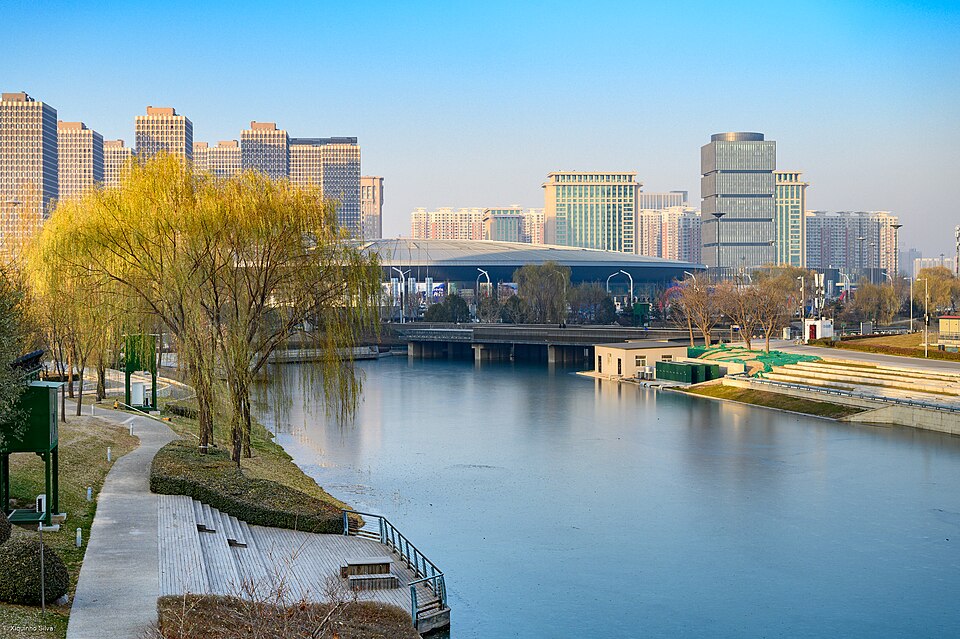
The capital of Shanxi Province sits in a valley ringed by mountains 795 metres above sea level on the Loess Plateau. Taiyuan has served as capital or provisional capital to several dynasties including the Northern Qi and Northern Zhou, earning its ancient name Longcheng—Dragon City. Today it is an industrial centre of more than four million people, built on coal and steel, though layers of history remain visible in temples, grottoes and museums scattered throughout its six urban districts.
The city occupies a strategic bowl bounded on three sides by mountains, a geography that made it defensible and significant throughout Chinese history. What visitors encounter now is a working industrial city—one of China's major bases for energy and heavy manufacturing—where heritage preservation exists alongside the visible realities of factory infrastructure and urban development. The pace and scale can feel overwhelming, but the historical sites offer clear reasons to visit.
Historical Context
Taiyuan's position at the frontier between China's agricultural heartland and the grassland world to the north shaped both its strategic importance and its vulnerability across millennia. The city rose to prominence during periods of division and consolidation in Chinese history, serving as capital during the Northern Qi and Northern Zhou dynasties. During the Chinese Civil War of the mid-20th century, Taiyuan remained a significant point of contest between Kuomintang and Communist forces, reflecting its enduring military value.
Buddhist Heritage
The Buddhist landmarks that survive from earlier periods form the core of Taiyuan's visitor appeal. The Tianlongshan Grottoes, located in mountains 36 kilometres southwest of the city, comprise 25 caves carved during the Sui and Tang Dynasties between the 6th and early 10th centuries. The caves contain Buddhist statuary, though many sculptures have been removed or damaged over time. The site spans two mountains with eight grottoes on the eastern peak and 13 on the western.
Jinci Temple, built during the Western Zhou Dynasty more than 3,000 years ago and expanded through subsequent centuries, is a combination of architectural styles and natural landscape. The main Shengmu Hall dates to the Tiansheng Period of the Song Dynasty (1023–1032 CE) and is the temple's oldest surviving primary structure. The site is known particularly for Song Dynasty maid statues that capture varied postures and moments of daily life.
The Twin Pagoda Temple, officially Yongzuo Temple, contains two 13-storey octagonal brick pagodas approximately 54 metres tall dating from the Ming Dynasty. The East pagoda was completed in 1597. The structures stand in the southeast of the city, south of the Nansha River, with little of the original temple complex remaining beyond the pagodas themselves.
Modern Economy and Daily Life
Taiyuan functions as Shanxi Province's economic engine. The city is a major industrial base focused on steel production, coal mining, and energy sector work. These industries shape employment patterns, air quality, and the visible urban landscape. Recorded GDP reached approximately 402 billion yuan (roughly 58 billion USD) in 2019. Like many resource-dependent industrial cities across China, Taiyuan faces ongoing challenges balancing environmental impact with economic output and working towards diversification.
The Shanxi Museum, reopened in 2004 after major provincial investment, serves as the cultural anchor and represents the largest cultural infrastructure project Shanxi Province has completed since 1949. The museum covers regional history and material culture comprehensively; visits typically require two to three hours. The museum keeps standard hours (09:00 to 17:00) but closes on Mondays, the last day of the lunar year, and the first day of the lunar new year.
Liu Alley night market is recorded as among northern China's largest, offering evening commerce and local dining. The market provides a window into contemporary urban life and local food culture.
Geography and Climate
The mountains that ring Taiyuan are a constant visual presence and shape the city's microclimate. The Loess Plateau terrain gives the landscape its characteristic ochre-coloured earth and distinctive geological formations. The city experiences a temperate continental climate with hot summers and cold winters; visitors should plan for significant temperature variation between seasons.
Getting There and Around
Taiyuan Railway Station serves as a major transport hub on multiple railway lines including the Tongpu Railway, the Shitai Railway, and the Shitai Passenger Railway, integrating the city into China's broader rail network. For current schedules, routes and ticket information, check directly with railway operators as services and timetables change.
Public transport within the city, including buses and taxis, functions as the primary means of getting around for residents and visitors. For current information on air access and long-distance bus connections, consult local tourism resources and transport authorities.
Practical Information
Standard travel precautions apply for mainland China. The UK Foreign, Commonwealth & Development Office and US State Department maintain normal precautions for China with no specific regional restrictions for Shanxi Province. Check official UK and US travel advisory websites for current medical and entry requirements before travelling.
The city spreads across six districts, with Xiaodian, Yingze, and Xinghualing among the most established. Visitors interested in historical sites should prioritise Jinci Temple, Tianlongshan Grottoes, the Twin Pagoda Temple, and the Shanxi Museum. The night market at Liu Alley offers insight into contemporary urban life and local food culture.