In This Guide
Tampa, Florida
Tampa is the third-most populous city in Florida and the county seat of Hillsborough County, sitting where the Hillsborough River meets Tampa Bay on the Gulf Coast. The wider Tampa Bay metropolitan area — over 3.4 million residents — is Florida's second-largest, which means Tampa functions as the commercial, civic and cultural centre of a broad connected region rather than a self-contained destination. The city is well-known for its working port, its cigar-making heritage (concentrated in the historic Ybor City neighbourhood), its annual Gasparilla pirate festival, and a growing bayfront and riverside visitor offer. Visitors expecting a quiet beach town will find something considerably more substantial.
The city is not itself a beach resort — the Gulf beaches at Clearwater and St Pete are nearby but separate. What Tampa proper offers is a walkable downtown waterfront, a nationally significant research university, professional sports franchises, and a historic Latin quarter with a story that extends well beyond Florida.
History and Identity
Tampa's modern settlement dates to the establishment of Fort Brooke, a United States military post on the Hillsborough River, which gave the town its first significant non-Indigenous structure. During the American Civil War, the town's maritime position made it strategically relevant: in June and July of 1862, the US Navy confronted a Confederate artillery company defending Tampa in what became known as the Battle of Tampa, and in October 1863 a second action — the Battle of Fort Brooke — resulted in the destruction of two Confederate blockade runners hidden upstream on the Hillsborough River. These engagements were minor by the war's standards but reflect how seriously Tampa's port was regarded even when the settlement was small.
The more transformative chapter came in 1886, when Spanish-born industrialist Vicente Martínez Ybor relocated his cigar manufacturing operations from Cuba to a site just northeast of downtown Tampa. The neighbourhood that grew up around his factories — Ybor City — drew thousands of immigrants from Cuba, Spain and Italy. By 1900, Ybor City had become known as the cigar capital of the world, and the cultural layering of that community remains visible in its architecture and identity today.
Ybor City
Ybor City (pronounced EE-bor) is Tampa's most historically distinctive neighbourhood and the one most likely to reward time on foot. Founded in 1886 by Vicente Martínez Ybor and developed by cigar manufacturers who recruited workers predominantly from Cuba, Spain and Italy, it was by 1900 the largest cigar-producing centre in the United States. The neighbourhood today retains much of its late-19th-century brick streetscape and functions as a designated historic district, with restaurants, bars, music venues and cultural institutions occupying buildings that once housed factories and mutual-aid societies.
Visitors should note that Ybor City's character shifts considerably between daytime (quieter, heritage-focused) and evening (a significant nightlife district). Those with a particular interest in the cigar tradition or the history of Cuban and Spanish immigrant communities in the American South will find Ybor City one of the more genuinely substantive neighbourhood visits in Florida.
Gasparilla: Tampa's Signature Annual Event
The Gasparilla Pirate Festival is Tampa's most prominent annual public event and one of the larger street festivals in the southeastern United States. It centres on the legend of José Gaspar, a pirate said to have operated in West Florida waters in the late 18th century, and takes the form of a mock invasion of the city by a costumed pirate fleet. The festival began in 1904, organised initially by Louise Francis Dodge and George W. Hardee working with Tampa's city government, and has been staged by Ye Mystic Krewe of Gasparilla ever since. The centrepiece is the Parade of Pirates through downtown Tampa. Visitors should check current dates and schedules with the official organisers, as the event spans multiple days and includes a range of associated activities beyond the main parade.
Downtown and the Riverwalk
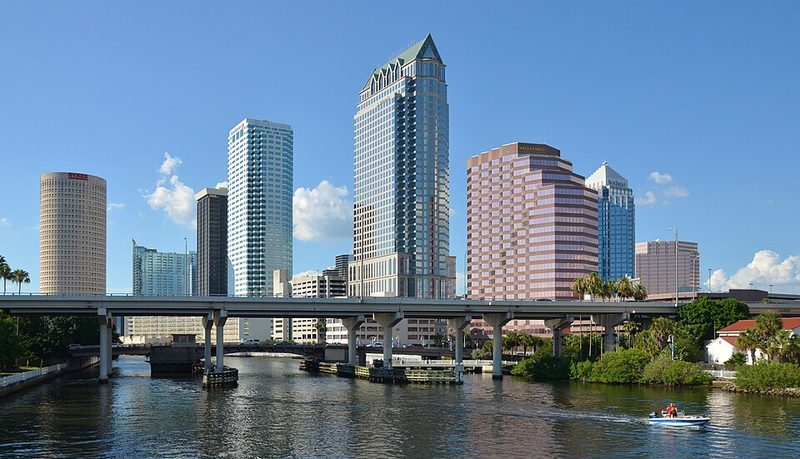
The Tampa Riverwalk is a 2.6-mile waterfront walking and cycling path that connects a string of downtown attractions along the Hillsborough River. Developed by the City of Tampa, it links parks, museums, performance venues and waterfront dining areas including Water Street Tampa, Sparkman Wharf and Armature Works. The path is freely accessible and provides a practical orientation route for visitors arriving in central Tampa for the first time. Cycling and scooter hire is available along the route.
The Florida Aquarium and the Glazer Children's Museum are among the major institutions positioned close to the Riverwalk corridor. The Channelside District, at the southern end of downtown, adds retail and entertainment options near the waterfront.
University, Port and Economy
The University of South Florida, with its main campus within Tampa, is one of the more significant public research universities in the southeastern United States and holds membership in the Association of American Universities — a body limited to institutions with the highest levels of research output. Its 14 colleges offer more than 240 degree programmes. The university's presence shapes Tampa's workforce and demographic profile in measurable ways.
Tampa's port remains one of the busiest on the Gulf Coast, handling goods that range from phosphate to consumer products, and the city is a recognised financial and professional services centre for the wider Florida region.
Practical Information
Tampa operates on Eastern Time. The city sits at low elevation on Florida's Gulf Coast and has a pronounced wet season; summer afternoons frequently bring heavy rain. Visitors planning outdoor activities should account for this, particularly between June and September.
The city population of just over 414,000 represents only a fraction of the wider metropolitan area, so many institutions, attractions and services that visitors associate with "Tampa" are distributed across Hillsborough County and neighbouring cities. Distances between areas can be considerable, and planning transport in advance is advisable. Tampa is served by major road corridors and by regional transit; visitors should confirm current routes and services locally or with official providers.
The nearest Gulf beaches — Clearwater Beach and St Pete Beach — are separate cities accessible from Tampa but not within the city limits. Day trips to these are straightforward by road.
Both the UK Foreign, Commonwealth and Development Office and the US State Department maintain general travel advisories for the United States. Neither body has issued any specific regional warning for Tampa or the surrounding area. Visitors should check current official guidance at gov.uk/foreign-travel-advice/usa (UK) or travel.state.gov (US) before travel, as advisories can change.
University of South Florida
The University of South Florida (USF) was founded in 1956 and has grown into one of the ten largest universities in the United States by enrolment, serving nearly 50,000 students across campuses in Tampa, St Petersburg and Sarasota-Manatee. The Tampa campus houses 14 colleges offering more than 200 programmes at undergraduate, graduate and doctoral level.
USF holds membership of the Association of American Universities, a body restricted to universities with the highest research activity — a distinction that makes it one of Florida's most significant research institutions. It was the first public university in Florida to receive an AAU invitation in close to 40 years. The university's research output and health services have a direct economic impact on Tampa, sustaining employment, spin-off businesses and a professional workforce that shapes the city's character well beyond the campus boundary. Visitors to Tampa will find USF's influence present throughout the city rather than confined to a single site.
Read the full University of South Florida guide
Sources: About USF - University of South Florida • USF History - University of South Florida • University of South Florida - Wikipedia
Gasparilla Pirate Festival
The Gasparilla Pirate Festival is Tampa's most distinctive annual civic event — a large-scale parade and series of community celebrations held most years since 1904. Built around the mythology of a fictional pirate named José Gaspar, the festival centres on a mock invasion of the city by the crew of a fully-rigged pirate ship, followed by a parade along Bayshore Boulevard that draws hundreds of thousands of spectators. It is simultaneously a piece of elaborate civic theatre and one of the largest events of its kind in the United States.
Sources: Gasparilla - City of Tampa • 2027 Gasparilla Parade Information - City of Tampa • Gasparilla Pirate Festival - Wikipedia • Gasparilla History - Ye Mystic Krewe of Gasparilla • Ye Mystic Krewe of Gasparilla
Tampa Riverwalk and Downtown Waterfront
The Tampa Riverwalk is the city's primary downtown public space — a 2.5-mile paved path that runs along the Hillsborough River and organises much of what visitors encounter in central Tampa. Developed as a deliberate civic investment to connect the downtown waterfront into a coherent whole, the Riverwalk links museums, parks, food halls, performance venues and waterfront districts into a walkable sequence that is free to access on foot.
Sources: Tampa Riverwalk - City of Tampa • Henry B. Plant Museum • Tampa Bay History Center • The Tampa Riverwalk - Visit Tampa Bay