Image: Wikipedia / Wikimedia Commons
Image: Wikipedia / Wikimedia Commons
Tripoli, historically known as Tripoli-of-the-West, is Libya's capital and largest city, standing at the crossroads of North African culture and Mediterranean influence. With a population of approximately 1.3 million residents, it serves as the country's political, economic, and cultural heart. Perched on the edge of the Sahara where rocky headlands meet the sea, Tripoli presents a distinctive character shaped by its geography, history, and pivotal role in modern Libya.
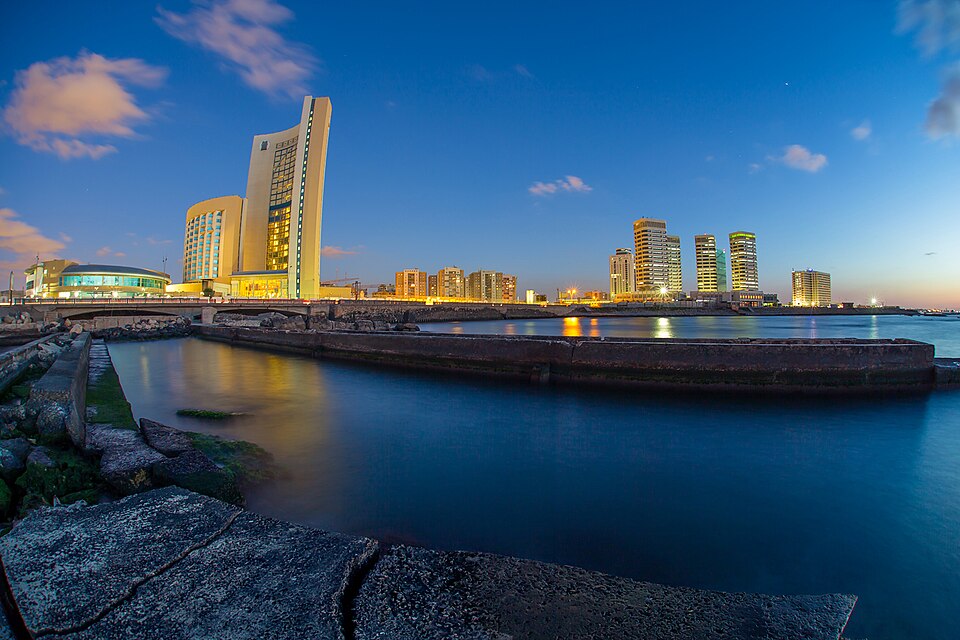
Situated in northwestern Libya at coordinates 32.88743N and 13.18733E, Tripoli rises just 15 meters above sea level on a promontory of rocky terrain that extends into the Mediterranean Sea. This geographical position is fundamental to understanding the city's identity and importance. The coastline forms a natural harbor, creating the sheltered bay that has drawn merchants, sailors, and settlers for centuries. The city's proximity to the desert edge gives it a unique character—urban development gives way surprisingly quickly to the arid landscapes that define much of the Libyan interior.
The Mediterranean breeze provides some relief from the intense heat of the surrounding region, and the sea has always been central to Tripoli's economy and daily life. The natural harbor remains one of North Africa's important ports, connecting the city to trade routes that span the Mediterranean and beyond. Those arriving by sea encounter the city's most dramatic aspect: the contrast between the built environment and the seemingly endless expanse of water.
Tripoli's name itself reflects its historical significance, derived from the three cities that once existed in this region. The city has accumulated layers of history across millennia, with evidence of Phoenician, Roman, Arab, and Ottoman influences woven into its urban fabric. The medina, or old city, preserves architectural elements and street patterns that speak to these different periods of habitation and rule. Walking through these older quarters offers glimpses into the city's layered past, from fortified structures to traditional courtyard houses.
The city's modern character has been substantially shaped by the twentieth century and beyond. Tripoli has served as the seat of Libya's government and the center of its most significant economic activity. This role has made it a focal point for national development, cultural expression, and the complex political and social changes that have affected the country in recent decades.
The primary draw for many visitors to Tripoli is the medina, the historic old city that occupies much of the city center. This densely packed quarter contains narrow winding streets, traditional markets, and buildings that reflect the city's multicultural history. The medina's layout and architecture provide a tangible connection to centuries of urban life in this region. Wandering through these streets reveals the rhythm of daily life, traditional crafts, and local commerce that continues much as it has for generations.
The waterfront and Mediterranean coastline form another essential aspect of the Tripoli experience. The harbor itself is a working port and remains vital to the city's economy and character. The relationship between Tripoli and the sea is not merely historical but ongoing and fundamental to how residents and visitors experience the place. The rocky shoreline and bay offer vantage points from which to observe maritime activity and enjoy the Mediterranean atmosphere that defines so much of the city's identity.
Beyond the immediate urban center, the surrounding landscape transitions quickly toward the desert environment that characterizes much of Libya. This proximity to dramatically different environments—sea, city, and desert—is a defining feature of Tripoli's geography. The University of Tripoli stands as an important institution within the city, representing its role as a center of higher education and intellectual life for the nation.
Tripoli International Airport serves as the main gateway for air travel to the city, connecting it to other North African cities and beyond. The port remains active for maritime access, and road connections link Tripoli to other parts of Libya, though travel within the country should be evaluated carefully depending on current conditions. Within the city itself, getting around relies primarily on local transportation options and taxis, with the medina and waterfront areas being most accessible on foot for those exploring the historic center.
For the 1.3 million people who call Tripoli home, the city represents opportunity, employment, and cultural connection. The port and associated maritime industries remain significant employers, as does the broader commercial and manufacturing sector that makes Tripoli the country's economic engine. The city's role as the capital means government employment and administration are also central to local livelihoods. Daily life in Tripoli reflects the complexity of a major Mediterranean port city situated at the edge of the Sahara—a place where commercial activity, family networks, and cultural traditions intersect and evolve.
Tripoli, Libya is located at an elevation of 15 meters above sea level in the Africa/Tripoli timezone. The city's population stands at approximately 1.302 million residents, making it not only Libya's largest city but one of North Africa's significant urban centers. Those planning to visit should note that travel information and conditions can change, and current guidance from official sources should always be consulted before traveling.
View larger map — © OpenStreetMap contributors
Flight delayed or cancelled?
You could be owed up to €600 compensation. Check your eligibility for free.Do you know Tripoli?
Share local tips, recommend a hotel, list a business or add a photo.
✏️ Share your knowledge about TripoliDo you know Tripoli?
Share local tips, recommend a hotel, list a business or add a photo.
✏️ Share your knowledge about Tripoli