Image: Wikipedia / Wikimedia Commons
Image: Wikipedia / Wikimedia Commons
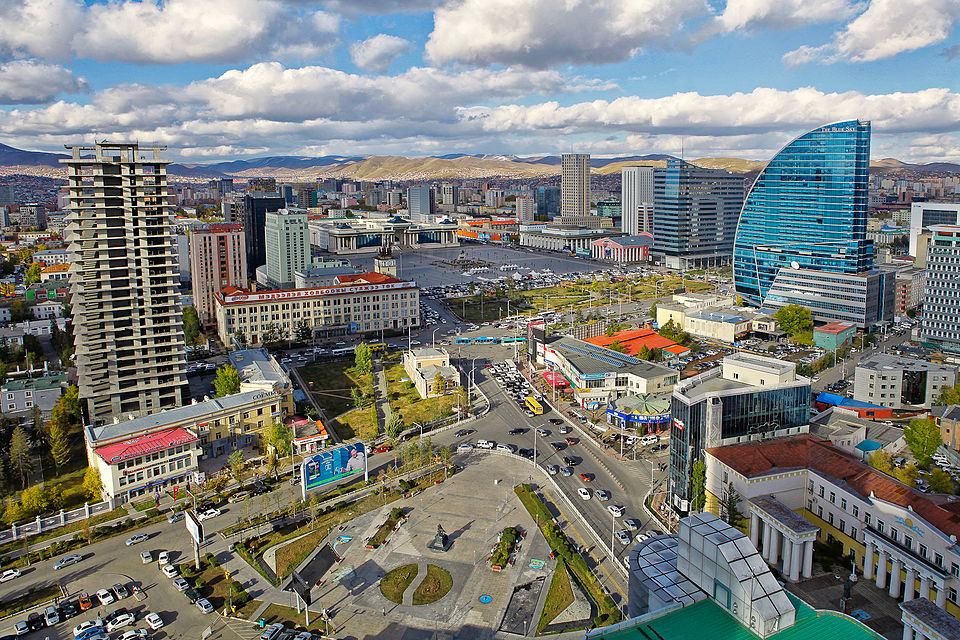
Ulaanbaatar stands as the beating heart of Mongolia, a city where ancient traditions meet contemporary energy in one of the world's most distinctive capitals. With a population of 844,818 residents, it anchors a metropolitan region that has grown dramatically in recent decades. This is a place shaped by nomadic heritage and Buddhist spirituality, yet increasingly connected to the modern world—a dynamic tension that defines the city's character.
Ulaanbaatar occupies a valley on the Tuul River in north central Mongolia, positioned at an elevation of 1,284 metres (approximately 4,210 feet) above sea level. The city's geographical setting is one of its most defining features: surrounded by mountains and positioned on the high Central Asian plateau, it experiences a continental climate with extreme seasonal variation. Winter temperatures regularly plunge well below freezing, earning Ulaanbaatar recognition as the coldest capital city in the world by average yearly temperature. The precise coordinates of 47.90771°N, 106.88324°E place the city firmly within Mongolia's heartland, roughly equidistant from the country's borders.
The topography around Ulaanbaatar creates distinct neighbourhoods and districts sprawling across the valley floor. The Tuul River runs through the city, providing both ecological significance and a natural gathering space for residents. To the north, south, and east, mountains rise dramatically, offering both a stunning natural backdrop and limiting the city's physical expansion. This geographical constraint has shaped how the city has developed and continues to influence planning and growth patterns.
Few cities in the world have such a mobile and unusual origin story as Ulaanbaatar. Founded in 1639 as a nomadic Buddhist monastic centre, the city was deliberately designed to move. Over the course of 139 years, it relocated 29 times as circumstances, political winds, and economic factors dictated. This reflects a time when even major urban centres in Mongolia maintained the fluid, adaptive character of nomadic life.
The city finally settled at its modern location in 1778, establishing permanent roots in the valley it still occupies today. This transition from mobile monastery to fixed capital marks a crucial turning point in Mongolian history. The decision to remain here reflected broader changes in Mongolian society, trade patterns, and governance. Today, traces of this religious heritage remain visible in the city's Buddhist sites and in the spiritual practices of many residents, though the dominant architectural and cultural landscape has been transformed by more recent historical periods and contemporary development.
Visitors to Ulaanbaatar will find a city that rewards exploration on multiple levels. The natural surroundings offer immediate appeal—the mountains encircling the city provide hiking opportunities and viewpoints for those seeking outdoor recreation and perspective. The Tuul River valley itself, though increasingly urban along much of its course through the city, retains ecological significance and serves as a space for walking and observation.
Within the city, Buddhist monasteries and temples represent the spiritual heritage that has deep roots here. These sacred spaces offer insight into Mongolian Buddhist practice and artistic traditions spanning centuries. The city also contains museums and cultural institutions that document Mongolia's history, from its nomadic past through its modern development. Cultural performances, traditional music, and local festivals provide windows into contemporary Mongolian identity and artistic expression. The night sky, particularly during seasons with less light pollution, can be remarkably clear given the city's elevation and distance from major industrial zones elsewhere on Earth.
The surrounding landscape beyond the immediate city offers additional appeal. The valleys and mountains within day-trip distance preserve something of the landscape that shaped Mongolian pastoral and nomadic traditions. This proximity to relatively undeveloped terrain is one of Ulaanbaatar's great advantages—urban life here is never far removed from wider nature.
Ulaanbaatar is Mongolia's primary transportation hub, with an international airport serving regional and some international routes. The city also connects to Russia by rail, with the Trans-Mongolian Railway linking it to Moscow and Beijing. Within the city, public transportation includes buses and minibuses, though many residents and visitors also rely on walking, cycling, and taxis. The relatively compact urban centre makes many areas accessible on foot, though distances can be significant and the elevation affects how physical exertion feels.
For the 844,818 people who call Ulaanbaatar home, this is a city of work, education, and opportunity. The city drives Mongolia's economy as the centre of government, trade, and services. It attracts people from across the country seeking employment and advancement. Construction and development create visible energy in many neighbourhoods. Residents navigate both the constraints of extreme winter weather and the freedoms of a city increasingly connected to global networks. The tension between traditional values and rapid modernization shapes daily life, from family structures rooted in nomadic heritage to contemporary technologies transforming work and communication.
Ulaanbaatar operates on Asia/Ulaanbaatar timezone. The city's elevation of 1,284 metres means visitors arriving from sea level may experience mild altitude effects initially. The population of 844,818 represents the city proper, though metropolitan areas extend beyond these official boundaries. Anyone planning a visit should prepare for extreme seasonal temperature variation and plan accordingly for the season of travel.
View larger map — © OpenStreetMap contributors
Flight delayed or cancelled?
You could be owed up to €600 compensation. Check your eligibility for free.Do you know Ulaanbaatar?
Share local tips, recommend a hotel, list a business or add a photo.
✏️ Share your knowledge about UlaanbaatarDo you know Ulaanbaatar?
Share local tips, recommend a hotel, list a business or add a photo.
✏️ Share your knowledge about Ulaanbaatar