Image: Wikipedia / Wikimedia Commons
Image: Wikipedia / Wikimedia Commons
Volgograd stands as one of Russia's most significant cities, a sprawling urban centre of over one million residents positioned along the mighty Volga River. The city carries the weight of remarkable history—having endured transformation, destruction, and renewal across centuries—while remaining a vital economic and cultural hub of southern Russia. Today, it presents itself as a place where grand historical narratives intersect with contemporary Russian urban life, drawing visitors interested in both its storied past and its present character.
Situated on the western bank of the Volga River at coordinates 48.71378 North, 44.4976 East, Volgograd occupies a substantial urban footprint of 859.4 square kilometres. The city's elevation lies just below sea level, a geographical fact that reflects its position within the vast Volga basin. Volgograd functions as the administrative centre of Volgograd Oblast and ranks as the third-largest city in the Southern Federal District and the fourth-largest along the Volga itself, making it a major regional centre with considerable economic and administrative influence.
The Volga's presence defines much of the city's character and layout. The river's scale—it is Europe's longest river—lends Volgograd a sense of grandeur and openness. The landscape around the city is relatively flat, with the Volga providing the dominant geographical feature. Winters here are cold and often snowy, while summers can be warm, creating distinct seasonal variations that shape local life and activity patterns throughout the year.
The city's past is extraordinary and inescapable. Originally founded in 1589 as Tsaritsyn, the settlement grew as a fortress and trading post. It was renamed Stalingrad in 1925, a name that became infamous following the catastrophic battle fought there during World War II. The city was almost entirely destroyed during this conflict, which lasted from August 1942 to February 1943, making it one of the war's most significant and brutal engagements. The human cost was staggering, and the physical devastation was nearly total.
In 1961, following the Soviet leadership changes that followed Stalin's era, the city was renamed Volgograd, reflecting the desire to move beyond that historical association. The post-war reconstruction of the city was itself a remarkable undertaking, and this historical experience—of destruction and rebuilding—remains central to Volgograd's identity. Visitors and residents alike encounter this history continuously, through monuments, memorials, and the architectural character of much of the rebuilt city. This past is neither forgotten nor hidden; rather, it is woven into the fabric of how Volgograd understands itself.
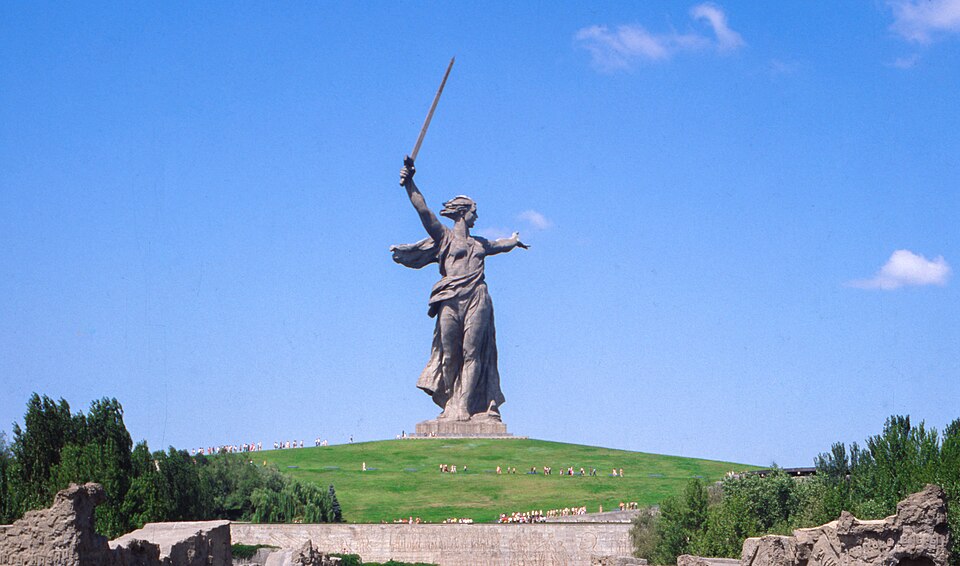
Volgograd's attractions are intrinsically linked to its historical significance and relationship with the Volga River. The most prominent landmark is the Mamayev Kurgan, an elevated area in the city that was the site of intense fighting during World War II and now serves as a major memorial complex. From this vantage point, visitors can gain a literal and metaphorical overview of the city and understand something of the geography that made the battle so significant.
The Volga River itself offers opportunities for walking, observation, and leisure. The riverside areas provide space for understanding the scale of this crucial waterway and the role it plays in regional transport and commerce. The city's architecture reflects different periods of its existence—from pre-revolutionary structures that survived the war, through Soviet-era reconstruction, to contemporary buildings. Walking through different quarters reveals how the city has evolved and rebuilt itself across generations.
Cultural activities centre around museums, theatres, and galleries that document local and regional history, art, and cultural life. These institutions serve both as repositories of memory and as spaces for contemporary cultural expression. The wide avenues that characterize much of the city's layout—a product of post-war Soviet urban planning—create a distinctive sense of space and scale.
Volgograd is connected to other Russian cities by rail, road, and air. The city's railway station links it to major destinations, and regional roads connect it to surrounding areas. Volgograd International Airport serves the city, providing connections to Moscow and other major centres. Within the city itself, public transport including buses and trams enables movement across the large urban area. The wide streets and scale of the city mean that distances between attractions can be substantial, making transport planning a practical consideration for visitors.
For those who live in Volgograd, the city functions as a major economic centre with diverse industries. Manufacturing, services, and trade form the backbone of the local economy. The Volga's role in regional commerce and transport remains significant, and the city serves as an important administrative and educational hub. Schools, universities, and cultural institutions provide employment and shape the life experience of residents. The city's population of 1,013,533 makes it a substantial urban community where local connections matter and diverse neighbourhoods serve different functions and communities.
Volgograd lies in the Europe/Volgograd timezone. The city's population exceeds one million residents, making it one of Russia's significant urban centres. Its elevation of -32 metres reflects its position in the Volga basin. This is a real place with real characteristics, deserving serious attention from those interested in Russian geography, history, and contemporary life.
View larger map — © OpenStreetMap contributors
Flight delayed or cancelled?
You could be owed up to €600 compensation. Check your eligibility for free.Do you know Volgograd, Volgograd Oblast?
Share local tips, recommend a hotel, list a business or add a photo.
✏️ Share your knowledge about Volgograd, Volgograd OblastDo you know Volgograd, Volgograd Oblast?
Share local tips, recommend a hotel, list a business or add a photo.
✏️ Share your knowledge about Volgograd, Volgograd Oblast