What Windermere is known for
Read the guide as a story
The Windermere Notebook: A Writer's Route from Station to Lake
Windermere is a small Cumbrian town of around 7,765 people that functions as the principal entry point to the English Lake District. It sits roughly two kilometres from Lake Windermere - England's largest lake by length, area and volume - and within walking distance of several accessible viewpoints above the town. If you're imagining the Lake District as wild and remote, Windermere will gently correct that idea: this is an organised, well-connected settlement where you step off the train and the landscape immediately shifts around you.
The place works best as a base. Walkers use it as a launch pad for the surrounding fells and viewpoints. Car-free visitors appreciate that buses, boats and the railway connect onward to much of the region without needing a car. Cultural visitors find a concentration of nearby attractions - from Victorian lake steamers to Beatrix Potter country - within easy reach. Those who come expecting a quiet village will find instead a busy seasonal hub; peak summer brings considerable visitor pressure, and the town centre reflects that.
First Impressions and Setting
Windermere occupies a modest footprint in Cumbria at around 120 metres above sea level. The railway station sits less than 300 metres from the centre, which makes it unusually easy to arrive without a car and immediately begin exploring on foot. The bus terminus is immediately adjacent to the station, connecting to the wider region from the same spot.
The town is not directly on the lakeshore - that role falls to Bowness-on-Windermere, roughly two kilometres south, which offers waterfront access, the main pier and the vehicle ferry. The two settlements are effectively one extended community sharing resources, with buses and footpaths linking them. Most visitors move between the two as a matter of course.
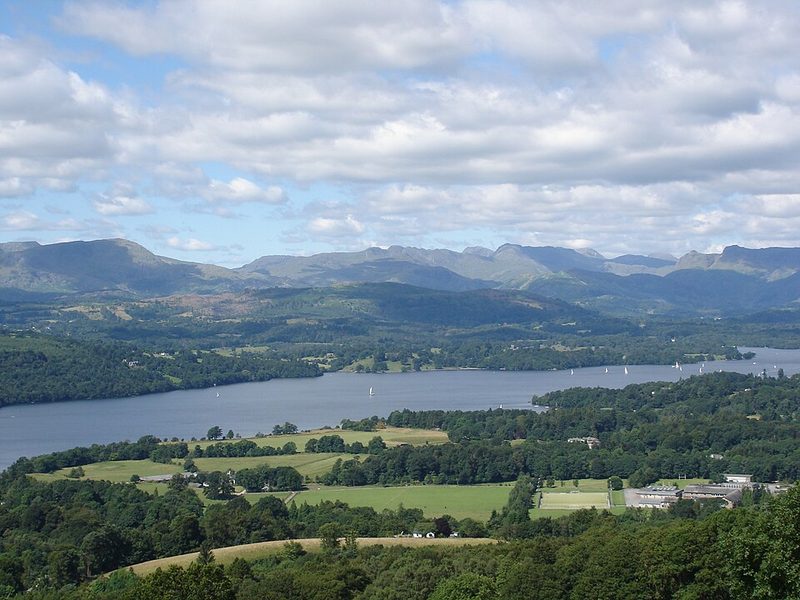
The surrounding hills are close and accessible. Orrest Head, the most visited viewpoint, rises just over half a kilometre from town. Banner Rigg and School Knott are within an hour's walk; Heathwaite Hill slightly further. These are not remote peaks but well-trodden vantage points that reward a modest effort with wide views of the lake and surrounding fells. This relationship between the town and the terrain - a railway hub positioned at the edge of big water and open hillside - defines what Windermere actually is.
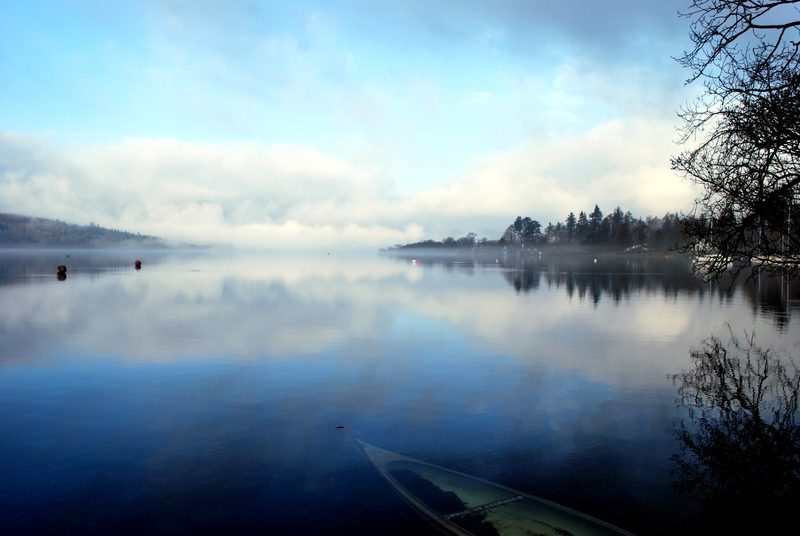
Lake Windermere
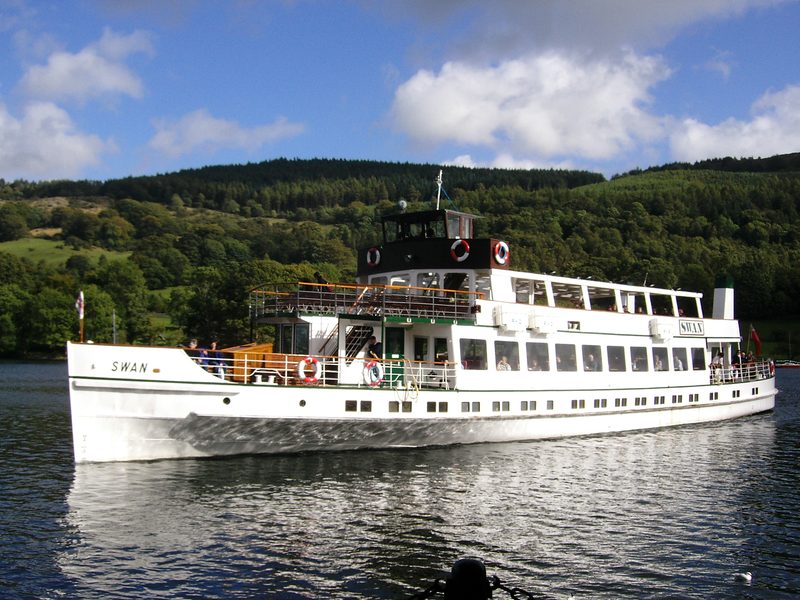
Lake Windermere is England's largest lake, and its scale shapes the whole visitor experience of the region. The lake stretches south from near Ambleside and carries a long tradition of waterborne tourism. Historic vessels such as the MV Swan and the MV Tern (built in 1891) operate as passenger cruise boats on the water, offering round trips and scheduled services between piers. The MV Teal and MV Swift are also part of the Windermere Lake Cruises fleet. These are passenger cruise services - distinct from the separate vehicle ferry that crosses from Bowness to the western shore.
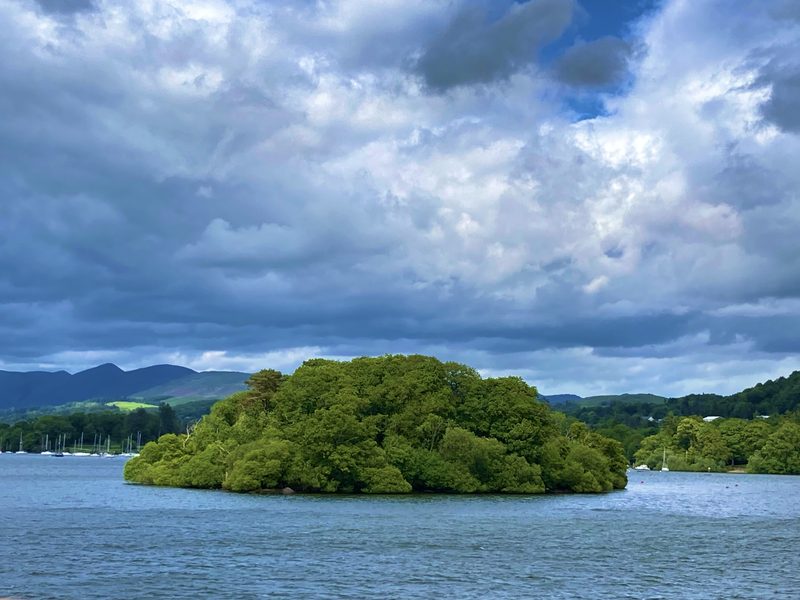
Islands including Ramp Holme are visible from the lake surface, though they are not generally accessible to visitors. The western shore, reached via the vehicle ferry from Ferry Nab in Bowness, offers lakeshore walking paths and access to the Claife Viewing Station, a National Trust property. The ferry, operated by Westmorland and Furness Council, carries vehicles, bicycles and foot passengers across to Far Sawrey. Current operating details should be confirmed with the council or local visitor information before travelling.
Visitors should be clear about the distinction between the two main boat options: the passenger cruise boats run by Windermere Lake Cruises offer scenic trips up and down the lake between named piers; the vehicle ferry is a practical crossing to the western shore. They depart from different points and serve different purposes.
Walks and Viewpoints
Walking is the central activity for most visitors. The terrain is immediately accessible from the town, with no need for onward transport to reach the first good viewpoints.
Walking conditions vary considerably by season. Snow and ice can affect higher ground in winter; wet weather is a genuine year-round factor in Cumbria. Visitors planning serious fell walking should check current conditions through the Lake District National Park or local walking guides before setting out.
For longer routes, the wider Lake District offers extensive path networks. Bus services from Windermere station provide access to trail heads across the region - see the transport section below.
Nearby Attractions
Windermere and the immediate area support a range of cultural and heritage attractions, several of which have strong source-backed visitor profiles.
Beatrix Potter connections are among the strongest draws in the region. Hill Top, the National Trust property in Near Sawrey where Potter lived and wrote many of her Peter Rabbit books, is reachable via the vehicle ferry from Bowness. The World of Beatrix Potter attraction in Bowness-on-Windermere provides an indoor introduction for families. Both have operated as established visitor attractions for many years; current opening details should be confirmed with the National Trust and visitcumbria.com before visiting.
Windermere Jetty Museum in Bowness is a boat museum on the water's edge covering the history of the lake and its vessels. It has featured in visitor listings for the area; current status and hours should be verified with the venue or Visit Lake District.
Blackwell, an Arts and Crafts house south of Bowness, is cited in local attraction listings as a notable building. Specific opening details should be confirmed locally.
The Lakeland Motor Museum at Backbarrow, and Fell Foot Park at the southern end of the lake, are accessible by the No. 6 bus service, which runs between Windermere and Barrow-in-Furness.
Arrival and Getting Around
By Train
Windermere Railway Station is the primary arrival point for visitors without a car, and one of the most practical entry points to the Lake District by public transport. Local trains from Oxenholme call at Kendal, Staveley and Windermere; services operate at least hourly from Oxenholme. National Rail operates the station; the operator serving the line is Northern Trains. Current timetables and connections should be checked at National Rail or Trainline.
By Bus
The bus terminus is immediately adjacent to the railway station, making onward connections straightforward. Source cards identify the following useful routes from Windermere station:
Bus journeys through the Lake District, particularly on the 599, are themselves scenic experiences and not merely functional connections. Stagecoach Cumbria and North Lancashire operates several of these services. Current timetables, fares and seasonal frequency should be confirmed with Stagecoach or Bus Times before travelling.
No Passenger Flights
There are no passenger flights into Cumbria or the Lake District. All air travellers reach the region by ground transport from Manchester, Leeds Bradford or other regional airports.
By Car and Parking
Car access is straightforward via the Lake District road network, though roads can become congested during peak summer periods. Car parks are available around the lake area; pre-booking parking is possible through providers listed at local visitor information services. Specific current parking charges and availability should be confirmed locally.
On Foot and by Bike
Walking is the primary means of exploration within and immediately around Windermere. Buses and boats extend the car-free range considerably. Cycling is noted as an option in local transport guides; bike-friendly routes and rental information can be sought from visitor information or Visit Cumbria.
Tourist Information
The Windermere Tourist Information Centre is located at the left turn to the town centre as you enter Windermere, in a wooden building at the junction, with one hour's free parking directly in front. It is a practical first stop for maps, current conditions and local guidance.
Seasonal Practicalities
Visitor pressure at Windermere is strongly seasonal. Spring and summer - particularly school holidays - bring the heaviest crowds. The town centre, the waterfront at Bowness and popular walks such as Orrest Head can become noticeably busy during peak periods. Visitors who prefer quieter conditions should consider autumn, which offers clearer skies and fewer day-trippers, or early spring before the main holiday season begins.
Winter brings shorter days, rain and occasional snow on higher ground. Ice and snow can affect walking routes on the fells; boat services and some waterborne activities may be reduced or run to seasonal timetables. Source-backed seasonal signals indicate that cold and icy conditions are a genuine factor, not a remote possibility.
Weather in Cumbria is variable year-round. Rain gear is practical kit in any season. Specific seasonal closures, service changes and local events should be checked with the Lake District National Park visitor services or local contacts, as these change annually.
Who Will Enjoy Windermere
Windermere works well for walkers who want accessible viewpoints and fells with good public transport connections; for car-free visitors who want to explore the wider Lake District by bus, boat and rail; and for families looking for a combination of lake activities, boat trips and nearby cultural attractions such as the Beatrix Potter sites. Culture and heritage visitors will find several source-backed attractions within reach, with the western shore, Claife Viewing Station and Hill Top accessible via the ferry from Bowness.
Visitors who dislike crowds should plan carefully around peak summer periods. Those looking for a remote or unspoilt experience should note that Windermere is the busiest and most commercially developed part of the Lake District - the wilder terrain is further in, reached from here as a base or jumping-off point.
Windermere Railway Station, less than 300 metres from the town centre, is the region's main rail entry point. Northern Trains operates services from Oxenholme Lake District, at least hourly during the day, with connections from the West Coast Main Line. There are no passenger flights to Cumbria. The bus terminus is immediately adjacent to the station, with named Stagecoach routes including the 505 (Coniston), 555 and 599 (Grasmere/Ambleside) and 508 (Ullswater) making car-free exploration of the Lake District practical. Car visitors should note summer congestion; parking pre-booking is available. Current timetables and fares should be confirmed with National Rail, Stagecoach or Bus Times before travelling.
Read the full Stations, airports and arrival routes for Windermere guide
Sources: National Rail - Windermere Station • Stagecoach - Windermere and Bowness Buses • Good Journey - Windermere • Bus Times - Windermere • Visit Cumbria - Windermere Transport and Parking
Windermere Railway Station, less than 300 metres from the town centre, is the region's main rail entry point. Northern Trains operates services from Oxenholme Lake District, at least hourly during the day, with connections from the West Coast Main Line. There are no passenger flights to Cumbria. The bus terminus is immediately adjacent to the station, with named Stagecoach routes including the 505 (Coniston), 555 and 599 (Grasmere/Ambleside) and 508 (Ullswater) making car-free exploration of the Lake District practical. Car visitors should note summer congestion; parking pre-booking is available. Current timetables and fares should be confirmed with National Rail, Stagecoach or Bus Times before travelling.
Read the full Stations, airports and arrival routes for Windermere guide
Sources: National Rail - Windermere Station • Stagecoach - Windermere and Bowness Buses • Good Journey - Windermere • Bus Times - Windermere • Visit Cumbria - Windermere Transport and Parking
Lake Windermere Cruises and Historic Boats
Boat trips on Lake Windermere are among the most established visitor activities in the Lake District, with a commercial cruising tradition stretching back well over a century. The operator Windermere Lake Cruises runs services on the lake, with a fleet that includes several historically notable vessels.
The Fleet
The MV Swan is one of the most recognisable vessels on the lake, and has been sailing Windermere for decades; Windermere Lake Cruises' own website notes the Swan's approaching 85th birthday, placing her construction in the late 1930s. She is registered on the National Historic Ships register.
The MV Tern, built in 1891, is the oldest vessel in the fleet and one of the oldest working passenger steamers in Britain. She has been photographed departing from Bowness Pier and is closely associated with the lake's Victorian tourism heritage. The Tern is also a passenger cruise boat - not to be confused with the vehicle ferry, which crosses the lake from Ferry Nab in Bowness to the western shore.
The fleet also includes the MV Teal and MV Swift, both passenger cruise vessels. Collectively, Windermere Lake Cruises operates scheduled services between piers on the lake, including Bowness, Waterhead (Ambleside) and Lakeside at the southern end.
What Cruises Offer
Lake cruises provide a practical way to move between points on the lake as well as a scenic experience in their own right. Services connect with buses at some piers, allowing visitors to combine a boat leg with an onward bus journey. The Stagecoach 599 bus, for example, connects Windermere station to Bowness pier, from which lake cruises depart.
Islands visible from the lake include Ramp Holme, one of several islands on the water. These are not publicly accessible but are visible from cruise boats as markers of the lake's scale.
The Vehicle Ferry (a Separate Service)
Visitors should note that the vehicle ferry from Ferry Nab, Bowness, to Far Sawrey on the western shore is a separate service from the passenger lake cruises. It is operated by Westmorland and Furness Council and carries vehicles, bicycles and foot passengers. It is a practical crossing rather than a scenic cruise. From Far Sawrey, walkers can access the Claife Viewing Station (National Trust) and the western lakeshore path.
Practical Notes
Current timetables, pier locations, fares and seasonal service changes for lake cruises should be confirmed directly with Windermere Lake Cruises. For the vehicle ferry, contact Westmorland and Furness Council. WorldTownGuide does not hold current timetable data.
Sources: Windermere Lake Cruises - MV Swan • National Historic Ships - Swan • Windermere Lake Cruises - Swan 85th Birthday • Westmorland and Furness Council - Windermere Ferry • National Trust - Claife Viewing Station and Windermere West Shore
Lake Windermere Cruises and Historic Boats
Boat trips on Lake Windermere are among the most established visitor activities in the Lake District, with a commercial cruising tradition stretching back well over a century. The operator Windermere Lake Cruises runs services on the lake, with a fleet that includes several historically notable vessels.
The Fleet
The MV Swan is one of the most recognisable vessels on the lake, and has been sailing Windermere for decades; Windermere Lake Cruises' own website notes the Swan's approaching 85th birthday, placing her construction in the late 1930s. She is registered on the National Historic Ships register.
The MV Tern, built in 1891, is the oldest vessel in the fleet and one of the oldest working passenger steamers in Britain. She has been photographed departing from Bowness Pier and is closely associated with the lake's Victorian tourism heritage. The Tern is also a passenger cruise boat - not to be confused with the vehicle ferry, which crosses the lake from Ferry Nab in Bowness to the western shore.
The fleet also includes the MV Teal and MV Swift, both passenger cruise vessels. Collectively, Windermere Lake Cruises operates scheduled services between piers on the lake, including Bowness, Waterhead (Ambleside) and Lakeside at the southern end.
What Cruises Offer
Lake cruises provide a practical way to move between points on the lake as well as a scenic experience in their own right. Services connect with buses at some piers, allowing visitors to combine a boat leg with an onward bus journey. The Stagecoach 599 bus, for example, connects Windermere station to Bowness pier, from which lake cruises depart.
Islands visible from the lake include Ramp Holme, one of several islands on the water. These are not publicly accessible but are visible from cruise boats as markers of the lake's scale.
The Vehicle Ferry (a Separate Service)
Visitors should note that the vehicle ferry from Ferry Nab, Bowness, to Far Sawrey on the western shore is a separate service from the passenger lake cruises. It is operated by Westmorland and Furness Council and carries vehicles, bicycles and foot passengers. It is a practical crossing rather than a scenic cruise. From Far Sawrey, walkers can access the Claife Viewing Station (National Trust) and the western lakeshore path.
Practical Notes
Current timetables, pier locations, fares and seasonal service changes for lake cruises should be confirmed directly with Windermere Lake Cruises. For the vehicle ferry, contact Westmorland and Furness Council. WorldTownGuide does not hold current timetable data.
Sources: Windermere Lake Cruises - MV Swan • National Historic Ships - Swan • Windermere Lake Cruises - Swan 85th Birthday • Westmorland and Furness Council - Windermere Ferry • National Trust - Claife Viewing Station and Windermere West Shore
Beatrix Potter, Hill Top and Bowness
Beatrix Potter is one of the strongest cultural reasons to use Windermere as a Lake District base. The World of Beatrix Potter Attraction is in Bowness-on-Windermere, close to the lakefront, while Hill Top - Potter's farmhouse at Near Sawrey - sits across the water on the western side of Lake Windermere.
The geography matters for visitors. From Windermere, Bowness is the practical first step: buses and walking routes connect the railway station area with the waterfront, and the vehicle ferry from Ferry Nab crosses to Far Sawrey for Hill Top and the western shore. This makes the Potter sites part of a wider car-free circuit rather than a single isolated attraction.
Potter's importance in the Lake District is not only literary. The National Trust records that when she died in 1943 she left 4,000 acres of land and 15 farms to the Trust, including Herdwick sheep and Lake District farmland. That conservation legacy is part of why the surrounding landscape still feels coherent rather than simply developed for visitors.
For families, the Bowness attraction is the easier wet-weather option. For readers interested in Potter's life and landscape, Hill Top and Near Sawrey carry more biographical weight. Current opening times, tickets and ferry arrangements should be checked directly before travelling.
Sources: World of Beatrix Potter Attraction - Getting Here • National Trust - Hill Top • National Trust - Beatrix Potter • Westmorland and Furness Council - Windermere Ferry
Beatrix Potter, Hill Top and Bowness
Beatrix Potter is one of the strongest cultural reasons to use Windermere as a Lake District base. The World of Beatrix Potter Attraction is in Bowness-on-Windermere, close to the lakefront, while Hill Top - Potter's farmhouse at Near Sawrey - sits across the water on the western side of Lake Windermere.
The geography matters for visitors. From Windermere, Bowness is the practical first step: buses and walking routes connect the railway station area with the waterfront, and the vehicle ferry from Ferry Nab crosses to Far Sawrey for Hill Top and the western shore. This makes the Potter sites part of a wider car-free circuit rather than a single isolated attraction.
Potter's importance in the Lake District is not only literary. The National Trust records that when she died in 1943 she left 4,000 acres of land and 15 farms to the Trust, including Herdwick sheep and Lake District farmland. That conservation legacy is part of why the surrounding landscape still feels coherent rather than simply developed for visitors.
For families, the Bowness attraction is the easier wet-weather option. For readers interested in Potter's life and landscape, Hill Top and Near Sawrey carry more biographical weight. Current opening times, tickets and ferry arrangements should be checked directly before travelling.
Sources: World of Beatrix Potter Attraction - Getting Here • National Trust - Hill Top • National Trust - Beatrix Potter • Westmorland and Furness Council - Windermere Ferry
MV Tern: Windermere's Victorian Steamer
The MV Tern, built in 1891, is the oldest vessel in the Windermere Lake Cruises fleet and one of the oldest working passenger steamers in Britain. She has operated on Lake Windermere for more than 130 years, making her a genuine piece of Victorian industrial and leisure heritage still in active service.
The Tern departs from Bowness Pier and operates as a passenger cruise boat on the lake's scheduled services. She is not the vehicle ferry - that is a separate council-operated crossing from Ferry Nab in Bowness to Far Sawrey. The Tern is a passenger vessel that carries visitors on lake cruise routes between named piers, including Bowness, Waterhead (Ambleside) and Lakeside.
Her longevity reflects both the quality of her original construction and the sustained visitor demand for lake cruising that has existed since the Victorian expansion of railway tourism into the Lake District. The arrival of the railway at Windermere in the mid-19th century transformed the region into a popular tourist destination, and vessels like the Tern were part of the infrastructure that met that demand.
Visitors who want to travel on the Tern specifically should check the current Windermere Lake Cruises schedule, as vessel allocation across routes is subject to operational decisions and seasonal timetabling. The Tern is a working vessel, not a static exhibit.
Sources: Windermere Lake Cruises (official site) • Westmorland and Furness Council - Windermere Ferry
MV Tern: Windermere's Victorian Steamer
The MV Tern, built in 1891, is the oldest vessel in the Windermere Lake Cruises fleet and one of the oldest working passenger steamers in Britain. She has operated on Lake Windermere for more than 130 years, making her a genuine piece of Victorian industrial and leisure heritage still in active service.
The Tern departs from Bowness Pier and operates as a passenger cruise boat on the lake's scheduled services. She is not the vehicle ferry - that is a separate council-operated crossing from Ferry Nab in Bowness to Far Sawrey. The Tern is a passenger vessel that carries visitors on lake cruise routes between named piers, including Bowness, Waterhead (Ambleside) and Lakeside.
Her longevity reflects both the quality of her original construction and the sustained visitor demand for lake cruising that has existed since the Victorian expansion of railway tourism into the Lake District. The arrival of the railway at Windermere in the mid-19th century transformed the region into a popular tourist destination, and vessels like the Tern were part of the infrastructure that met that demand.
Visitors who want to travel on the Tern specifically should check the current Windermere Lake Cruises schedule, as vessel allocation across routes is subject to operational decisions and seasonal timetabling. The Tern is a working vessel, not a static exhibit.
Sources: Windermere Lake Cruises (official site) • Westmorland and Furness Council - Windermere Ferry