Image: Wikipedia / Wikimedia Commons
Image: Wikipedia / Wikimedia Commons
Xi'an stands as one of China's most significant cities, a sprawling metropolis where thousands of years of history rest alongside contemporary urban development. As the capital of Shaanxi Province and the largest city in Northwestern China, Xi'an represents a bridge between China's imperial past and its dynamic present. The city's character is defined by its role as one of the world's great historical centers, yet it remains a vibrant, forward-looking place where millions of people build their daily lives.
Situated on the Guanzhong plain at an elevation of 416 meters above sea level, Xi'an occupies a strategically important location in central China. The city lies at coordinates 34.25833N, 108.92861E, positioning it as a natural crossroads in the northwestern region. With a current population of 9,600,000 in its core urban area, Xi'an ranks as the third-most populous city in Western China, surpassed only by Chongqing and Chengdu, though the metropolitan area's total population exceeds 12 million when including surrounding districts. The city operates on Asia/Shanghai timezone, following China's unified time system despite its western location.
The Guanzhong plain provides fertile ground that has supported human settlement for millennia. The landscape is relatively flat compared to the mountainous terrain surrounding Shaanxi Province, making Xi'an an accessible hub that naturally drew rulers, merchants, and settlers throughout history. The plain's agricultural productivity historically supported the large populations required for imperial courts and administrative centers.
Xi'an's historical importance cannot be overstated. The city served as the capital of multiple Chinese dynasties, most notably the Zhou, Qin, Han, and Tang dynasties. This extraordinary concentration of imperial authority across centuries left an indelible mark on the city's character and landscape. The presence of ancient walls, tombs, temples, and archaeological sites throughout and around Xi'an makes it an open-air museum of Chinese civilization.
The most famous archaeological discovery associated with Xi'an is the Terracotta Army, discovered in 1974 near the tomb of China's first emperor. This vast collection of life-sized clay warriors has fundamentally changed our understanding of ancient Chinese craftsmanship, military organization, and burial practices. Beyond this singular marvel, Xi'an's surroundings contain countless other imperial tombs, religious monuments, and cultural sites that testify to its long role as China's most important political and cultural center during multiple periods of history.
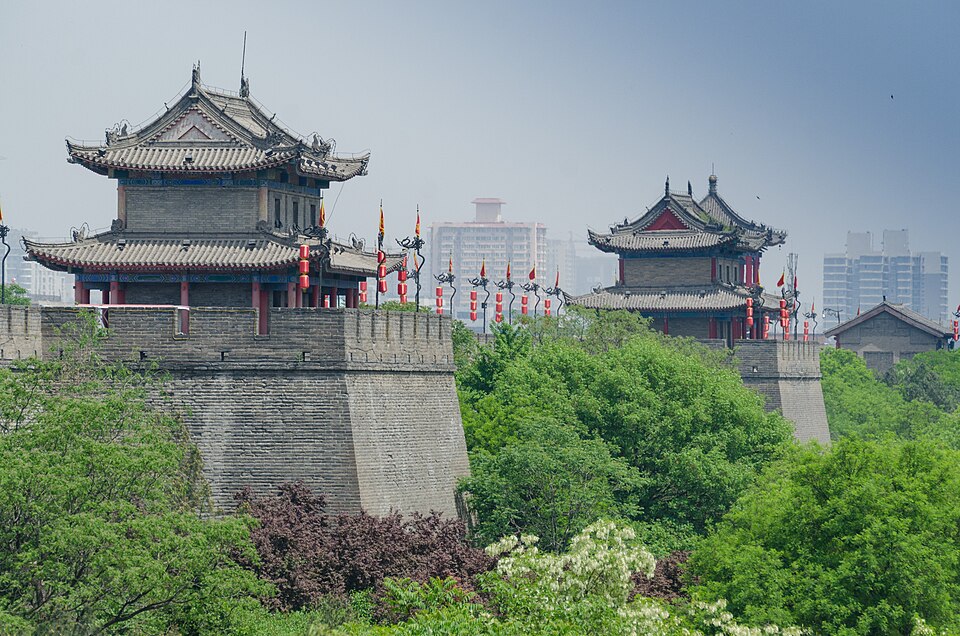
Visitors to Xi'an experience a landscape rich with historical monuments and cultural attractions. The ancient city walls that encircle the central urban area remain among the best-preserved medieval fortifications in China, offering both historical insight and pleasant walking paths with views across the city. These walls date primarily to the Ming Dynasty but follow the layout of earlier walls, creating a tangible connection to centuries of urban planning.
Beyond the walls, the surrounding region offers extensive opportunities for historical exploration. The area contains numerous Buddhist and Taoist temples, many dating back over a thousand years, where visitors can observe religious practices and appreciate architectural traditions. The natural landscape of the Guanzhong plain provides quieter spaces for reflection, particularly around the many tombs and sacred sites scattered throughout the region. The Yellow River, one of China's most significant waterways, flows through the broader Shaanxi landscape to the east of the city.
Cultural museums throughout Xi'an house artifacts from various dynasties, offering contextualized understanding of the objects and practices that shaped Chinese history. These institutions provide essential frameworks for appreciating both what remains visible in the landscape and what has been carefully preserved in climate-controlled spaces.
Xi'an's importance as a historical and cultural center has made it a major transportation hub. The city is served by commercial air connections to other major Chinese cities and international destinations. High-speed rail networks connect Xi'an to other significant urban centers across China, making it accessible for both domestic and international travelers. Within the city itself, a growing metro system, bus networks, and traditional taxis provide transportation options for navigating the expansive urban area. The city's size means that travel between different districts may require significant time and planning.
For the millions of people who call Xi'an home, the city functions as a modern economic and administrative center. While tourism and heritage preservation remain important, Xi'an is primarily a working city where people are engaged in education, manufacturing, technology, government service, and countless other professions. The presence of several major universities makes Xi'an an important educational hub attracting students from across China. Industrial and manufacturing sectors provide significant employment, while service industries continue to expand as the city modernizes. The daily rhythm of Xi'an reflects the balance between reverence for its historical significance and the practical demands of contemporary urban life.
Xi'an's urban population of approximately 9,600,000 makes it one of China's largest cities, though the broader metropolitan area encompasses significantly more people. The city sits at 416 meters elevation above sea level on the Guanzhong plain. It operates on Asia/Shanghai timezone. The combination of size, historical importance, and central location makes Xi'an an essential destination for understanding both ancient and contemporary China. Whether visiting for historical exploration or to experience urban life in Northwestern China, Xi'an offers a uniquely rich environment where past and present coexist in a constantly evolving city.
View larger map — © OpenStreetMap contributors
Flight delayed or cancelled?
You could be owed up to €600 compensation. Check your eligibility for free.Do you know Xi’an, Shaanxi?
Share local tips, recommend a hotel, list a business or add a photo.
✏️ Share your knowledge about Xi’an, ShaanxiDo you know Xi’an, Shaanxi?
Share local tips, recommend a hotel, list a business or add a photo.
✏️ Share your knowledge about Xi’an, Shaanxi