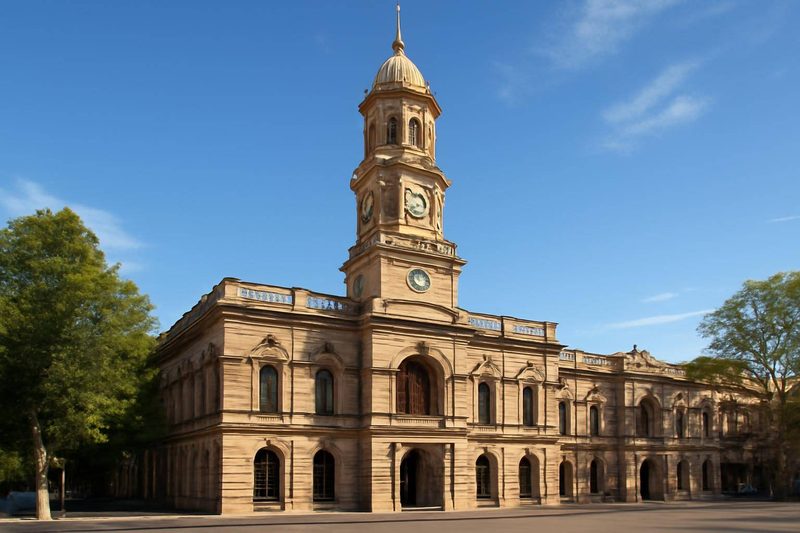


What Adelaide is known for
Adelaide sits on the eastern shore of Gulf St Vincent, roughly 12 kilometres inland from the water, with the River Torrens running through its centre. The original Kaurna people knew this country as Tarntanya or Tandanya—the place of the red kangaroo—and their traditional lands form the foundation of what became Australia's only planned free-settler colony, established in December 1836. Colonel William Light surveyed the city's geometric grid in 1837, a layout still legible today in its broad boulevards and methodical numbering.
The city's most distinctive feature is the ring of parkland—some 900 hectares of green that surrounds the city proper and cuts through its heart. This is not marketing: the parks are genuinely present and shape how the place feels. Greater Adelaide's population exceeds 1.3 million, yet the city centre does not feel congested. The boulevards are generous. The parks create breathing room.
History and Settlement
Governor John Hindmarsh and surveyor William Light established Adelaide as a free-settler enterprise in 1836, not a convict dumping ground. Light's choice of location was initially questioned—critics doubted the wisdom of placing a city on the eastern shore of the gulf rather than closer to existing ports—but his judgment was vindicated within years. The settlement grew from roughly 2,000 residents in 1840 to over 14,000 by mid-century.
Light's urban design was progressive: the grid is not dogmatic but responsive to land and water. The 1,042 original town acres were distributed to early purchasers by lottery, a system that tried to blend fair allocation with entrepreneurial incentive. Adelaide became Australia's first incorporated municipality in 1840, with James Hurtle Fisher serving as its first mayor. A significant German settlement arrived in the mid-19th century, leaving cultural traces that persist in regional names and community memory.
Getting Oriented
The grid layout makes wayfinding straightforward. Streets are numbered logically. North Terrace forms the cultural spine, with the South Australian Museum, Art Gallery of South Australia and other institutions concentrated along it. The River Torrens Linear Park provides a natural anchor running through the city centre. Victoria Square (Tarntanyangga in Kaurna), historically a central meeting place, remains a public gathering point.
The Adelaide Central Market, established in 1869, operates Tuesday through Saturday and functions as a working food market with over 70 traders offering locally grown produce, fresh meats, seafood and multicultural food. Reddit contributors consistently recommend it for food shopping and people-watching.
Wine Regions and Surroundings
Adelaide serves as a base for three major wine regions: the Barossa Valley, McLaren Vale and Adelaide Hills. Multiple tour operators offer hop-on, hop-off and private group services departing from the city centre. McLaren Vale lies to the south, the Barossa Valley approximately an hour north-east, and the Adelaide Hills to the east. Specific route details and booking should be confirmed with operators or the Visitor Information Centre.
Festivals and Events
Adelaide maintains a year-round calendar of festivals. The Adelaide Festival, held annually, presents international art, theatre, dance, opera and music, alongside Adelaide Writers' Week, Australia's largest free literary festival. The Adelaide Fringe, Adelaide Cabaret Festival (June), Adelaide International Jazz Festival, South Australia's History Festival (May), and Tasting Australia contribute to the city's festival calendar. Specific dates and programmes change annually; check Festival City Adelaide or individual event websites for current schedules.
Practical Arrival and Transport
Adelaide Airport handles interstate and international flights. Ground transport options from the airport include taxis, ride-sharing services and buses, though specific routes and schedules should be confirmed locally. The city's grid layout and compact centre make walking viable for many journeys within the CBD. The Visitor Information Centre provides free WiFi in many areas and can advise on current transport options.
Museums and Collections
The National Railway Museum at Port Adelaide holds Australia's largest under-cover railway collection with over 100 major exhibits from South Australian and Commonwealth Railways. It operates largely on volunteer labour. The Mortlock Chamber, housed within the State Library on North Terrace, is noted for its historic reading room. The South Australian Museum and Art Gallery of South Australia offer free entry. Current exhibitions and opening times should be checked before visiting.
Cultural Context
Kaurna names appear throughout the city, paying tribute to Elders or local links to the area. Warriparinga, a nature reserve in Adelaide's southwest, offers cultural and heritage tours of the grounds and wetlands. The Adelaide Botanic Garden includes information on native plants and their traditional uses, and city cultural tours address colonial history.
Safety and Seasonal Considerations
The UK Foreign Office and US State Department advise normal travel precautions for Australia. Standard urban awareness applies. Australia experiences higher bushfire risk during spring and summer (October to February); visitors planning to travel during those months should monitor local fire danger ratings and heed official warnings. Check current official travel advice before departure.
Current Economy and Industries
Defence industry is a significant sector in Adelaide. The city supports radio and television production and maintains performing arts venues. The automotive industry, which once drove manufacturing across Australia and peaked in the 1970s, has largely contracted since the early 2000s; Adelaide's specific role in that history is documented locally but falls outside current visitor concerns.
Local Knowledge Gaps
This guide reflects available sources but would benefit from local knowledge on accommodation districts, specific walking routes, pedestrian infrastructure, day-to-day public transport experience, food culture beyond the Central Market, and how the city has changed in recent years. Contributions from Adelaide residents are welcomed.