
In This Guide
This story guide follows The Ghost at the Courthouse: Atlanta's Oldest Story in Atlanta, giving the narrative route a clear starting point from the hub.
Read the guide as a story
The Ghost at the Courthouse: Atlanta's Oldest Story
Atlanta Georgia Fox Theatre
Fox Theatre, Atlanta
The Fox Theatre on Peachtree Street is one of the most distinctive performance venues in the American South. The building opened in 1929, originally conceived as a Shriners auditorium before being converted for the Fox Theatre cinema and performance circuit. Its interior is an exercise in Moorish-Egyptian Revival design, with a ceiling painted to simulate a night sky and atmospheric effects including a working star field. The New Georgia Encyclopedia and the Library of Congress both document the building as an architecturally significant example of the ornate movie palace tradition.
The Fox came close to demolition in the 1970s when its owners sought to sell the site for redevelopment. A preservation campaign led by local organisations saved the building, and it has operated as a major live performance venue since. Today it hosts Broadway touring productions, concerts and a range of live events. It seats just under 4,700 people, making it one of the larger theatrical venues in the region.
Visitors should check the Fox Theatre's own box office for current programming and ticket availability. The venue is located on Peachtree Street NE in Midtown, within walking distance of the Midtown MARTA station.
Sources: Fox Theatre (Atlanta) - Wikipedia
Truist Park
Truist Park
Truist Park is the home ground of the Atlanta Braves baseball team, located in the Cumberland area of Cobb County, northwest of downtown Atlanta. According to Baseball Reference and Wikipedia, the stadium opened in 2017, replacing Turner Field as the Braves' home. It seats around 41,000 spectators for baseball.
The stadium anchors The Battery Atlanta, a mixed-use development surrounding the ballpark that includes restaurants, bars, hotels, retail and entertainment venues. The Battery has become a destination in its own right on game days and for events outside the baseball season, according to multiple source cards including Discover Atlanta and Ballparks of Baseball.
Getting to Truist Park without a car requires some planning. The stadium is not on the MARTA heavy rail network; Cobb County Transit operates services to the area, and a dedicated game-day shuttle has operated from certain MARTA stations in previous seasons. Visitors should verify current transit options before attending. Parking is available but fills quickly on game days. The Atlanta Braves' MLB season runs from April through September, with post-season play possible in October.
Sources: Truist Park - Wikipedia • Truist Park - Ballparks of Baseball
Discover Atlanta The Grant Park
Grant Park
Grant Park is one of Atlanta's oldest and largest public green spaces, covering around 131 acres in the neighbourhood of the same name, approximately one mile south of downtown. The park dates from the 1880s, when it was established as a municipal park and later developed with formal landscaping and recreational facilities.
Zoo Atlanta, one of the few zoos in the United States to house giant pandas, occupies a significant portion of the park. According to Discover Atlanta, Zoo Atlanta is consistently among the city's most visited attractions for families. The park also contains a preserved Civil War fortification — Fort Walker — along with picnic areas, playgrounds and walking paths. Cyclorama, the large-format Civil War panoramic painting, was historically housed in the park but has been relocated to the Atlanta History Center.
The Grant Park neighbourhood itself is characterised by well-preserved Victorian-era housing stock and is generally considered one of the more walkable historic residential areas in the city. The park is accessible by car; MARTA bus routes serve the area, though direct rail access requires a walk or connecting service from the nearest stations.
Atlanta Botanical Garden
Atlanta Botanical Garden
The Atlanta Botanical Garden occupies around 30 acres on the northeastern edge of Piedmont Park in Midtown. According to Wikipedia's article on the garden, it was established in 1976 and has expanded significantly since then, including through the addition of the Fuqua Conservatory, which houses tropical and desert plant collections, and the Fuqua Orchid Center, one of the largest public orchid collections in the United States.
The garden is a separate organisation from Piedmont Park and charges admission, though reciprocal membership arrangements with other botanical gardens are common. It is consistently listed among Atlanta's top visitor attractions by Discover Atlanta and Explore Georgia. An outdoor canopy walk provides views across the garden from above the tree line.
The garden hosts seasonal events including a winter light installation that draws significant visitor numbers; crowd levels at these events can be high and advance booking is advisable. Its Midtown location makes it directly accessible on foot from the Midtown MARTA station, and it connects to the BeltLine trail system via Piedmont Park's southern boundary.
Sources: Atlanta Botanical Garden - Wikipedia
Piedmont Park
Piedmont Park
Piedmont Park is Atlanta's main central urban green space, located in the Midtown neighbourhood. According to Piedmont Park's published history, the park has served as Atlanta's primary public gathering ground since the late 19th century, hosting major community events and providing open recreational space for residents. It covers approximately 185 acres and is bordered by 10th Street to the south and the park's northern entrance near the Atlanta Botanical Garden.
The Atlanta Botanical Garden occupies land directly adjacent to Piedmont Park's northern edge, making the two attractions a practical single visit. The park itself is free to access and open daily; the Botanical Garden operates separately with its own admission. Discover Atlanta and ExploreGeorgia both list the park among the city's essential outdoor destinations.
Piedmont Park is accessible from MARTA's Arts Center station (Gold and Red lines), approximately a ten-minute walk from the park's south entrance. The park serves as a venue for several annual community events throughout the year; specific event dates should be verified through piedmontpark.org or Discover Atlanta's events calendar.
Sources: Sources: Piedmont Park - Wikipedia • Learn the History of Piedmont Park in Atlanta
Atlanta BeltLine Public Art and Walking Route
The Atlanta BeltLine is a 22-mile loop of trails and parks built on a former railway corridor, connecting 45 neighbourhoods across the city. The Eastside Trail is the most established section, running through the Old Fourth Ward past Ponce City Market and Krog Street Market. Art on the Atlanta BeltLine, one of the largest free temporary public art exhibitions in the United States, runs annually along the corridor. The BeltLine's official map at beltline.org lists current trail status and access points.
Read the Atlanta BeltLine Public Art and Walking Route guide
Sources: Atlanta Beltline - Wikipedia • Visit the Atlanta BeltLine - Atlanta BeltLine Inc. • About Atlanta BeltLine, Inc. • Atlanta BeltLine Art - Public Arts and Culture Events • Atlanta BeltLine Art 2026 Exhibition Season Press Release • Interactive Map - BeltLine
Martin Luther King Jr. National Historical Park
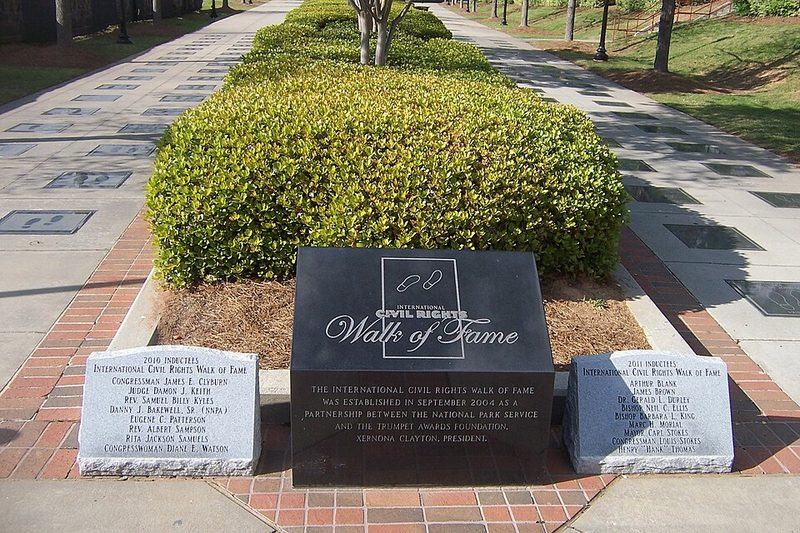
The Martin Luther King Jr. National Historical Park preserves the birthplace, church and burial site of the civil rights leader in Atlanta's Sweet Auburn neighbourhood. King's birth home at 501 Auburn Avenue is accessible by ranger-led tour on a first-come, first-served basis. Historic Ebenezer Baptist Church and the King Centre — founded by Coretta Scott King in 1968, and site of the marble crypt where both are interred — are also open to visitors.
Read the Martin Luther King Jr. National Historical Park guide
Sources: Martin Luther King, Jr. National Historical Park - National Park Service • Ebenezer Baptist Church - National Park Service • Visit - The King Center
Support WorldTownGuide
Help keep these town guides researched, corrected and freely available. Contributions support hosting, source research, validation work and ongoing improvements.
Payments are processed securely by Stripe.
Nearby Places and Districts
Sources
GeoNames (population, coordinates and place data) • Wikipedia / Wikimedia Commons (background context and images) • OpenStreetMap (map) • Page data (JSON)
Article research: Atlanta Beltline - Wikipedia • Visit the Atlanta BeltLine - Atlanta BeltLine Inc. • About Atlanta BeltLine, Inc. • Atlanta BeltLine Art - Public Arts and Culture Events • Atlanta BeltLine Art 2026 Exhibition Season Press Release • Interactive Map - BeltLine • Martin Luther King, Jr. National Historical Park - National Park Service • Ebenezer Baptist Church - National Park Service • Visit - The King Center • Fox Theatre (Atlanta) - Wikipedia • Truist Park - Wikipedia • Truist Park - Ballparks of Baseball
Local tips, corrections, business details, community projects or photos help make this guide better.