In This Guide
Read the guide as a story
The Bridge That Goes Nowhere: an October Visit to Avignon
Avignon, City of Popes and Festival Stages
Stand in the shadow of the Palais des Papes on a warm July evening and you will understand immediately why this city has held people in its grip for seven centuries. The great Gothic palace rises from its rock above the Rhône like a fortified cliff, its towers catching the last of the Provençal light. Avignon is a city that wears its history plainly and yet never feels like a museum piece — it is a genuinely lived-in place, full of markets, music and the purposeful rhythm of a regional capital.
First Impressions and Setting
Avignon sits on the left bank of the Rhône in the Vaucluse department, enclosed by a circuit of medieval ramparts that have survived largely intact. Arriving by train, the walls are often the first thing visitors see: honey-coloured stone rising from the plain, framing a compact city centre within. The station area itself is functional rather than picturesque — a working urban approach — but the old town begins within a few minutes' walk of the gates. Inside the walls, the streets are narrower and older, home to around 16,000 people who live alongside some of the most visited heritage sites in southern France. The Grand Avignon agglomeration — a grouping of sixteen communes — had around 197,000 inhabitants as of 2022, making the wider city a significant urban hub for the region.
The Palais des Papes and UNESCO Heritage
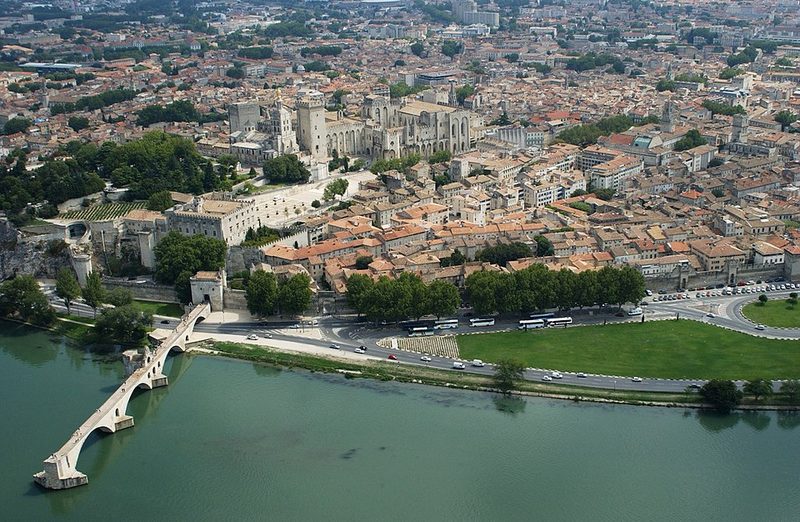
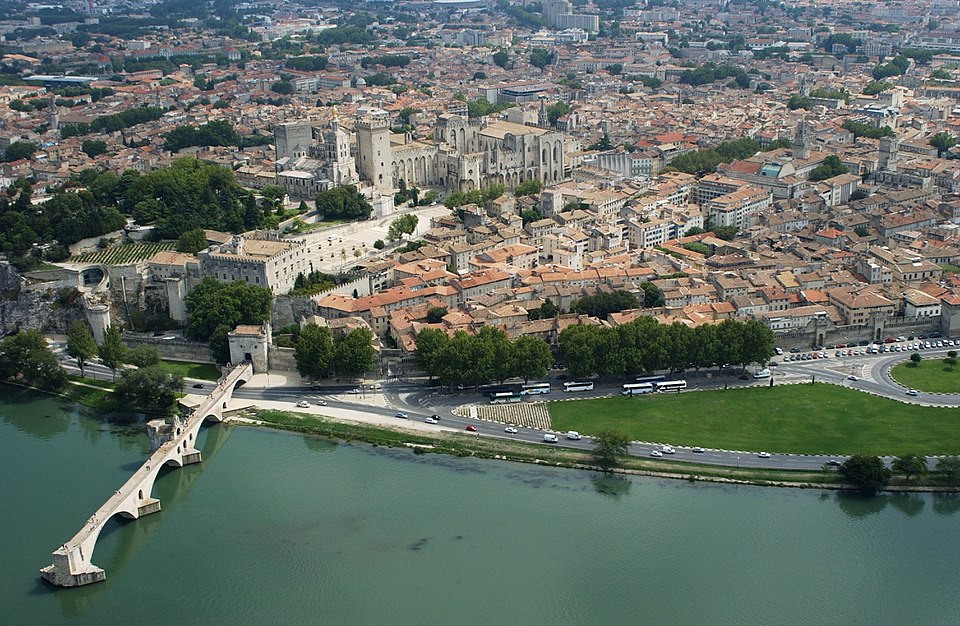
The feature that defines Avignon above all others is the Palais des Papes, the immense Gothic palace that served as the seat of the Catholic papacy between 1309 and 1377, when seven successive popes governed Christendom from this city rather than from Rome. The move came after political turbulence in Italy made Rome unsafe for the papacy; French-born Pope Clement V established the papal court in Avignon, and his successors remained for nearly seven decades. The palace they built is the largest Gothic structure of its kind in the world, according to the regional tourism authority.
That period left a deep mark on the surrounding city. The palace, the surrounding episcopal buildings and much of the medieval city centre together form a UNESCO World Heritage Site. After the papacy returned to Rome, the palace passed through turbulent use — barracks, prison — before becoming the monument and cultural venue it is today. The Festival d'Avignon, which has run annually since 1947, now uses the Cour d'Honneur, the palace's great ceremonial courtyard, as one of its main performance spaces, giving the building a vivid second life every July.
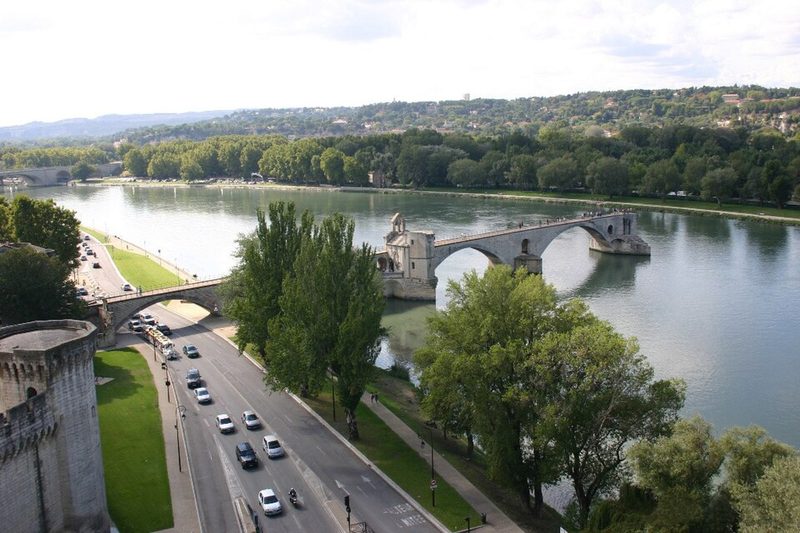
A short distance from the palace, the Pont Saint-Bénézet — known the world over as the Pont d'Avignon — stretches out into the Rhône and then, famously, stops. The bridge dates to the twelfth century and once spanned the river entirely; today only four of its original twenty-two arches survive. The nursery rhyme Sur le Pont d'Avignon has given it a cultural life that long outlasted its practical one, and the Provence-Alpes-Côte d'Azur tourism authority lists it alongside the palace as an essential site within the UNESCO perimeter. Visitors should note that the bridge is a ticketed entry, separate from the palace; the two are close enough to combine on a single morning.
The Festival and the Arts
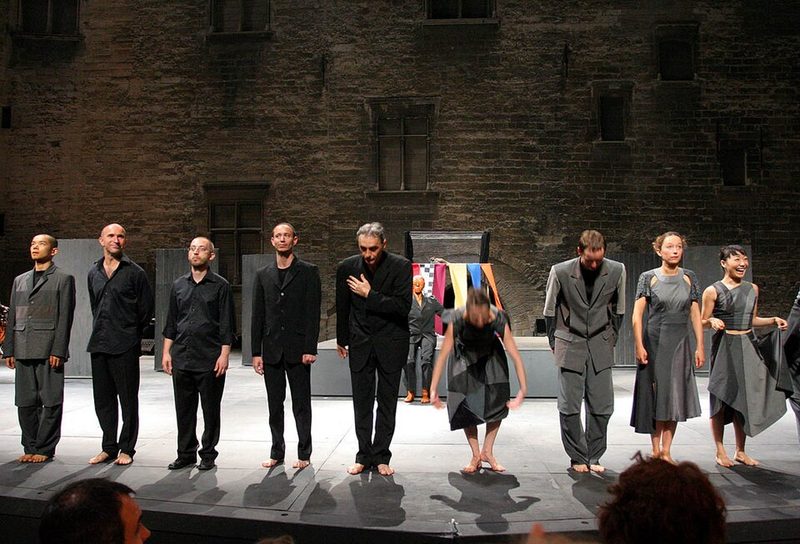
Every July, Avignon transforms. The Festival d'Avignon began in 1947 when Jean Vilar organised a dramatic arts week in the city, with the Cour d'Honneur of the Palais des Papes becoming the setting that gave the festival its scale and public ambition. Maison Jean Vilar records that Vilar premiered three plays in three Avignon venues that September, including Shakespeare's Richard II in the palace courtyard. The festival grew from that post-war experiment into one of the most significant theatre events in French-speaking Europe. Two parallel programmes now run simultaneously: the official In festival, centred on the Cour d'Honneur and other established venues, and the Off festival, a sprawling independent programme that fills courtyards, chapels, converted warehouses and street corners throughout the old town. During festival weeks, the city's population swells considerably and accommodation fills quickly; visitors planning a July trip should book well in advance.
Beyond July, the city maintains a year-round cultural calendar. The Opéra Grand Avignon presents opera and orchestral performances through the season, and the old town's performance spaces and galleries sustain a local arts scene that reflects Avignon's role as a regional cultural capital. Mireille Mathieu, born in Avignon in 1946, became one of France's most recognised popular singers — a fact locals hold with evident pride, and a reminder that the city's musical tradition runs deeper than its summer festival alone.
Walks, Parks and Riverside
Walking the streets inside the ramparts, visitors notice heritage layered into an otherwise functional urban fabric: a Romanesque chapel here, a cardinal's palace repurposed as a municipal building there. The Rocher des Doms — a garden park set on the high rock directly above the Palais des Papes — provides one of the most useful elevated views in the city, looking out over the Rhône, the broken bridge and the plains stretching towards the Alpilles to the south and the Luberon to the east.
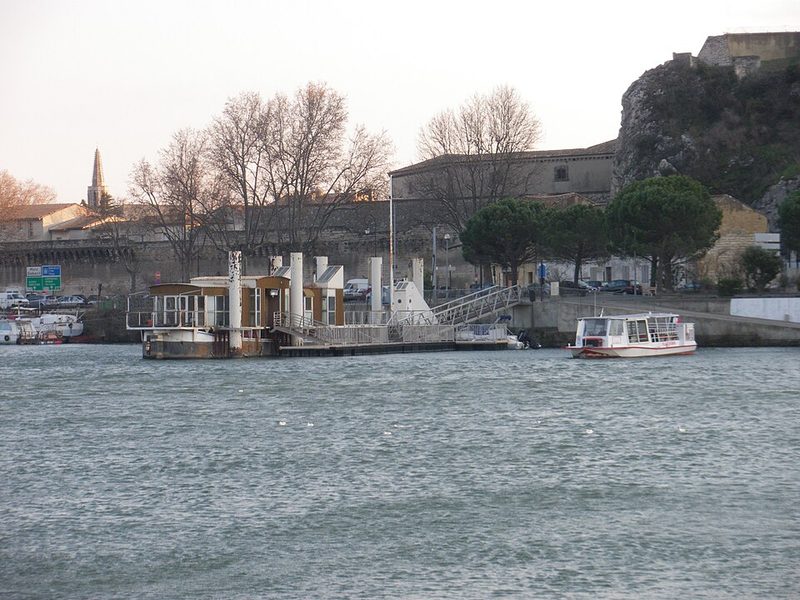
The riverside itself offers a quieter kind of orientation. A river shuttle has operated between Avignon and the Île de la Barthelasse, the large river island that sits between the city and the Gard bank, giving access to paths and open ground that feel removed from the old town's tourist traffic. Views back to the city walls and the Pont Saint-Bénézet from the water or the opposite bank are among the most memorable in the city.
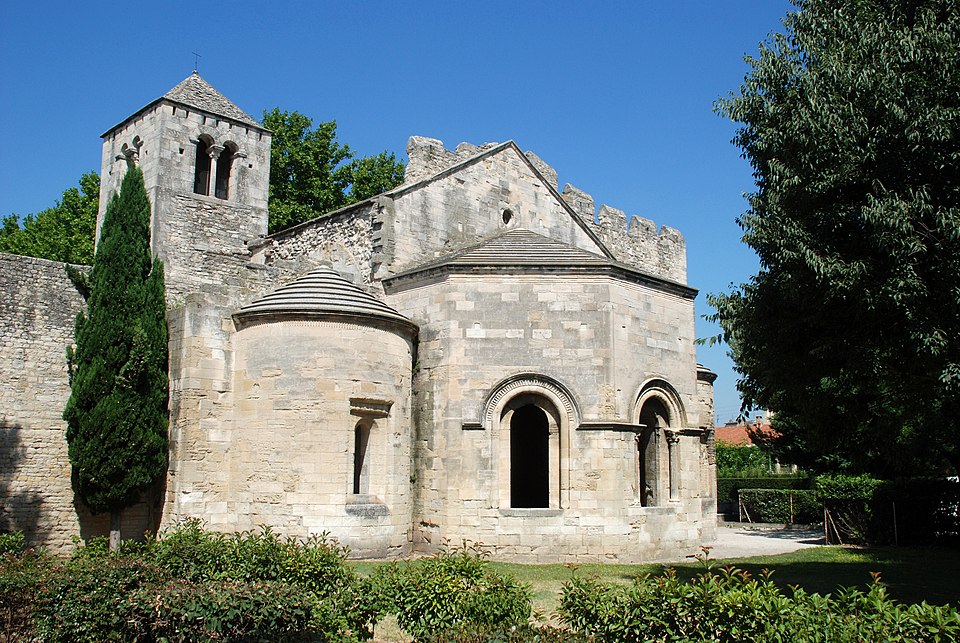
The area around Saint-Ruf, just beyond the old centre's southern edge, contains traces of the Abbaye Saint-Ruf, a medieval religious community whose stonework has weathered many centuries. It is a quieter, less-visited corner of the city than the palace quarter.
Day Trips: Alpilles, Luberon and Beyond
Avignon's position makes it a practical base for the wider region. The Alpilles Regional Natural Park — a compact limestone range south of the city — is one of the most visited natural areas in Provence-Alpes-Côte d'Azur, according to the regional tourism authority. Its villages, including Les Baux-de-Provence, are reachable by car in under thirty minutes; the terrain is suited to walking and cycling, with marked routes through garrigue, olive groves and rocky viewpoints.
To the east, the Luberon range offers a similar combination of hilltop villages, agricultural landscape and walking routes. Further afield, source evidence identifies Arles — where Van Gogh produced many of his most famous paintings — and the Camargue wetlands as day-trip destinations reachable from Avignon. The Roman theatre at Orange, to the north, and the archaeological site at Vaison-la-Romaine are also within the regional day-trip orbit. Car hire at either Avignon station is the most practical option for most of these destinations; rural public transport coverage is variable.
Getting There and Around
Avignon is one of the better-connected cities in southern France. Avignon-Centre station sits close to the ramparts and is within comfortable walking distance of the old town; it handles regional and inter-city rail services. A second station, Avignon TGV, lies outside the city and handles high-speed services that place Avignon within approximately two and a half hours of Paris. A shuttle bus — operated by Orizo on routes 10 and 14 — connects the TGV station to the city centre; passengers should verify current schedules directly with the operator, as timetables change seasonally.
Avignon Caumont Airport (IATA: AVN), a smaller facility south of the city, handles some domestic and European services including easyJet routes. It is not the primary arrival point for most visitors; the TGV connection from Paris or Lyon is typically faster and more practical. Regional trains and buses connect Avignon to nearby towns across the Vaucluse and Bouches-du-Rhône; the Zou! regional network covers much of the territory, though rural frequency can be limited. Within the city, the compact old centre is walkable, and local bus services — including tram line T1 — cover the wider urban area.
Current timetables and fares for national rail should be verified with SNCF directly. Regional services can be checked through the Zou! and Orizo networks.
Practical Notes
The UK Foreign, Commonwealth and Development Office advises normal precautions for travel to France, with no specific warnings relating to Avignon or the Provence-Alpes-Côte d'Azur region. US government guidance suggests exercising increased caution across France as a whole. Standard urban awareness applies as in any city of this size. Visitors should check current official travel advisories from their home government before departure and ensure travel insurance covers their planned activities.
July is the city's busiest month by a significant margin; the theatre festival brings substantial crowds inside the walls, accommodation prices rise sharply and quieter corners become harder to find. Spring — particularly April and May — and early autumn offer warm weather, lower prices and noticeably fewer visitors. September brings a local grape-harvest festival in nearby Châteauneuf-du-Pape, a village a few kilometres north of the city whose famous wine appellation traces its origins directly to the papal court that once operated from Avignon.