


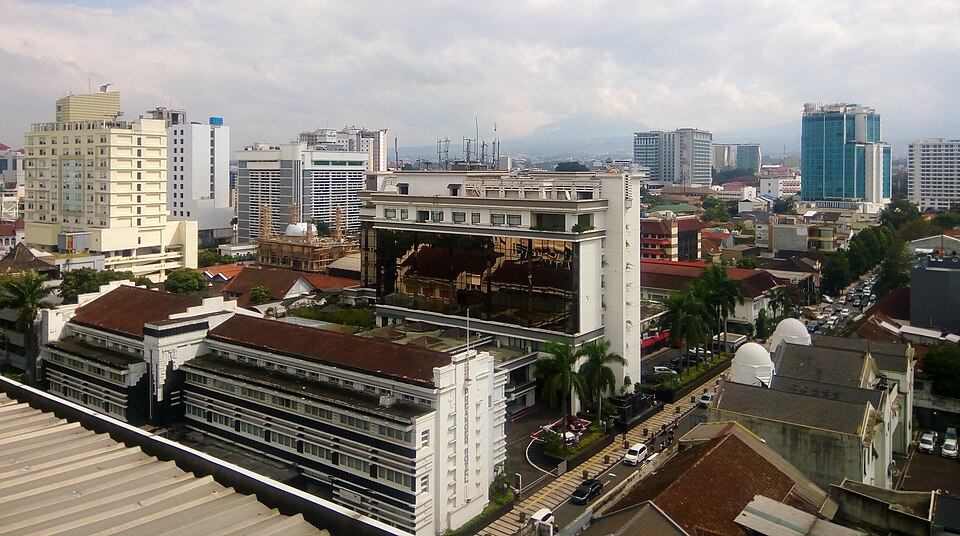


What Bandung is known for
At 2.4 million people, Bandung is Indonesia's fourth-largest city, sitting 708 metres above sea level in the volcanic highlands of West Java, approximately 135 kilometres southeast of Jakarta. The elevation creates a noticeably cooler climate than coastal Indonesian cities, which originally attracted Dutch colonial planners who considered relocating their capital here from Batavia. Today the city functions as a regional educational and industrial centre, home to the Institut Teknologi Bandung (established 1920) and a concentration of textile and fashion manufacturing. The Sundanese language predominates locally, though Indonesian serves for official communication and visitor interaction.
Historical Significance
Bandung gained international prominence in April 1955 when it hosted the Bandung Conference, a gathering of twenty-nine Asian and African nations that shaped Cold War-era politics and established the Non-Aligned Movement. The conference represented a defining moment for post-colonial nations asserting their voice in global affairs. The city retains a museum commemorating the Asian-African Conference at the original venue.
The colonial period left a distinct architectural legacy. Art Deco buildings from the 1920s survive throughout the city centre, most notably Gedung Sate, completed in 1920 to designs by J. Gerber. The building, now the office of the provincial governor, blends Balinese and European architectural elements and stands as one of Indonesia's most photographed colonial structures. Other Art Deco survivors include Villa Isola (now Bumi Siliwangi) and buildings along Braga Street, where European-style cafés and galleries occupy heritage shophouses.
Universities and Research
The Institut Teknologi Bandung anchors the city's identity as an educational hub. The institution has trained many of Indonesia's leading engineers, geologists and scientists since its founding. Additional universities and a nuclear research centre contribute to significant student populations and research activity. This academic concentration influences the city's character, supporting bookshops, affordable dining and a generally younger demographic than might be expected for a city of this size.
What to See and Do
Visitors interested in geology should note the Museum Geologi, one of Indonesia's oldest museums, displaying 250,000 rocks and minerals alongside 60,000 fossils documenting the archipelago's geological history. The Sri Baduga Museum holds collections spanning Sundanese history from prehistoric eras through the Hindu-Buddhist kingdoms to contemporary culture, with approximately 6,923 pieces.
Braga Street offers a walkable heritage district lined with galleries, cafés and colonial-era buildings. Visitors can park at Braga City Walk and explore on foot. Gedung Sate, whilst functioning as government offices, permits exterior viewing and photography. The Asian-African Conference Museum occupies the original conference venue on Jalan Asia Afrika.
The NuArt Sculpture Park, covering three hectares, exhibits works by sculptor Nyoman Nuarta spanning his career. Bandung also maintains smaller specialised museums including the Indonesia Postal Museum and a Museum of Photography.
Shopping and Fashion
Bandung's textile and garment industry supports numerous factory outlets, particularly concentrated along Jalan Dago (often called simply "Dago") in the northern upscale residential area. These outlets occupy converted houses and sell clothing, often branded or export-quality items, at prices below Jakarta retail. The shopping district has become sufficiently well-known that "belum ke Dago, belum ke Bandung" (not visiting Dago means not visiting Bandung) circulates as a local saying. Individual outlets include Grande Fashion & Gallery and various locations along Jalan Soekarno Hatta.
Food
Sundanese cuisine forms the local culinary tradition, with regional specialities available throughout the city. Traditional markets operate as food landscapes where Sundanese ingredients and prepared foods are sold; Bandung maintains forty traditional markets divided into three classes. Specific restaurants mentioned by local sources include Sambal Hejo, Raja Rasa, Ampera and Ibu Imas. The Dago Atas area in upper Dago offers elevated dining venues such as Lisung, Igelanca and The Stone Cafe, where visitors can dine with views over the city.
Day Trips from Bandung
The surrounding volcanic landscape provides accessible natural attractions. Tangkuban Perahu, an active volcano north of the city, allows visitors to view crater formations. The journey also passes through Lembang, where tea plantations and the Lembang Floating Market operate. South of Bandung, Kawah Putih (White Crater) in the Ciwidey region features a turquoise crater lake surrounded by forested cliffs at higher elevation, providing relief from lowland humidity. Strawberry farms operate in the Ciwidey area. Local transport operators and hotels can arrange day-trip transport; verify current arrangements and access conditions before departure.
Getting There
Jakarta serves as the primary international gateway. Road and rail connections link Bandung to the capital, with rail services operating on Java's passenger network. The journey covers approximately 135 kilometres. "Travel" services (shared minibuses operating on fixed routes) also connect the two cities. Specific schedules, fares and departure points should be verified locally or through current transport resources.
Getting Around
Traffic congestion affects Bandung as it does most Indonesian cities, though the density remains more manageable than Jakarta. Ride-hailing services operate locally. Visitors planning trips to outlying attractions such as Tangkuban Perahu or Kawah Putih typically arrange vehicle hire with driver for the day, as public transport to these sites is limited. Costs and arrangements vary; local hotels or online platforms can facilitate bookings.
Safety and Local Context
In December 2022, a suicide bombing at a police station in the Astana Anyar district resulted in two deaths and multiple injuries. The incident reflects broader national security concerns rather than conditions unique to Bandung.
Current travel advisories for Indonesia include regional restrictions for certain areas. The UK Foreign, Commonwealth & Development Office and US State Department maintain updated guidance; West Java and Bandung are not identified in the restricted regions cited in major current advisories, but travellers should verify official advice before departure, as regional conditions and guidance are updated regularly.
Practical Considerations
Bandung rewards visitors interested in Indonesia's post-colonial history, regional culture, highland geography and Sundanese heritage more than conventional beach-and-temple tourism. The city remains less visited by international travellers than Yogyakarta or Bali, which contributes to more modest pricing. The cooler climate registers noticeably, particularly for those arriving from Jakarta or coastal regions. Two to three days allows coverage of city sights and one day trip to surrounding volcanic landscapes. Accommodation ranges from budget guesthouses near the universities to hotels in the Dago area; visitors prioritising walkability to heritage sites should consider locations near Braga Street or Jalan Asia Afrika.